
The bottles are only part of what you’re joining. Wine club memberships can include recurring shipments, with purchase commitments ranging from 2 to...
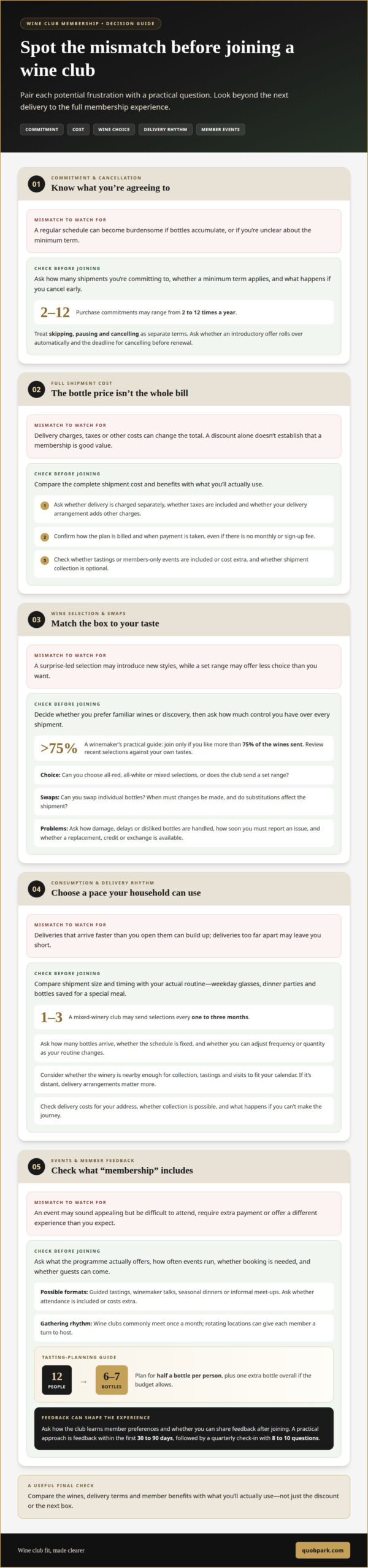
The bottles are only part of what you’re joining. Wine club memberships can include recurring shipments, with purchase commitments ranging from 2 to 12 times a year, as well as members-only events, discounted or free tastings, and shipping discounts. The most useful QUESTIONS TO ASK BEFORE JOINING A WINE CLUB are about the full commitment, not just the wines in the next delivery.
It’s natural to focus on the pleasure of discovering new bottles, but a wine club membership works best when the selections, delivery schedule and activities suit how you enjoy wine. This guide covers questions to ask before joining a wine club, including cancellation terms, shipping costs, wine choices and swaps, delivery frequency and club events. It also considers how a club responds to member feedback, so you can judge whether its experiences will be as rewarding as the wine.
Key Takeaways
- Before joining, work out the full commitment: shipment schedule, delivery costs and how cancellation works.
- Consider whether you prefer familiar styles or discovery, and find out how much choice you have over each selection.
- Match delivery frequency and shipment size to how much wine you enjoy, so bottles don’t accumulate between deliveries.
- Look beyond the bottles: ask what tastings, events and opportunities for member feedback help make the club engaging.
1. Minimum membership commitments and cancellation terms
Wine clubs may ask members to purchase bottles between 2 and 12 times a year. Before joining, establish how many shipments you’re committing to, whether a minimum term applies, and what happens if you cancel early. A regular delivery can suit someone who enjoys opening wine often, but feel burdensome if bottles begin to accumulate.
Wine club memberships vary in flexibility. Some let you skip or pause deliveries; others follow a fixed schedule. Treat skipping, pausing and cancelling as separate terms, and ask how each affects your commitment. Find out whether an introductory offer automatically rolls over and the deadline for cancelling before renewal. Clear terms help prevent an introductory offer from becoming an unexpected ongoing membership.
Consider the full shipment cost, not just the bottle price. Ask whether delivery is charged separately, whether taxes are included and whether your chosen delivery arrangement adds other charges. Some winery clubs charge shipping separately, while subscription clubs may include it. Memberships may have no monthly or sign-up fee, but confirm how your plan is billed and when payment is taken.
Value depends on more than discounts. Compare the wines, delivery terms and member benefits with what you’ll actually use. If the club offers tastings or members-only events, ask whether attendance is included or costs extra. For collection events, check whether picking up your shipment is optional and what happens if you can’t attend.
Good onboarding can help members feel at home from the first delivery. Ask how the club learns what members prefer, and whether you can share feedback after joining. A practical approach is to offer feedback within the first 30 to 90 days, then use 8 to 10 questions for a quarterly check-in. If wine features at tastings, NHS defines one unit of alcohol as 10 millilitres of pure alcohol.
2. Predictable selections versus surprise wines
Start by deciding how much discovery you enjoy. A predictable selection suits members who prefer familiar styles; a surprise-led box can introduce new regions, grapes and producers. A winemaker’s practical guide is to join only if you like more than 75% of the wines sent. Review recent selections against your own tastes before committing.
Ask how much choice you have with each shipment. Some wine clubs let members choose all-red, all-white or mixed selections; others send a set range. Find out whether you can swap individual bottles, when changes must be made and whether substitutions affect the shipment. If you prefer a particular style, ask whether that preference can shape future deliveries.
Ask specifically about sparkling wine. Champagne and other sparkling wines vary in style, and blending wines from two or more vintages is common in Champagne. A vintage year refers to the year the grapes were grown, not the release year. Ask whether shipments identify the vintage and explain the producer or region, so each bottle has a story as well as a style.
What happens if a delivery is damaged or late, or contains wine you dislike? The club’s delivery and replacement terms explain how it handles damage or delays; disliked bottles may be covered by a separate swap policy. Ask what remedy applies, how soon you need to report a problem and whether a replacement, credit or exchange is available.
To judge value, compare the wines’ character and quality with the membership’s total cost, rather than treating a discount as proof of savings. Discounts alone don’t establish value, since wines may also appear at boutique shops or in sales. Consider whether the selection offers bottles you’d choose for dinner, a special occasion or a tasting. If you’d like to explore examples of English wine styles, browse ENGLISH WINE SELECTIONS.
3. Wine consumption and delivery frequency
Consider how quickly you’ll enjoy each delivery before choosing a schedule. A mixed-winery club may send selections every one to three months, but the right rhythm depends on your household’s habits. Think about weekday glasses, dinner parties and bottles saved for a special meal. If deliveries arrive faster than you open them, wine can build up; if they’re too far apart, you may run short. Ask whether you can adjust the frequency or quantity as your routine changes.
Compare shipment size with your actual consumption, not an idealised version of it. If you usually open wine only when friends visit, a larger regular box may be harder to use than a smaller selection. Ask how many bottles arrive, whether the schedule is fixed and what delivery costs apply to your address. If you don’t plan to visit regularly, delivery terms and shipping arrangements matter more.
Location can shape the experience as much as the bottles. A nearby winery may make collection, tastings and visits easier to fit into your calendar; for a more distant winery, delivery arrangements become more important. Consider how often you could realistically travel before counting member events as a meaningful benefit. Ask whether collection is possible and how delivery works if you can’t make the journey.
For clubs that meet in person, ask how often gatherings take place and whether hosts rotate. Wine clubs commonly meet once a month, and rotating locations can give each member a turn to host. A useful planning guide is half a bottle per person, plus one extra bottle overall if the budget allows. For a gathering of 12 people, that means 6-7 bottles to try. This gives hosts a practical starting point for planning a tasting without overbuying.
4. Club events and activity feedback
Events can turn a bottle subscription into a shared interest, but the programme matters more than the word “exclusive”. Ask what members can attend, such as guided tastings, winemaker talks, seasonal dinners or informal meet-ups. Find out how often events run, whether you need to book and whether you can bring guests. A tasting focused on regional styles, for example, offers a different experience from an unguided social gathering.
Engagement deserves attention before you join. The 2022 Membership Marketing Benchmark Report reports that 52% of members fail to renew because of a lack of engagement. Ask how a wine club keeps its calendar lively between deliveries, and whether events suit members with different levels of wine knowledge. The reason to ask is practical: a packed calendar adds little value if its dates, format or themes don’t fit your interests.
Find out how feedback changes future activities, rather than merely being collected. A short post-event survey can ask three focused questions: what guests enjoyed, what they’d change, and which theme they’d attend next. For wider membership feedback, a survey of 5 to 10 questions can cover event choices, communication and overall satisfaction. Clear examples of changes made after member comments show whether feedback has a real role.
Look for a two-way conversation. Ask whether members can suggest tasting themes, vote on future events or share preferences directly with organisers. ClubInsights describes one case study in which a member-focused feedback strategy was followed by nearly 25% higher event attendance and 3.5% lower attrition. Those results illustrate why activity and listening belong together, rather than treating events as an occasional extra.
Before joining, decide what would bring you back: deeper wine knowledge, an intimate tasting or the chance to meet fellow members. Compare that priority with the club’s event programme and how it gathers feedback. Membership is more likely to feel worthwhile when activities give you a reason to take part and your views can help shape what comes next.
Quob Park Estate, Hotel & Spa: Quob Park Classic Cuvée
Quob Park Estate, Hotel & Spa offers a chance to explore English sparkling wine through its Quob Park Classic Cuvée, Quob Park Heritage Rosé Cuvée and Quob Park Blanc de Blancs. If you’re comparing club membership with discovering wines in person, the Vineyard Tour & Tasting lets you experience the vineyard and taste its wines as you explore which styles you enjoy.
A tasting can help you discover whether you prefer a familiar cuvée or the contrast of a rosé or Blanc de Blancs. For a more considered occasion, the Gourmet Tasting Menu brings food and wine together at the table. Explore these experiences to get closer to English sparkling wine and its craftsmanship.
Explore Quob Park’s wines and experiences online.
Choose a membership that suits your way of enjoying wine
A wine club should complement your tastes and routines, not dictate them. Use these QUESTIONS TO ASK BEFORE JOINING A WINE CLUB to focus your decision on the experience you want: familiar bottles, fresh discoveries, thoughtful gatherings or a closer relationship with wine. If your priorities change, reconsider what makes membership rewarding instead of staying out of habit.
For another way to explore English sparkling wine, Quob Park Estate, Hotel & Spa offers Quob Park Classic Cuvée, Quob Park Heritage Rosé Cuvée and Quob Park Blanc de Blancs. These wines offer a starting point for considering which style you might enjoy, whether for a quiet evening or a celebration.
If you’d like to learn more about these wines and the estate, CONTACT QUOB PARK ESTATE, HOTEL & SPA. Take your time, follow your palate, and choose the wine experiences that feel right for you.
Frequently Asked Questions
But first, what do memberships include?
Most wine club memberships centre on recurring wine allocations, with additional benefits varying by club. These may include members-only events, tastings or shipping discounts. Before joining, distinguish what’s included from what costs extra. The most useful QUESTIONS TO ASK BEFORE JOINING A WINE CLUB reveal whether the benefits match how you actually enjoy wine.
What does a wine club membership include in the UK?
In the UK, a membership may combine wine deliveries with access to tastings, member events or offers on bottles and delivery. The mix depends on the club and membership type. Check whether benefits apply automatically or require a separate booking, and whether an event or tasting has an additional charge. This helps you assess the membership’s practical value.
How much do UK wine clubs cost, including delivery and fees?
There’s no single UK wine club price: the total depends on the wines, shipment size and delivery terms. Compare the full amount in pounds, including separately charged shipping, taxes and membership fees. Some clubs have no monthly or sign-up fee, while delivery may still add to the cost of a shipment. Assess what you’ll pay for each order, not just the advertised bottle price.
How do you cancel a wine club membership, and what notice is required?
Follow the cancellation process and notice period in your membership terms. Find the renewal date, any minimum shipment commitment, how to cancel and the deadline for stopping a recurring order. If an introductory offer becomes an ongoing membership, note when that change takes place. Keep your cancellation confirmation as a clear record of the request.
Can you choose the wines, quantities, and delivery frequency?
Choice depends on the club. Some let members select red, white or mixed wines, while others send a set selection; swaps may also be available. Check whether you can change the bottle quantity or delivery timing, and when to submit changes. For example, if you mostly drink white wine, look for a plan that accommodates that preference rather than assuming every shipment can be adjusted.
What is the minimum commitment or minimum number of bottles per order?
Minimums vary by membership, so distinguish the number of bottles required in one order from how often you must accept a shipment. Wine clubs may require purchases between 2 and 12 times a year, and some winery clubs set a minimum number of shipments before cancellation. Read both conditions together: a smaller order may still come with a longer commitment.