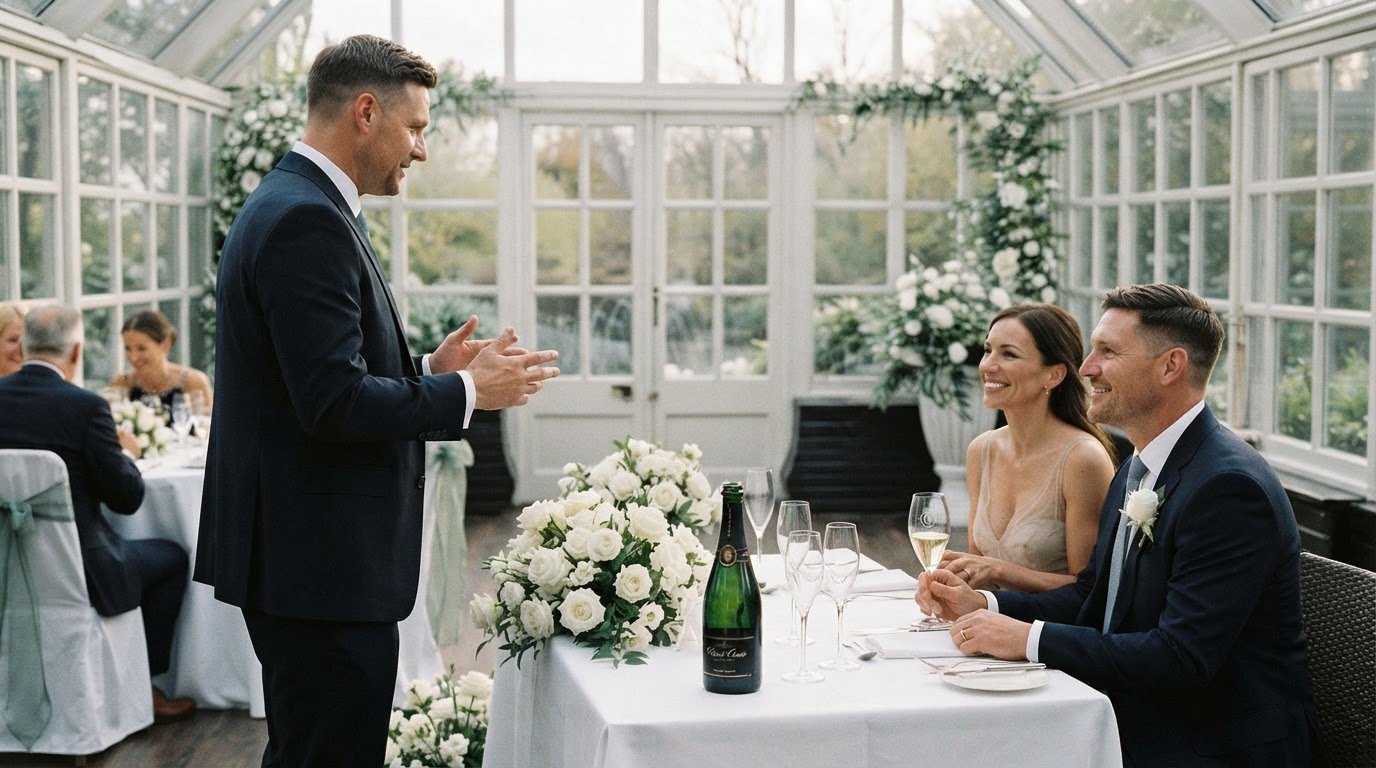
Traditionally, the father of the bride speaks first, followed by the groom and then the best man or best woman. The maid of honour and the bride’s...
Traditionally, the father of the bride speaks first, followed by the groom and then the best man or best woman. The maid of honour and the bride’s parents are also traditional speakers. These wedding speech writing tips will help you shape a warm, memorable toast that doesn’t run on.
It’s natural to want to honour the couple and keep guests engaged, especially if speaking in front of a room feels daunting. A toast of two to four minutes gives you time for a personal story, a sincere message and a wish for the couple’s future.
Here, you’ll find a clear approach to choosing what to say, balancing humour with heartfelt moments and cutting details that don’t serve the story. You’ll also learn how to rehearse aloud, use notes confidently and settle your nerves, so your words feel considered and natural on the day.
Key Takeaways
- Understand who traditionally gives wedding speeches, and how the couple can shape the speaker list to suit their celebration.
- Build a toast around a personal story and a heartfelt message, while steering clear of humour that could embarrass or exclude guests.
- Keep your speech focused on the couple, edit out details that don’t strengthen the message and finish with a toast to their future.
- Rehearse aloud, prepare notes you can read comfortably and use a few calm breaths to feel more composed before speaking.
How to write an epic wedding speech?
Shape your toast around one true story, a sincere message and a warm finish. These steps help keep it personal, considerate and clear for everyone in the room.
-
Personalise the Speech with Stories
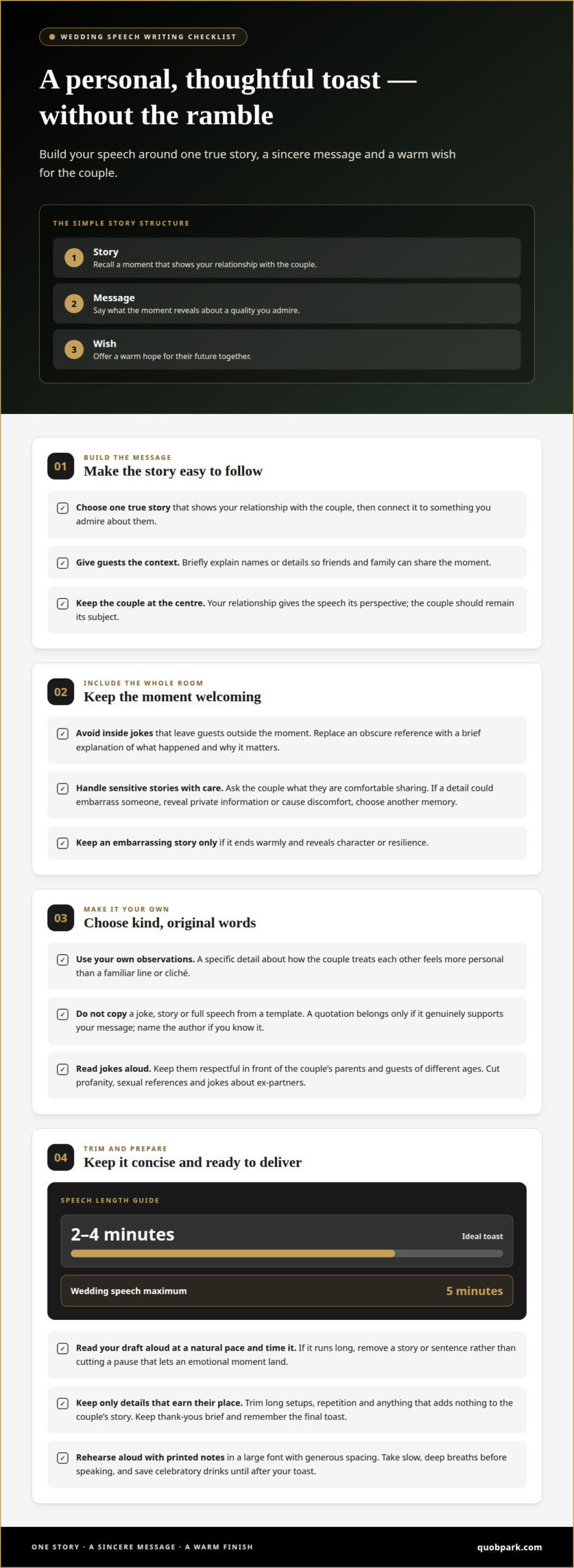
Choose one story that shows your relationship with the couple, then connect it to a quality you admire. Try this simple structure: story, message, wish. Recall a moment, say what it reveals, then offer a hope for their future. For example, describe how one partner welcomed you into the wedding party and link that kindness to the life they’re building together.
Effective wedding speech examples use this structure without copying someone else’s words. Choose details guests can follow, and briefly explain names or context so friends and family can share the moment.
-
Avoid Inside Jokes and Embarrassing Stories
Cut jokes that only a few friends understand, as they can leave other guests outside the moment. Replace an obscure reference with a brief explanation of what happened and why it matters to the couple. Keep the focus on them, not on proving how close you are to the wedding party.
Leave out embarrassing stories unless they end warmly and reveal character or resilience. Before including a sensitive detail, ask the couple what they’re comfortable sharing. If a story could make someone look bad, reveal private information or cause discomfort, choose another memory.
-
Avoid Clichés and Copied Material
Share your own observations rather than relying on familiar lines about soulmates or “the perfect couple”. A specific detail, such as how the couple makes time for each other, feels more personal than a phrase that could apply to anyone.
Use a quotation only if it genuinely supports your message, and name the author if you know it. Don’t copy a joke, story or full speech from a template. Keep the structure, but make every example and sentiment your own.
-
Edit Inappropriate Language and Jokes
Read each joke aloud and consider whether it would feel respectful in front of the couple’s parents and guests of different ages. Cut profanity, sexual references and jokes about ex-partners. Avoid drinking before your speech: a clear head helps you deliver your words as intended.
Revise anything that feels awkward or too revealing, then read the speech aloud again. Ask whether each line is kind, relevant and easy for everyone to understand. If a sentence adds nothing to the couple’s story, remove it.
Overcoming public-speaking nerves
Prepare the practical details as carefully as the words. Rehearsal, clear notes and a few deliberate breaths can help you feel steadier during the reception.
-
Manage Nerves Before Speaking
Practise aloud until you can deliver the main points with only occasional glances at your notes. Try speaking in front of a mirror or reading the speech to a pet, then mark pauses and phrases that need emphasis. Just before speaking, take slow, deep breaths. A little adrenaline can help you focus; it doesn’t mean something is going wrong.
Use a printed copy with a large font and generous spacing, so you can find your place at a glance. Rehearse with those notes rather than a version on your phone, and keep them easy to reach.
-
Limit Alcohol Before Speaking
Save celebratory drinks until after your toast. Alcohol can make it harder to judge your pace, follow your notes and deliver anecdotes clearly, especially when you’re already managing the attention of the room. A clear head helps you keep your words measured and your delivery warm.
Before the reception, check where you’ll stand, whether a microphone will be available and where you can place your notes. If the speech is outdoors, a microphone can help carry your voice to guests. Confirm the speaking order with the wedding planner or master of ceremonies, so you’re ready when introduced.
-
Speak to the Whole Room
Begin by introducing yourself and explaining your relationship to the couple. For example: “I’m Alex, and I’ve known Sam since university.” This gives guests who don’t know you a point of connection before you share your stories.
Address the whole room, not just the wedding party or friends nearest you. Look up from your notes between thoughts, let a pause settle after a meaningful line and speak towards the guests rather than down at the page. If nerves disrupt your pace, pause, breathe and continue with your next point.
Keeping the speech concise
In the UK, a wedding toast ideally lasts between two and four minutes. Keep your contribution focused, especially when several friends or family members are speaking.
- Set a clear time limit. Aim for a toast of two to four minutes, and keep a wedding speech to no more than five minutes. Read your draft aloud at a natural pace and time it. If it runs long, remove a story or sentence rather than cutting the pause that gives an emotional moment room to land.
- Keep the couple at the centre. Review each paragraph and ask whether it tells guests something meaningful about the couple. A brief account of how they support each other says more than a long story about your own adventures. Your relationship gives the speech its perspective, but the couple should remain its subject.
- Make every story earn its place. Choose one anecdote with a clear point, then trim details that don’t help guests understand it. For example, keep the moment a friend showed kindness, but remove the long setup about how everyone got to the restaurant. Keep an addition only if it deepens the meaning or offers the couple a sincere compliment.
- Edit for relevance and originality. Read the draft once for repetition, then again for lines that could describe any newly married couple. Replace a familiar phrase with a precise observation, such as how they listen to each other. Keep thank-yous brief, and remember the final toast. If you’re unsure what to cut, remove material about yourself before removing the couple’s story.
These wedding speech writing tips help you shape a heartfelt toast rather than a long account of the day. Leave guests with one vivid memory and a clear wish for the couple’s future.
Who is traditionally asked to give wedding speeches
In the traditional UK order, the father of the bride speaks first, followed by the groom, then the best man or best woman. Etiquette is flexible: the couple can choose different speakers and an order that suits their day.
- Use tradition as a starting point. Speakers may include people close to the couple, such as family members or members of the wedding party. This familiar sequence takes guests from a family welcome to the couple’s words and a friend’s tribute. It’s not a rule every wedding must follow.
- Ask the couple who they want to hear from. Both partners may wish to speak, or they may invite siblings, close friends or another important person. Discuss the speaker list together so no one assumes they have a role and the programme reflects the couple’s relationships.
- Separate the reception from a rehearsal dinner. At an intimate rehearsal dinner or pre-wedding gathering, such as celebrating over dinner at Valentino’s Italian Restaurant, the groom’s parents or other hosts may speak, along with wedding party members the couple invites. Keep these moments distinct from the reception speeches, where the couple can choose a different line-up and order.
- Agree the order and practical details in advance. The couple or host can tell each speaker when they’ll speak and who will introduce them. A brief introduction might explain the speaker’s relationship to the couple. Confirming the sequence with the master of ceremonies helps avoid uncertainty, especially if nerves make it difficult to remember what comes next.
- Keep etiquette thoughtful, not rigid. Introduce yourself if guests may not know you, thank the hosts where appropriate and direct your words towards the couple. Choose a heartfelt message that suits the whole audience, then finish with a toast. The best order is the one that feels natural to the couple and gives each speaker a clear moment.
Quob Park Estate, Hotel & Spa: Wedding Venue Hire
Quob Park Estate, Hotel & Spa offers Wedding Venue Hire for couples planning a celebration where heartfelt speeches are part of the day. Consider the venue as you plan the setting, guest experience and flow of your wedding, including when speakers will address the room.
A considered toast pairs naturally with a celebratory glass. Quob Park Classic Cuvée, Quob Park Heritage Rosé Cuvée and Quob Park Blanc de Blancs offer distinct English sparkling wine choices to raise with family and friends.
If you’re planning your celebration and considering a venue for those shared moments, explore WEDDING VENUE HIRE.
CONTACT QUOB PARK ESTATE, HOTEL & SPA to discuss your wedding venue plans.
Make the Moment Your Own
A wedding toast doesn’t need to sound like a performance. Let it sound like you: a thoughtful reflection on the people you’re celebrating, delivered with the ease that comes from preparation. The best wedding speech writing tips help you find your own words, not borrow someone else’s voice.
As the celebration takes shape, think about the atmosphere you want guests to remember. Consider how the room, the gathering and the shared toast can feel connected, creating a moment that belongs to the couple. A calm, considered setting gives those words space to be heard and appreciated.
If you’re planning a celebration, CONTACT QUOB PARK ESTATE, HOTEL & SPA, SET ACROSS 180 ACRES. Bring your ideas and take the next step at your own pace. With a sincere message and a little preparation, you’re ready to raise a toast that feels entirely your own.
Frequently Asked Questions
Who normally gives a wedding speech?
Traditionally, the father of the bride speaks, followed by the groom and then the best man or best woman. The maid of honour and the bride’s parents may also be invited to speak. Treat this as a familiar starting point, not a fixed requirement. If a traditional speaker can’t attend or prefers not to speak, the couple can choose someone else who matters to them.
Are There Any Differences in Speeches Depending on Your Role?
Yes. A parent might welcome guests and reflect on watching their child build a partnership, while a best person can share a friendship-based perspective. A partner speaking at their own wedding might acknowledge family, friends and the person they’re marrying. These are helpful distinctions, not strict scripts. Choose material that reflects your connection rather than trying to imitate another speaker’s style.
Can Multiple People Give One Speech Together?
Yes, two or more speakers can share a speech if they plan the handovers and give each person a clear purpose. One might introduce a shared memory, while another explains why it captures the couple’s relationship. Agree who opens and closes, and rehearse the transitions together. Avoid overlapping anecdotes or private exchanges that leave guests unsure whose story they’re hearing.
What If You Don’t Know One Partner Very Well?
You can still give a thoughtful speech by speaking honestly about the partner you know and welcoming the person they’ve chosen. For example, describe a moment when your friend spoke warmly about their partner, then offer a sincere wish for their life together. Don’t pretend to have a close relationship you don’t share. Honesty sounds more natural than invented familiarity.
What makes a great speech then?
A great speech feels genuine, easy to follow and suited to the occasion. It gives guests a sense of the couple without becoming a private conversation or a performance. Choose one clear takeaway, such as the kindness they show each other, and let that guide your choices. A natural speaking voice and a warm finish matter more than elaborate wording.
What should you include in a wedding speech?
Include a brief introduction if some guests may not know you, a meaningful observation about the couple and a wish for their shared future. Thank people when it’s relevant to your role, such as hosts who welcomed guests. For a partner’s speech, a personal acknowledgement can make the moment especially intimate. Finish by inviting guests to raise a glass.