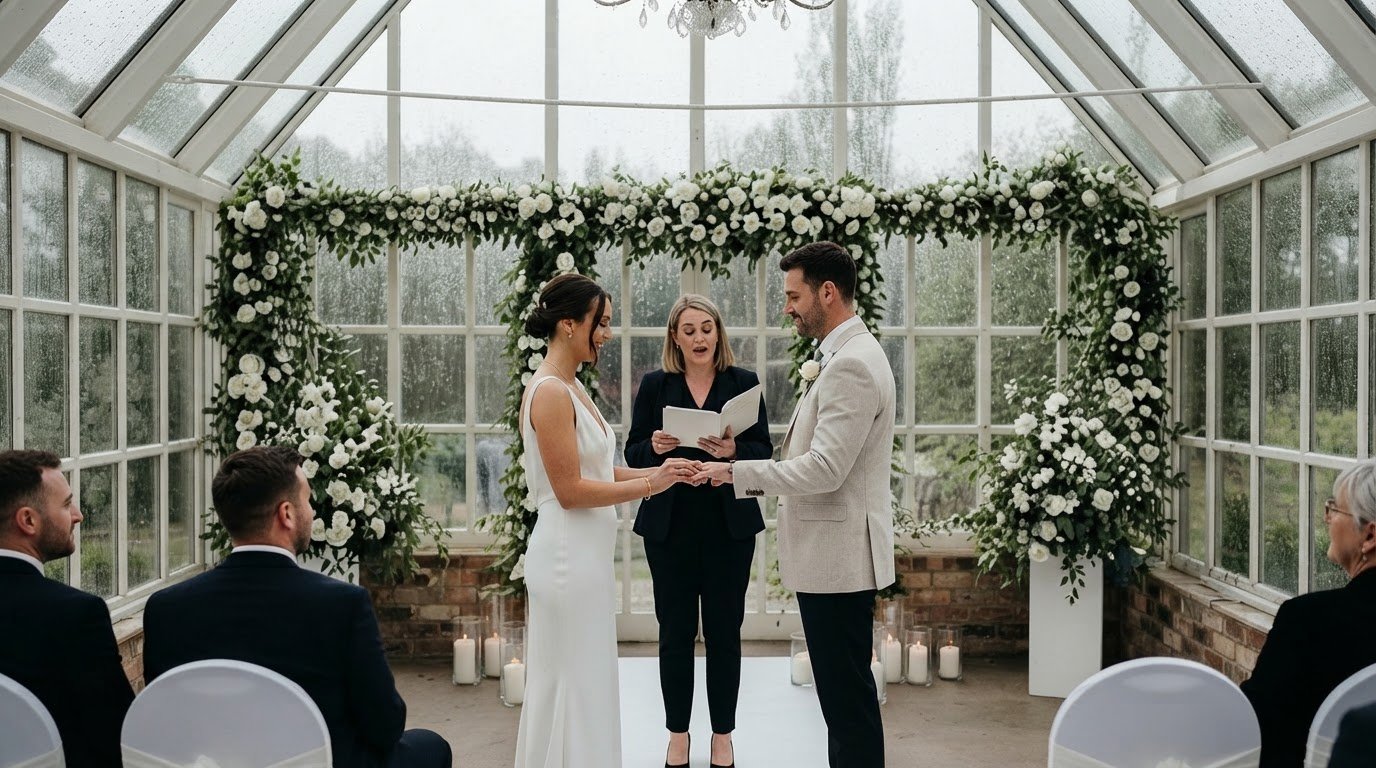
A wedding day contingency plan for weather should be agreed at least 30 days before the wedding, with a clear alternative for any outdoor plans. If...
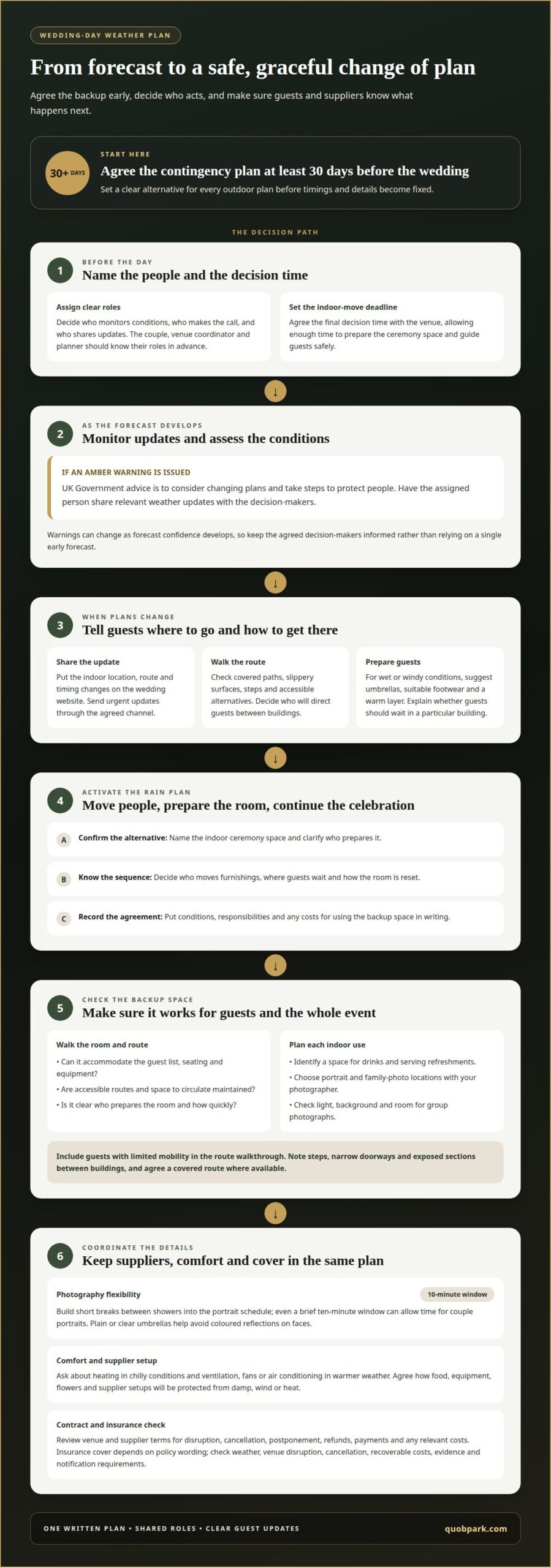
A wedding day contingency plan for weather should be agreed at least 30 days before the wedding, with a clear alternative for any outdoor plans. If an amber warning is issued, the UK Government advises considering changes to your plans and taking steps to protect people. Decide in advance who will make the call and how guests will be kept informed.
Rain is often said to bring good luck, and a shower needn’t diminish the beauty of your wedding day. Still, knowing where everyone will go, how the ceremony can continue and what happens if conditions become unsafe can make the difference between a graceful adjustment and a last-minute scramble.
This guide covers the practical questions to raise about severe-weather safety, your venue’s official rain plan and the suitability of indoor backup space. It also explains when to prepare, giving you time to make considered decisions about timings, guest comfort and the details that help your celebration feel special in any weather.
Key Takeaways
- Ask how the venue will adapt timings and communicate changes if conditions affect the day.
- Get the rain plan in clear terms, including the decision point and how the space will be reset.
- Check that the indoor alternative can comfortably accommodate guests and support the parts of the celebration planned outdoors.
- Discuss weather arrangements with your venue and suppliers before committing, so the backup plan works as a coordinated whole.
1. How Does the Venue Protect Guest Safety During Severe Weather?
A wedding-day weather timeline should name who monitors conditions, who makes the decision and how guests will hear about changes. Agree the indoor-move deadline with your venue, allowing enough time to prepare the ceremony space and guide guests safely. The couple, venue coordinator and planner should know their roles before the wedding day, rather than improvising during a downpour.
Set the final decision time with your venue in advance, taking its setup time and the forecast into account. If an amber warning is issued, UK Government advice is to consider changing plans and take steps to protect people. Weather warnings can change as forecast confidence develops, so assign someone to monitor updates and share relevant changes with the decision-makers.
Tell guests what the outdoor plan involves and how they’ll receive updates. Include the indoor location, route between buildings and any timing changes on your wedding website, then send urgent updates through the agreed channel. For wet or windy conditions, suggest guests bring umbrellas, suitable footwear and a warm layer. Explain whether they should wait in a particular building instead of crossing exposed grounds.
Walk the transition route with your venue team. Identify covered paths, slippery surfaces, steps and accessible alternatives, then decide who will direct guests between buildings. For a chilly season, ask how the ceremony or waiting area will be heated. In warmer weather, clarify whether ventilation, fans or air conditioning are available and where guests can cool down. These practical details help the venue plan for comfort as well as movement.
Wedding insurance is intended to protect against weather-related problems and emergencies, but cover depends on the policy wording. Check how it treats severe weather, venue disruption, cancellation and recoverable costs. A change of plan isn’t automatically covered. Keep the policy details with your wedding documents and understand what evidence and notification steps it requires.
2. What Is Your Official Rain Contingency Plan?
A useful rain plan names the alternative ceremony space, who prepares it, when the decision is made and how the transition works. Ask the venue to explain the sequence: who moves the furnishings, where guests wait and how the room is prepared. Put the arrangements in writing, including any conditions, responsibilities or costs attached to using the backup space.
Your venue contract should explain what happens if bad weather disrupts the agreed arrangements, including cancellation, postponement and any relevant refund or payment terms. Read it alongside your other supplier agreements to understand how a change of venue or date affects each booking. The practical plan should also cover wind, heat and cold, including whether outdoor areas close in strong winds and what shelter or heating is available in chilly conditions.
Ask your photographer to build flexibility into the portrait schedule. Instead of relying on one long session, use short breaks between showers; even a brief ten-minute window can allow time for couple portraits. Cloud cover can soften the light compared with bright midday sun, while umbrellas, puddle reflections and rain boots can make photographs memorable. Plain or clear umbrellas help avoid coloured reflections on faces.
Rain is often welcomed as a good-luck symbol, a comforting sentiment rather than a reason to ignore unsafe conditions. Protect outfits with a coat or wrap between outdoor photographs, and ask the florist how to keep seasonal flowers fresh. Keep food and equipment under suitable cover, and agree with suppliers how heat, damp or wind may affect their setup. Record these details together in your wedding-day contingency plan for weather, so the venue team and suppliers work from the same arrangements.
3. Checking whether an indoor backup space is available
Ask the venue to name the indoor room reserved for your ceremony or reception, then walk through it together. Check that its layout can accommodate your guest list, seating, accessible routes and any necessary equipment. Clarify whether the backup plan is included in your agreement, who prepares the room and how quickly the transition can happen. A space that looks suitable when empty may feel crowded once chairs, guests and suppliers are in place.
Plan indoor photography with your photographer before the wedding. Visit potential locations such as a bright window, covered entrance or conservatory, and consider the background, available light and space for group photographs. Ask where couples can take portraits and where larger family groups can gather without blocking guest access. An indoor plan gives your photographer options if rain makes lawns or garden paths impractical.
For an outdoor drinks reception, identify an indoor alternative that can comfortably hold your guests, with space to circulate and serve refreshments. Walk the route from the ceremony space to the reception area, noting steps, narrow doorways and exposed sections. If guests must move between buildings, agree who will guide them and which covered route to use. Include guests with limited mobility in this walkthrough from the outset.
Marquee, tent and weather-cover costs in the UK vary with the structure, size, ground conditions, flooring, side panels, installation and hire period. The price depends on individual requirements and is provided after a quote request; compare what each quote includes, such as setup and suitable flooring. Confirm whether your venue’s covered backup is part of your booking or requires separate hire. Record the agreed indoor and covered options in your wedding-day contingency plan, including which spaces will be used for photographs, drinks and the main celebration if conditions change unexpectedly.
4. Planning a weather contingency plan early
For an outdoor celebration, settle the backup before the finer details become fixed. Confirm a clear Plan B at least 30 days before the wedding, then revisit it with the venue and suppliers. Early decisions leave room to coordinate room layouts, catering, photography and guest movement without hurried re-planning. Put the agreed arrangements in one shared document, so everyone works from the same version.
Start with the choices that affect the whole day: which activities move indoors, what happens to the schedule and who makes each change. Ask the venue and caterer how dining can move between outdoor and indoor spaces. Your photographer can help identify suitable portrait locations, while the planner or nominated coordinator keeps the running order aligned. Record each person’s responsibilities beside the relevant decision rather than relying on memory.
Build a flexible timeline, not a minute-by-minute promise that leaves no room to adapt. Mark which moments can shift, such as portraits or drinks, and which depend on a fixed supplier arrival or room setup. Agree when the forecast will be reviewed and how updates will reach decision-makers. If conditions change, this shared process helps the team act without turning every adjustment into a new discussion.
During planning, think beyond rain. A spring or autumn date may call for shelter from wind and extra warmth, while a warm spell may make shade and a cool indoor space more useful. Write down what guests should bring, how accessible routes will remain usable and which supplier handles each practical detail. Share the final plan with everyone responsible for carrying it out, so the celebration feels prepared rather than improvised.
Explore WEDDING VENUE DETAILS as you shape your plans.
Quob Park Estate, Hotel & Spa: Quob Park Classic Cuvée
Once your weather arrangements are in place, Quob Park Estate, Hotel & Spa can help you plan the wine and dining for your celebration. Quob Park Classic Cuvée, Quob Park Heritage Rosé Cuvée and Quob Park Blanc de Blancs offer a choice of English sparkling wines, while the Gourmet Tasting Menu brings a food-led experience for guests to savour.
If you’re gathering ideas for a wedding celebration or future occasion, explore the Vineyard Tour & Tasting to discover the estate’s wines. For details about Quob Park’s offerings, contact Quob Park Estate, Hotel & Spa or visit the Quob Park website.
Shape a Celebration That Feels Like Yours
A thoughtful wedding-day contingency plan for weather gives you room to make decisions calmly while preserving the character and warmth you want your celebration to have. Once the practical arrangements are settled, turn your attention to the details guests will remember: the welcome, the setting and what you share around the table.
Quob Park Estate, Hotel & Spa offers Quob Park Classic Cuvée, Quob Park Heritage Rosé Cuvée and Quob Park Blanc de Blancs. These English sparkling wines can be part of your celebration hospitality, bringing a sense of place to a reception or gathering.
As you consider the finishing touches for your wedding, take a moment to explore what may suit your plans. CONTACT QUOB PARK ESTATE, HOTEL & SPA to continue the conversation, and look forward to a celebration shaped with care, whatever the skies bring.
Frequently Asked Questions
But isn’t wedding day rain good luck?
Many couples enjoy the tradition that rain brings good luck, and it can create a memorable backdrop for photographs. Treat the saying as a charming sentiment, not a reason to take risks: slippery steps, strong winds or an official weather warning may call for a change of plan. If conditions are mild and everyone is comfortable, your photographer can make rain part of the day’s atmosphere.
Are outdoor weddings risky?
Outdoor weddings involve more weather-dependent decisions than celebrations held entirely indoors, but the risks depend on the setting and conditions. Consider wind exposure, ground surfaces, shelter, temperature and how guests can reach essential spaces. A clear alternative for the ceremony and reception helps you respond if the weather changes, while keeping your priorities and guest access in view.
How Does Weather Preparedness Protect Your Investment?
Preparedness helps protect the time, arrangements and payments committed to a wedding, although insurance cover depends on the policy. Check the wording for weather disruption, cancellation and supplier-related costs, and note any steps required to make a claim. Keep contracts, receipts and key correspondence together. This makes it easier to understand your options if severe weather disrupts your plans.
How Does the Venue Protect Guest Safety During Severe Weather?
Ask how venue staff respond if conditions make an outdoor area unsafe, including who can restrict access and how guests will be directed to shelter. Find out how emergency access will be kept clear and who can assist guests with mobility needs. For example, a named coordinator can guide guests away from a slippery garden path and towards the agreed indoor area.
What Does the Covered Ceremony Space Look Like?
A covered ceremony space might be a marquee, pavilion or covered terrace, but the layout and level of protection vary. Consider how open sides handle wind-driven rain, whether the flooring is suitable underfoot, and how seating, sound equipment and décor will fit. Visit the space set up for a ceremony, not just empty, to picture how it will feel with guests present.
What Is Your Official Rain Contingency Plan?
Your formal rain plan should state which ceremony or reception space replaces each outdoor area, who authorises the change and what happens to the schedule. Ask how staff manage a ceremony-to-reception change if both are planned outdoors, and whether guests will wait in one sheltered location during the reset. Keep the agreed plan with your wedding documents so suppliers can follow it.