The most personal wedding vows aren’t necessarily the most revealing. They’re promises that sound like you, reflect the life you share and feel...
The most personal wedding vows aren’t necessarily the most revealing. They’re promises that sound like you, reflect the life you share and feel comfortable saying aloud. Writing your own wedding vows works best when both partners are happy to do it. In the UK, a personal reading generally takes around one to two minutes.
It’s natural to want your words to feel intimate without turning a cherished moment into a public account of your relationship. You can keep private stories between the two of you and still make your vows warm, unmistakably personal and sincere.
This guide explains what wedding vows are and how to shape your own: begin with what you value in your partner, choose promises that feel true, and decide which details belong in the ceremony and which are better shared in private. You’ll also find ways to make the words flow naturally when spoken, so the moment feels like a promise between you, even with loved ones gathered nearby.
Key Takeaways
- Start with words that sound like you, then shape them into promises that reflect the life you share.
- Gather specific memories and qualities you love about your partner to make your vows feel personal rather than generic.
- Choose what belongs in front of guests and save especially intimate thoughts for a private letter.
- Read your vows aloud and refine the rhythm so your words feel natural and sincere on the day.
What Are Wedding Vows?
Wedding vows are spoken promises that express your commitment to your partner during the ceremony. Personal wording can sit alongside the ceremony’s required words, but it doesn’t replace the legal formalities of marrying in the UK. Treat your vows as a meaningful reading, not a legal document.
There isn’t one wording rule for every UK ceremony. Requirements differ between civil and religious ceremonies, and across the UK. Ask your registrar, celebrant or religious officiant how personal vows fit your ceremony and whether they need to approve the wording.
- Decide together whether to write your own. Both partners should feel comfortable speaking personal vows in front of guests. If one of you would rather use traditional wording, agree on a shared approach, such as adding a short personal reading before or after the formal vows.
- Gather inspiration from your shared life. Note a few details: a quality you admire, a moment that changed your perspective, or a familiar routine that feels distinctly yours. For example, you might promise to keep making time for Sunday walks if that genuinely reflects your relationship.
- Choose what belongs in the ceremony. Focus on promises and hopes, rather than trying to retell your whole relationship. A useful starting point is three or four promises, such as offering support, listening honestly and building a life together. Leave out private stories if they feel too intimate for guests.
- Write in your natural voice. Start with your partner’s name and one honest sentence about what they mean to you. Build from there using familiar words, not elaborate poetry. Read the draft aloud; if a phrase feels unlike something you’d say, replace it with a simpler version.
Reflecting on what you love about your partner
- Make a short list of what you value. Write down qualities you admire, then connect each one to something your partner does. “Kind” becomes more vivid when linked to how they make room for someone who feels overlooked. Add values that shape your relationship, such as patience, curiosity or a shared sense of adventure.
- Choose details only you could name. Recall a gesture, habit or moment that reveals your partner’s character. Perhaps they remember how everyone takes their tea or stay calm when plans change. These observations make your vows personal without needing a grand story. Keep the detail brief, then explain why it matters to you.
- Open by speaking directly to your partner. Use their name, followed by a clear thought about what they mean to you. For example: “Alex, I believe our life together is richer because you meet each day with generosity.” This direct opening gives your words a natural focus and lets guests understand whom you’re addressing.
- Turn admiration into a promise. Choose a quality you love and consider how you’ll honour it in your shared future. If their brilliant curiosity draws you in, promise to keep discovering new things together. A promise to love feels more sincere when it describes an action, such as listening carefully or making space for each other’s ambitions.
- Check in about tone and boundaries. Agree whether your vows should feel tender, light-hearted or quietly reflective, without sharing every line beforehand. Ask what each of you wants to keep private and whether a personal detail would feel comfortable in the ceremony. This conversation respects your partner’s boundaries while keeping each voice honest.
Keeping vows appropriately private
- Decide what feels right to share. Before drafting, separate stories you’re happy to tell guests from details meant only for the two of you. A funny first-date mishap may feel light-hearted; a difficult family experience may feel too personal. Your vows can honour what you’ve lived through without recounting every private chapter.
- Keep the focus on your commitment. Let your relationship’s history provide context, then turn towards promises and hopes for the future. Instead of describing a painful disagreement, you might say, “I promise to meet hard days with patience and care.” This keeps the feeling heartfelt while protecting the people and memories involved.
- Use concise, specific words. Personal vows in the UK are often shaped into around 150 to 250 words, a length that leaves room for meaning without turning the ceremony into a long speech. Remove repeated ideas, long explanations and examples that only make sense to you. Keep one vivid detail if it supports a promise.
- Preserve the language that sounds like you. Read each sentence aloud and ask whether you’d use those words in everyday life. “You make my life gentler” may feel more authentic than a polished phrase borrowed from a poem. Adapt inspiration only when the wording expresses your own feelings and respects your partner’s privacy.
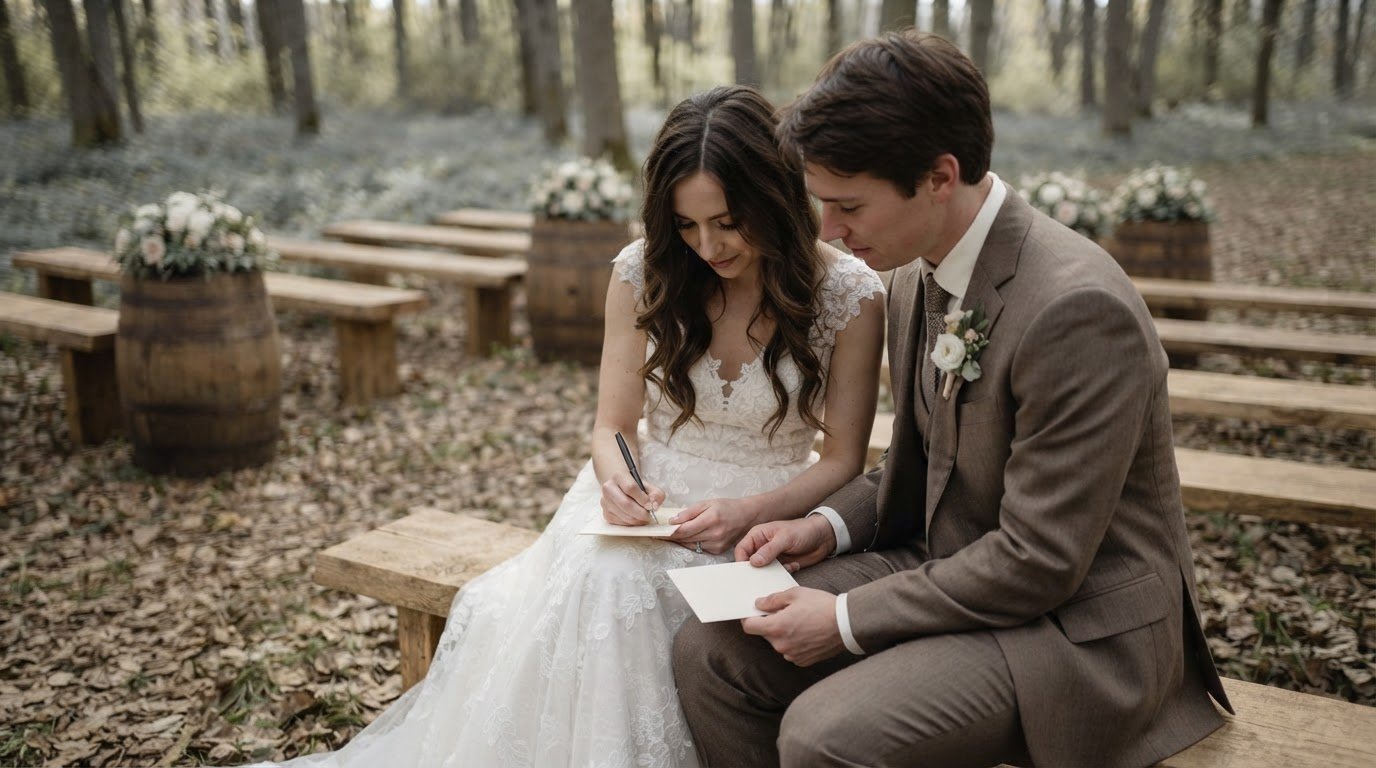
- Give intimate thoughts a private place. If a memory matters deeply but feels too personal for guests, write it in a letter instead. You can exchange letters and open them together later on the wedding day. This lets you share more freely while keeping your spoken vows focused on the commitment you’re making publicly.
Writing sincere vows from the heart
- Make the writing feel like time together. Set aside a relaxed evening as a date, rather than treating your vows as another planning task. Talk about the life you hope to build, then write freely without polishing every sentence. A rough first draft gives honest thoughts room to emerge before you decide what belongs in the ceremony.
- Begin with the truth, not a perfect line. If the page feels daunting, write one plain sentence: “I feel most myself when I’m with you.” Add what that feeling means in your relationship. Sincerity comes from a recognisable truth, not a grand declaration designed to impress the room.
- Make promises you can live by. Choose commitments that reflect how you want to show up after you’re married. For example, promise to listen with care, support your partner’s ambitions or keep making space for laughter. If you promise to love your husband, wife or partner, connect those words to everyday actions.
- Let the ending look forward. Finish by naming what you’re excited to discover together, such as a home filled with friends or quiet mornings over coffee. This turns your vows towards a shared future, rather than ending on a list of past events. Keep humour warm and understandable, so guests can share the moment without needing private context.
- Read, refine and seek a fresh ear. Speak the draft aloud at a measured pace, then change phrases that feel stiff. A trusted friend can offer an honest reaction; a celebrant can help assess flow and tone. Practise from a card, so your attention can return to your partner rather than getting lost in the wording. Cameras and wedding photography may capture the moment, but your focus can stay on the promise.
As you shape the setting for those promises, EXPLORE WEDDING VENUE HIRE for a considered place to celebrate your commitment.
Quob Park Estate, Hotel & Spa: Wedding Venue Hire
Quob Park Estate, Hotel & Spa offers Wedding Venue Hire for couples bringing their ceremony and celebration together in one setting. After shaping vows that feel personal, choosing a venue is a natural next step: the place becomes the setting for sharing those promises with loved ones. The estate spans 180 acres, offering a Hampshire countryside backdrop for the occasion.
Consider how the venue will support the atmosphere you want, from an intimate exchange of words to a gathering with family and friends. A WEDDING VENUE can help make the ceremony feel connected to the wider celebration. Quob Park’s Vineyard Tour & Tasting and English sparkling wines may also suit couples planning a vineyard-led experience.
For details about Wedding Venue Hire, contact Quob Park Estate, Hotel & Spa.
Let Your Promises Shape the Celebration
Once your words feel true, let them guide the atmosphere you want around the ceremony. Writing your own wedding vows is a personal choice, and the setting can give that promise a fitting frame: intimate, lively or quietly elegant. Think about how you want to feel as you speak and what you’d like to remember when the day has passed.
As you shape the celebration, Quob Park Estate, Hotel & Spa offers Quob Park Classic Cuvée, Quob Park Heritage Rosé Cuvée and Quob Park Blanc de Blancs. These English sparkling wines offer distinct choices to consider as part of your wedding plans.
If you’re considering Wedding Venue Hire or would like to discuss the estate’s offerings, CONTACT QUOB PARK ESTATE, HOTEL & SPA. Take the next step at your own pace, with your promises at the heart of the occasion.
Frequently Asked Questions
What should I do if I feel too nervous to speak my vows aloud?
Read from a prompt card; memorising your vows isn’t necessary. Practise aloud in a quiet room, then try reading them to one trusted person so the ceremony feels less unfamiliar. Mark a natural pause after each promise and keep the card easy to hold. If emotion catches your voice, stop, breathe and continue when you’re ready.
How do you WRITE YOUR OWN WEDDING VOWS step by step?
Begin by collecting notes about what you admire, what you’ve learnt together and what you hope for next. Choose a few promises, then arrange them into an opening, a middle and a closing. For example, address your partner, name a quality you cherish, make a commitment and finish with a hope for married life. Read the draft aloud and edit for clarity.
How long should wedding vows be?
A personal reading generally takes around one to two minutes, depending on your pace and pauses. Read your draft aloud with a timer rather than judging its length by the page. If it runs long, remove repeated thoughts or background details before cutting a promise that matters. Leave room for a breath, especially if you expect to feel emotional during the ceremony.
What should you include in personal wedding vows?
Include a direct address, a quality you value, promises you can act on and a hope for your shared future. A vow might say, “I promise to make time for the conversations that matter, even on busy days.” Choose details that respect your partner’s comfort. Avoid promises that sound impressive but don’t reflect how you genuinely intend to care for each other.
Examples of wedding vows for inspiration
Use examples as prompts, not scripts. For a simple tone, try: “I choose you as my companion and promise to meet each season with care.” For something lighter: “I promise to keep sharing the last slice, even when I want it.” Adapt the idea into words you’d naturally say. A borrowed phrase becomes more personal when reshaped around your own commitment.
How do you make wedding vows personal and meaningful?
Choose one detail that reveals something important about your relationship, then connect it to a promise. For instance, if your partner always makes space for friends, promise to help create a home where people feel welcome. Speak directly to them, not only to the guests. The strongest personal touch is a specific truth your partner recognises and you’re comfortable sharing.
What are the rules for wedding vows in a UK civil or religious ceremony?
Requirements differ between civil and religious ceremonies and across the UK. Personal vows can accompany, but not replace, the required legal words. Ask your registrar, celebrant or religious officiant whether they need to approve your wording.