
Wedding-day family tensions are rarely resolved by trying to mend old rifts in the moment. Getting family buy-in on wedding decisions works best when...
Wedding-day family tensions are rarely resolved by trying to mend old rifts in the moment. Getting family buy-in on wedding decisions works best when you and your partner agree on what matters, decide where parents can contribute, and set clear limits before plans gather momentum.
It’s natural to want parents to feel included, especially when they offer experience, practical help or financial support. But being heard doesn’t mean handing over the final decision, and a generous guest allowance doesn’t have to become an open-ended list.
This guide explains how to invite parental input while keeping major choices in your hands, discuss contributions clearly, and give each set of parents a fair guest allowance. You’ll also find ways to prevent disagreements from spilling into the ceremony or reception, focusing on resolving family tensions before the wedding day rather than hoping the occasion will repair them.
Key Takeaways
- Agree together which decisions are yours as a couple and where you genuinely welcome parental input.
- Discuss financial contributions before accepting them, including what contributors expect and what those gifts do not decide.
- Set a fair guest allowance for each set of parents, then share the limits clearly and kindly.
- Plan ahead for sensitive family dynamics and give a trusted person responsibility for handling last-minute tensions.
- Keep the wedding day focused on celebrating, rather than trying to resolve long-standing family disagreements.
1. Managing family influence over wedding decisions
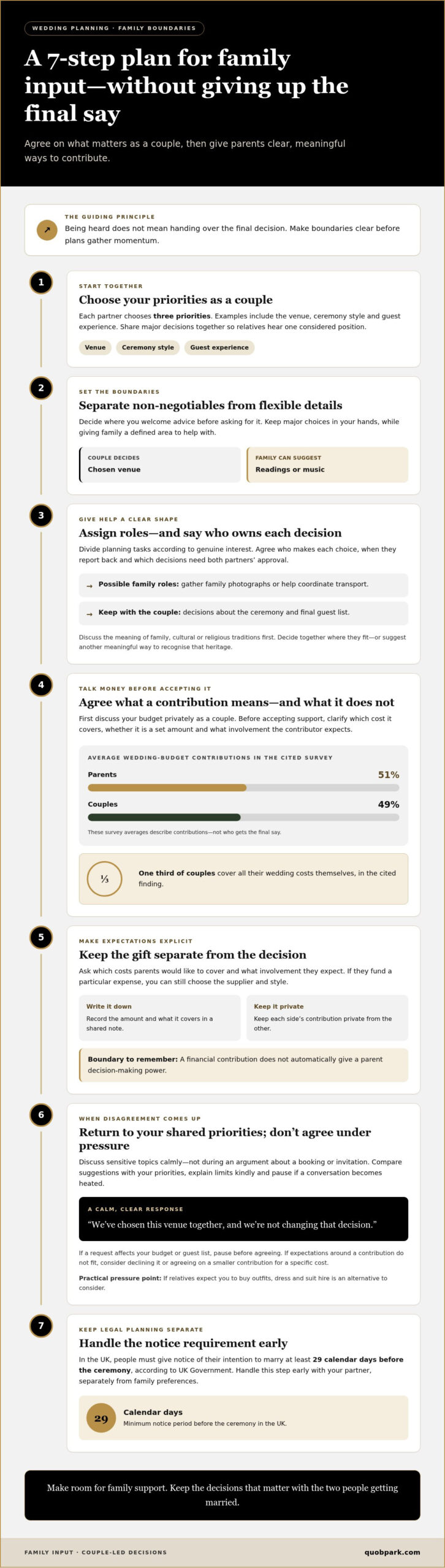
Getting family buy-in on wedding decisions is easier when you and your partner agree on boundaries before asking parents for input. Choose three priorities each, such as the venue, ceremony style and guest experience, then identify where advice is welcome. Share major decisions together so relatives hear one considered position, not competing answers.
Discuss priorities with parents in a calm conversation, not during a disagreement about a booking or invitation. Explain what matters and why, then distinguish non-negotiables from flexible details. For example, you might keep your chosen venue but invite a parent to suggest readings or help select music. This gives family members a meaningful role without handing over control.
When disagreements arise over the venue, guest list, budget or traditions, return to the reason behind your choice. If relatives prefer a different venue, compare it with your shared priorities, such as location or accessibility, before responding. If guest requests exceed your allowance, explain the limit and offer to review the list together. Avoid agreeing under pressure, especially when the decision affects your budget.
Divide planning responsibilities according to genuine interest, and set clear limits in advance. One parent could gather family photographs while another helps coordinate transport; you and your partner retain decisions about the ceremony and final guest list. Agree who makes each choice, when they should report back, and which decisions need both partners’ approval.
You can include different family, cultural or religious traditions by discussing their meaning before deciding where they fit. Each partner can identify a tradition they value, then you can decide together whether it belongs in the ceremony, reception or another part of the celebration. If a custom conflicts with your plans, explain your choice respectfully and suggest another meaningful way to recognise that family heritage.
If family members won’t accept a decision, repeat it calmly instead of reopening the discussion every time it’s challenged. You might say, “We’ve chosen this venue together, and we’re not changing that decision.” If a conversation becomes personal or heated, pause it and return to the subject later, with both partners present.
Clothing can also become a source of family pressure. If relatives expect the couple to buy outfits, consider dress and suit hire as an alternative, then choose styles that suit the formality and feel of the day. Agree who will make the final selection before involving parents, so practical suggestions don’t turn into demands.
Keep legal planning separate from family preferences. In the UK, people must give notice of their intention to marry at least 29 calendar days before the ceremony, according to UK Government. Handle this step early alongside your partner, while relatives contribute to the personal details that you have agreed to share.
2. Wedding Planning: Should Parents Have A Say?
Parents can offer valuable experience and financial support, but contributing money doesn’t automatically give them decision-making power. Decide together which choices remain yours, then explain those boundaries before accepting contributions. This distinction protects the planning process and helps relatives understand that their support is welcome without giving them control over every detail.
Start with a private budget conversation between partners. List the costs you’ll cover yourselves, the choices you consider essential, and any shortfall a family contribution could help address. Parents contribute an average of 51 per cent of the wedding budget in the cited survey, while couples cover an average of 49 per cent. Those figures describe contributions, not who gets the final say.
Before discussing money with parents, agree on your approach together. Decide whether you’ll ask for help with a particular expense or simply invite them to offer support. Make clear that you don’t expect a contribution. If a parent offers to cover the flowers, for example, confirm whether they’re offering a set amount or expect to choose the arrangements.
Ask practical questions before accepting: which costs would they like to cover, and what involvement do they expect in return? A contribution might come with a request to invite family friends or include a ceremony tradition. Discuss each request openly; don’t assume everyone sees financial help the same way. If expectations feel incompatible, politely decline the money or agree on a smaller contribution for a specific cost.
Keep the gift separate from the decision. You could agree that parents fund a particular expense while you and your partner choose the supplier and style. Record the arrangement in a shared note, including the amount and what it covers, so later conversations don’t rely on memory. Keep each side’s contribution private from the other, even if one set of parents gives twice as much.
Some parents may feel that a large contribution should earn them more of a say. Acknowledge their generosity, then state the boundary calmly: “We’re grateful for your help, and we’ll make the final decisions together.” If a request affects your budget or guest list, pause before agreeing. Consider whether you can accommodate it without taking money from another priority.
Parents no longer customarily pay for everything, and one third of couples cover all their wedding costs themselves in the cited finding. Choose an arrangement that suits your finances and comfort, not family tradition alone. If you’ll pay independently to retain control, plan a wedding you can afford. Once you’re married, a clear, respectful conversation can matter more than meeting anyone else’s expectations.
3. Agreeing on decision-making boundaries as a couple
Before involving parents in another wedding choice, make time for a private conversation. Each partner should name three priorities they care deeply about and three areas where they can be flexible. Compare your lists, then mark shared priorities, such as the ceremony, and differences that need discussion. This gives you a clear basis for decisions before family opinions enter the conversation.
Agree which choices belong to you both. The couple should make major decisions, including the venue and photographer, even when relatives offer advice or support. You can invite parents to comment on options without giving them the final say. For example, ask for their views on two shortlisted photographers after agreeing together on the style and atmosphere you want.
Decide how you’ll communicate choices before your next family conversations. Share important decisions together, using language such as, “We’ve decided to hold the ceremony here.” A united message helps prevent a relative from treating one partner’s answer as negotiable or privately asking the other partner for a different outcome. If you need more time, say you’ll discuss it together before replying.
Set boundaries around family involvement by naming specific ways relatives can contribute. A parent might help research readings or gather addresses, while you retain authority over the ceremony format and guest list. Define the task, its limits and when you’ll review suggestions. This makes involvement practical instead of leaving an open invitation for relatives to direct every detail.
Paying for the wedding yourselves can help if you expect financial support to bring pressure over your choices. One third of couples cover all their wedding costs themselves in the cited finding, and couples increasingly fund their own celebrations. Review your budget together and decide what you can afford before booking. If independence means changing the scale or style, agree on which priorities stay and where you’ll compromise.
When family members challenge a boundary, respond with appreciation and a consistent answer. For instance, “We value your advice, but we’ll choose the photographer together.” Avoid making separate promises to keep the peace, as they can create confusion between partners. If one partner feels uncomfortable with a decision, pause the conversation and resolve it privately before giving relatives a final response.
Revisit your agreement when a new request changes the plan, rather than treating every decision as permanently settled. You might reconsider the music after hearing a parent’s suggestion while keeping your venue choice unchanged. A brief check-in between partners before each significant commitment keeps the process balanced: both people stay involved, and neither becomes the sole negotiator with family.
4. Giving each set of parents an equal guest allowance
Start the guest list together, before inviting parents to suggest names. This gives you and your partner a shared picture of the celebration and its practical limits. Decide how many places are for your own friends, close family and other guests, then reserve an equal allowance for each set of parents. This allowance is for additional invitations, not a substitute for people already on your list.
Set the limit before family discussions begin, and explain it as a fairness principle rather than a judgement about relatives. Giving each side the same number of additional invitations helps ensure neither family feels its connections matter less. Make the allowance clear in writing, and ask each set of parents to rank their suggestions if their preferred list exceeds it.
Some requests reflect relationships the couple barely knows. A parent may feel close to 15 cousins, while their child has met those relatives only once at a family Christmas. Ask parents to identify which names are especially meaningful and why, then weigh those requests against your own priorities. For an intimate wedding, an evening invitation can be a thoughtful compromise for people who can’t attend the ceremony and meal.
For example, you might not feel comfortable inviting family friends who haven’t seen you since you were three. Rather than dismissing the request, explain how the guest limit shapes the day. You could offer an evening invitation, or keep the list unchanged if that better suits your plans. Apply the same approach to requests from both families.
Discuss accommodation separately from invitations. Decide together whether you’ll pay for all guest accommodation, cover close family only, or ask guests to meet some or all of the cost. Tell family members what you’ve chosen before they make promises to relatives. If parents offer to fund accommodation, clarify which guests their contribution covers and whether it changes your agreed allowance.
A likely attendance estimate also helps keep the discussion grounded. In one example, a couple estimated around 175 guests would attend; use your own working list to judge whether additional names fit the day. Review the count after each round of invitations, and distinguish invited guests from confirmed attendees. This prevents a parent’s suggested list from quietly becoming an assumed final number.
Keep your tone warm but decisive when sharing the limit. Say, “We’ve agreed each side can add the same number of guests, and we’ll review the names together.” If either family challenges the arrangement, return to the shared rule instead of negotiating separate exceptions. Consistency helps relatives feel heard while keeping the guest list, budget and atmosphere aligned with the celebration you want.
5. Avoiding attempts to repair family tensions on the wedding day
A wedding invitation won’t resolve an old family dispute, and the ceremony is a poor setting for reconciliation. Queensmith cautions that trying to repair longstanding rifts on the day rarely works and usually adds stress. Instead, decide with your partner which tensions need practical arrangements and which conversations belong at another time.
Address a disagreement when it arises, rather than letting it surface among guests. A calm conversation three to six months before the ceremony gives relatives more room to talk without the time pressure of the day. If direct discussion keeps becoming heated, a few sessions with a couples therapist or family mediator can help, especially in the two to three months before the wedding.
Make a plan for the people and moments most likely to create friction. If two relatives are feuding, seat them apart and avoid placing them together in photographs. For a blended family, agree in advance who walks down the aisle, who appears in formal portraits and how family members are introduced. These decisions prevent confusion when attention is already on the ceremony.
Speeches can also bring unresolved feelings into the room. Agree on speakers in advance, and set a time limit with each person before the reception. Explain that the aim is to keep the speeches warm and suitable for all guests. If a relative wants to raise a painful subject, tell them privately that the wedding isn’t the time for that conversation.
During the final weeks, nominate one point of contact for each family unit where possible. A trusted friend, sibling or wedding planner can handle small dramas and last-minute requests, leaving you free to be present. Give that person a concise list of useful contacts and agreed boundaries, such as who can approve a seating change or flower adjustment.
The six to eight weeks before the wedding are often the most pressured. Protect one evening each week from wedding planning and use it to reconnect as a couple, rather than revisit family disputes. If a parent asks you to invite someone at the last minute, refer them to the agreed point of contact instead of negotiating during dinner or preparations.
Most importantly, don’t use the wedding as a test of whether relatives can finally get along. You can invite both sides, set respectful expectations and arrange the day to reduce unnecessary contact, without demanding a reconciliation. If you’re still choosing a setting, review the practical details of WEDDING VENUE HIRE as part of planning a calm, well-organised celebration.
Quob Park Estate, Hotel & Spa: Quob Park Classic Cuvée
Quob Park Estate, Hotel & Spa offers a thoughtful next step for couples planning a celebration around shared experiences. Quob Park Classic Cuvée, Quob Park Heritage Rosé Cuvée and Quob Park Blanc de Blancs bring English sparkling wine to the occasion, while a Vineyard Tour & Tasting gives you a chance to spend time together before the wedding.
If family discussions have left little room to enjoy planning, choose an experience you and your partner can look forward to together. The Gourmet Tasting Menu can make time around the wedding feel like a celebration in its own right, without turning the day itself into a chance to settle family tensions.
For details, contact Quob Park Estate, Hotel & Spa or visit QUOB PARK ESTATE WINES.
Carry Your Shared Decisions Into the Celebration
Getting family buy-in on wedding decisions isn’t about securing agreement on every detail. It’s about creating a celebration that reflects you both while giving the people you love a clear, considerate place in the process.
As plans take shape, keep returning to the choices you made together. A thoughtful boundary can protect your priorities, while a sincere invitation to contribute can help relatives feel included. If a disagreement remains unresolved, you don’t have to make your wedding day responsible for fixing it. Give the occasion room to be what it is: a meaningful beginning, shared in a way that feels right to you.
When you’re ready to explore a setting or add a special detail to your celebration, CONTACT QUOB PARK ESTATE, HOTEL & SPA. Take the next step at a pace that feels comfortable, and make space for a wedding day shaped by your shared vision.
Frequently Asked Questions
Wedding Planning: Should Parents Have A Say?
Yes. Parents can share opinions and offer practical support, but the couple should decide which choices are theirs. Invite feedback on a specific question, such as whether a ceremony reading feels meaningful, rather than asking relatives to approve the entire plan. If advice conflicts, consider the reason behind it. A parent’s concern about travel, for example, may point to a practical issue you can address without changing your chosen celebration.
Is it okay to ask a family member not to attend if they’re causing serious problems?
Yes. You can decide not to invite someone if their behaviour is seriously harming your wellbeing or making the event feel unsafe. First, identify the specific behaviour and whether a clear condition could address it, such as no unwanted contact with another guest. If the problem continues, communicate your decision privately and plainly. Don’t use the invitation as leverage in a wider family argument, and arrange support from someone you trust.
What if a family member threatens not to come because of a disagreement?
Take the threat seriously, but don’t decide immediately under pressure. Respond calmly that you’d be sorry to miss them, while confirming that the disputed choice remains yours. Give them space to reconsider without repeated calls or messages. For example, if a relative objects to your ceremony format, explain what their attendance would mean to you, but don’t promise to change the ceremony just to secure it.
What wedding decisions should couples make before asking family for input?
Before seeking opinions, agree on the overall shape of the wedding: the kind of ceremony you want, your broad guest-list limit, your budget ceiling and any details you consider private. This gives family feedback useful context. For instance, relatives can suggest readings once they know whether the ceremony will be religious or secular. Also decide which topics you’re not ready to discuss, so early conversations stay focused.
How should couples respond when parents contribute money and expect decision-making influence?
A contribution doesn’t automatically give parents control, so clarify its terms before accepting it. Ask whether the money is an unconditional gift or intended for a particular expense, such as flowers or catering. If a condition doesn’t work for you, explain that respectfully and decline the contribution rather than accepting it with unspoken resentment. Keep your response consistent as a couple, especially if parents raise the issue separately.
What are typical UK wedding costs and how can couples explain their budget to family?
These are general examples, not a budget every couple must follow. Explain your own spending plan by showing how guest numbers, venue, food and priorities shape it. If family members want to add guests, discuss the overall impact together instead of treating each invitation as an isolated request.