
A difficult guest needn’t take centre stage. Knowing how to handle difficult wedding guests starts with staying calm, setting a clear boundary and...
A difficult guest needn’t take centre stage. Knowing how to handle difficult wedding guests starts with staying calm, setting a clear boundary and asking a trusted friend, usher or planner to step in, so you can stay focused on the celebration. If someone is drinking too much, a quiet word from someone they trust is usually more discreet than a public confrontation.
It’s natural to want the day to feel gracious for everyone, but you don’t have to accept behaviour that unsettles you or your guests. A steady plan helps you respond kindly while keeping your decisions clear.
Here, you’ll find practical ways to manage excessive drinking, requests to bring children to an adults-only wedding and a toast that becomes rambling or inappropriate. You’ll also learn what to say in the moment, when to brief a friend or planner in advance, and how to protect the atmosphere without letting one awkward exchange define the day.
Key Takeaways
- Respond to excessive drinking discreetly by involving someone the guest trusts and briefing the relevant event staff.
- Agree on clear boundaries with friends or a planner in advance, so they can step in while you stay present for the celebration.
- Use a consistent, courteous response to requests about children, and decide ahead of time whether any exceptions fit your plans.
- Keep toasts on course by agreeing the speaking order and giving your host or DJ a tactful way to move the evening along.
1. How do you handle a drunk wedding guest?
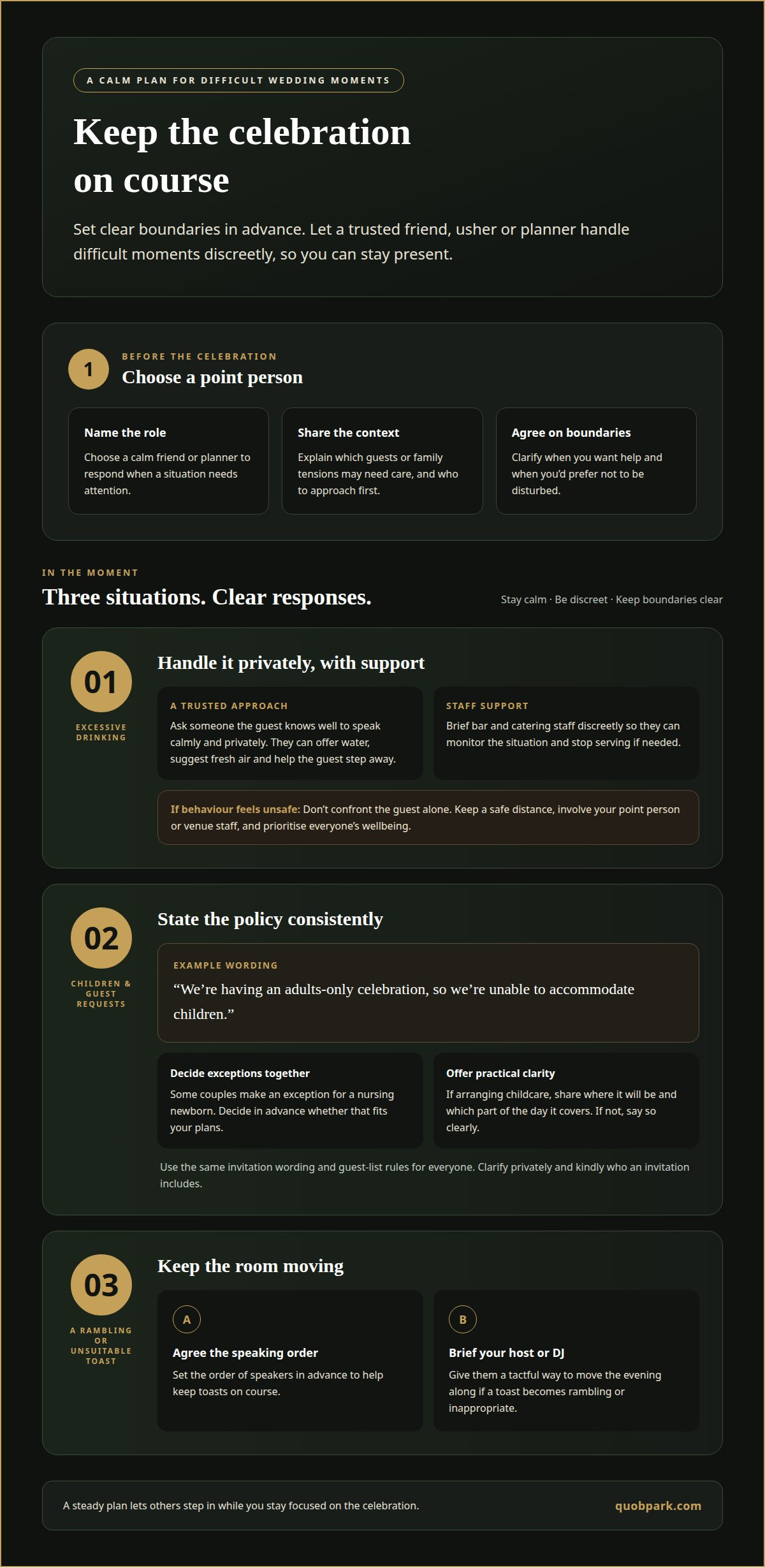
Choose a trusted point person before the wedding, then tell them which guests may need attention. Ask them to watch for changes in behaviour and speak privately with anyone drinking too much. This lets you stay with your partner and guests instead of handling every difficult moment yourself.
If a guest becomes intoxicated, ask someone they know well to approach calmly. They can offer water, suggest some fresh air and help the guest step away from the celebration. Brief the bar staff and catering team discreetly so they can monitor the situation and stop serving the guest if needed.
Don’t confront an aggressive guest alone or turn the exchange into a public argument. Ask your point person or venue staff for help, keep a safe distance and prioritise everyone’s wellbeing. If the behaviour is disruptive or feels unsafe, have the designated person speak to the guest and arrange for them to leave.
Venue procedures differ, so agree in advance who can address disruptive behaviour and how staff should respond. Ushers can alert the designated person, guide the guest away from the crowd and avoid escalating the situation. Venue staff should follow their procedures and coordinate with you.
You can withdraw an invitation after sending it. Call the guest privately as early as possible, give a brief, kind reason and avoid debating the decision. If someone assumed they were invited, explain that the guest list is limited and suggest catching up after the wedding.
If your parents don’t get along, seat them apart and ask someone you trust to keep an eye on the situation. Don’t try to make them reconcile; ask each to take part courteously. If family members pressure you to add guests, agree on guest-list rules with your partner and parents, then give one consistent response.
2. Enlisting friends and a wedding planner to intervene
Choose a calm friend or planner to act as your point person on the day. Before the celebration, explain which situations may need attention, who should be approached first and when you want to be left undisturbed. For example, a friend might speak privately with a relative who keeps criticising the schedule, while the planner handles timing and venue coordination. A clear plan for handling difficult wedding guests gives everyone a defined role.
Give your planner useful context well before the reception. Explain family tensions, recurring disagreements and any guest who has upset you before. Agree on practical responses, such as keeping relatives apart, asking a friend to join a guest who feels isolated, or letting the planner answer questions about the running order. Knowing how to handle difficult wedding guests also means briefing the people who can step in before you need their help.
Clear invitations prevent avoidable disputes. State whether children or additional guests are included, and use the same wording for everyone. Prepare a courteous reply for requests outside your policy. For example, explain that the invitation is for one named guest. Consistent communication leaves less room for friends and family to interpret the rules differently.
Keep planning enjoyable by sharing tasks according to each person’s strengths. Ask a practical friend to track replies, while you and your partner make decisions about the guest list and ceremony. Set aside time to discuss sensitive issues, then return to choices you’re excited about, such as music or the menu. This stops difficult guest discussions from taking over every planning session.
As you consider the setting for your celebration, review the WEDDING VENUE DETAILS alongside your plans for guest communication. A clear event plan helps your chosen friend or planner respond with confidence, while you remain present for the moments that matter.
3. Handling requests for kids at child-free weddings
Agree on a clear children policy with your partner before invitations go out. If the wedding is adults-only, say so plainly on the invitation and apply the rule consistently across both families. For example: “We’re having an adults-only celebration, so we’re unable to accommodate children.” A prepared sentence helps you answer requests without making each conversation feel like a new negotiation.
If a guest asks to bring their children, reply warmly and stay firm. You might explain that the venue has limited capacity, or simply say you’ve chosen an adults-only day. Avoid making exceptions for one family unless you’re prepared to explain a different policy to others. Some couples make an exception for a nursing newborn; decide together whether that suits your plans before replying.
Be consistent with plus-ones, too. You could invite partners who live with the guest, then apply that rule across the guest list. Address invitations to the people invited, rather than leaving room for assumptions. If someone thought their child or partner was included, clarify privately and kindly who the invitation covers. A short, direct response can stop an awkward exchange from growing into a family dispute.
A child-free wedding doesn’t have to leave parents without options. You could arrange childcare during the reception, and sometimes during the ceremony, so parents can attend while children have a separate activity. Share practical details directly with parents, including where the care will take place and which part of the day it covers. If you aren’t arranging childcare, say so clearly, giving parents time to arrange care or decide whether attending works for them.
Keep your replies calm and consistent, even if a relative presses for a different answer. Your decision should reflect the celebration you and your partner want, not who makes the most persuasive request. A gracious explanation, delivered once and repeated when needed, lets you welcome invited guests without weakening your policy.
4. Handling a rambling or inappropriate wedding toast
A toast can quickly shift the room’s mood, especially when a speaker strays into private stories or unkind jokes. Agree on the speech order with your master of ceremonies (MC) before the reception, and ask them to manage the microphone. Tell speakers in advance which subjects are off-limits, such as former partners, family disputes or embarrassing anecdotes.
If a speech runs on, give the MC a discreet cue rather than interrupting from your seat. They can approach the speaker, thank them and introduce the next person. If the toast becomes inappropriate, the MC can step in sooner: take the microphone calmly, thank the speaker, then move directly to the next planned moment.
Prepare a short, polite line so nobody has to improvise under pressure. For example, the MC might say, “Thank you, Alex. We’re going to raise a glass to the couple now.” A clear transition works better than arguing about a joke or explaining in front of everyone why it upset you.
Give your DJ the same briefing. If a toast continues despite the MC’s intervention, the DJ can start the next musical cue, helping guests understand that the programme has moved on. Agree on this signal beforehand so the music doesn’t accidentally interrupt a thoughtful speech. Keep the DJ informed about the speech order and who is authorised to use the microphone.
For an especially uncomfortable situation, ask a trusted friend to check in with the speaker privately after the reception. They can explain that the remarks crossed a boundary without creating a public confrontation. Meanwhile, the MC can return attention to the couple with a toast or announcement. A thoughtful PLAN FOR YOUR WEDDING CELEBRATION can include these quiet cues alongside the formal speeches, keeping the evening composed and welcoming.
Quob Park Estate, Hotel & Spa: Wedding Venue Hire
Quob Park Estate, Hotel & Spa offers Wedding Venue Hire for couples planning a celebration where thoughtful hosting and a composed atmosphere matter. The guidance above can help you prepare for sensitive guest situations; choosing a setting is another part of shaping the day. Consider how your guest arrangements, speeches and support plan will fit the wedding you envision.
Quob Park Classic Cuvée, Quob Park Heritage Rosé Cuvée and Quob Park Blanc de Blancs can also feature in your celebration’s English sparkling wine selection. Contact Quob Park Estate, Hotel & Spa to discuss Wedding Venue Hire for your wedding.
Shape a celebration that feels like yours
Your wedding should feel like a celebration you can enjoy, not a day spent anticipating the next difficult moment. As plans take shape, decide what you want guests to remember about the occasion, then let that intention guide your choices about the setting, schedule and support around you.
Knowing how to handle difficult wedding guests isn’t about controlling every conversation. It’s about preparing thoughtfully, delegating moments that don’t need your attention and giving yourself permission to return to the people and promises that brought everyone together. Clear boundaries and genuine warmth can sit comfortably side by side.
If you’re considering a celebration, start a conversation about the atmosphere you hope to create and the experience you want to share with your guests. BEGIN PLANNING YOUR CELEBRATION.
Trust the care you’ve put into the day, savour it as it unfolds and let the celebration belong to you.
Frequently Asked Questions
How do you handle a drunk wedding guest?
Ask someone you trust to speak with the guest discreetly and help them step away from the main gathering. Avoid trying to reason with someone who is too intoxicated to engage calmly. Tell the person coordinating the event what’s happening so they can support the guest and keep the celebration moving. If anyone appears to be in immediate danger, prioritise safety and seek appropriate urgent help.
How do you say no to plus-ones politely?
Be warm, brief and clear: “We’d love to celebrate with you, but we’re unable to extend the invitation to another guest.” Address the invitation to the named person and avoid wording that suggests an additional place might become available. If the guest asks again, repeat your decision without offering a new justification that could invite negotiation.
What is a good example of how to deal with difficult wedding guests without causing a scene?
If a guest criticises the reception in front of others, answer calmly: “I understand it isn’t what you expected. We’ve made our choice, and I hope you’ll enjoy the evening with us.” Then turn your attention elsewhere instead of defending every detail. If they continue, ask someone you trust to speak with them privately, away from other guests.
How do you set boundaries with difficult wedding guests before the wedding?
Speak privately with the person before the event and explain the behaviour you want to avoid. For example, tell a relative, “We want the day to feel comfortable for everyone, so please don’t raise the family disagreement at the reception.” Say what you’ll do if it happens, such as asking your chosen friend to redirect the conversation.
How do you handle a disruptive guest during a wedding ceremony or reception?
Agree on a discreet signal with your master of ceremonies or usher before guests arrive. If someone interrupts, the designated person can approach them quietly while the celebrant or speaker pauses. At the reception, the MC can redirect attention with a prepared announcement. Keep one calm person in charge of communication, rather than having several guests challenge the disruption at once.
How do you handle family conflict and awkward seating arrangements at a wedding?
Seat relatives who are in conflict at separate tables, and avoid placing them beside people who may revive old disagreements. Give each table a welcoming guest who can draw quieter relatives into conversation. For example, ask a sociable cousin to sit near a guest who knows few people. Share the seating plan discreetly, without presenting it as a judgement on either side.