Wine tasting is more than deciding whether you like a wine. It helps you notice how it looks, smells and tastes. These wine tasting terms for...
Wine tasting is more than deciding whether you like a wine. It helps you notice how it looks, smells and tastes. These wine tasting terms for beginners will help you put those impressions into words, from bright acidity to the gentle grip of tannin.
It’s natural to wonder whether there’s a right answer when describing a glass. There isn’t a vocabulary test to pass: simple, clear observations are a useful place to start. Swirl gently to release the aromas, take a sniff, then taste and notice how the wine feels across your palate.
This guide explains sweetness, acidity, tannin and body, and how to recognise balance, finish and other familiar tasting terms. It also covers a few thoughtful etiquette tips, so you can approach a tasting with confidence and enjoy each wine at your own pace.
Key Takeaways
- Follow a simple sight, smell and taste sequence to notice more in each glass.
- Learn how sweetness, acidity, tannin and body shape a wine’s feel on the palate.
- Use a few precise tasting words to describe aromas, finish and balance with confidence.
- Adopt considerate tasting etiquette that lets each wine’s character come through.
What is Wine Tasting?
Wine tasting involves assessing a wine by sight, smell and taste, not appearance alone. Notice its colour, aromas and sensations on the palate, then describe what stands out.
Wine Aroma Descriptors
Aroma descriptors compare a wine’s smells with familiar fruits, flowers, earth or other scents. Fruit notes might suggest lemon, apple, cherry or blackcurrant; floral notes can evoke rose or blossom. Earthy descriptions include damp soil or mushroom, while spice, herbs and toast offer other useful comparisons. These words describe impressions, not ingredients added to the wine.
Aroma Categories and Intensity
Aroma categories group smells by their apparent character, while intensity describes how strongly they register. Primary aromas generally come from the grape variety or fermentation; developed scents can suggest ageing. First place an impression in a category, such as fruit or floral, then describe its intensity as delicate, moderate or pronounced. A sparkling wine, for example, may suggest fresh citrus with lighter or more expressive intensity.
Aroma, Bouquet, and the Wine’s Nose
Aroma refers to smells associated with grapes or fermentation, bouquet to complex smells that develop as wine ages, and nose to the wine’s overall smell. Aroma and flavour differ: aroma is perceived through smelling, while flavour combines taste with smells perceived as you sip. Red wines may suggest cherry or spice, whites citrus or apple, rosé red fruit, and sparkling wines citrus or orchard fruit.
Smelling and Identifying Aromas
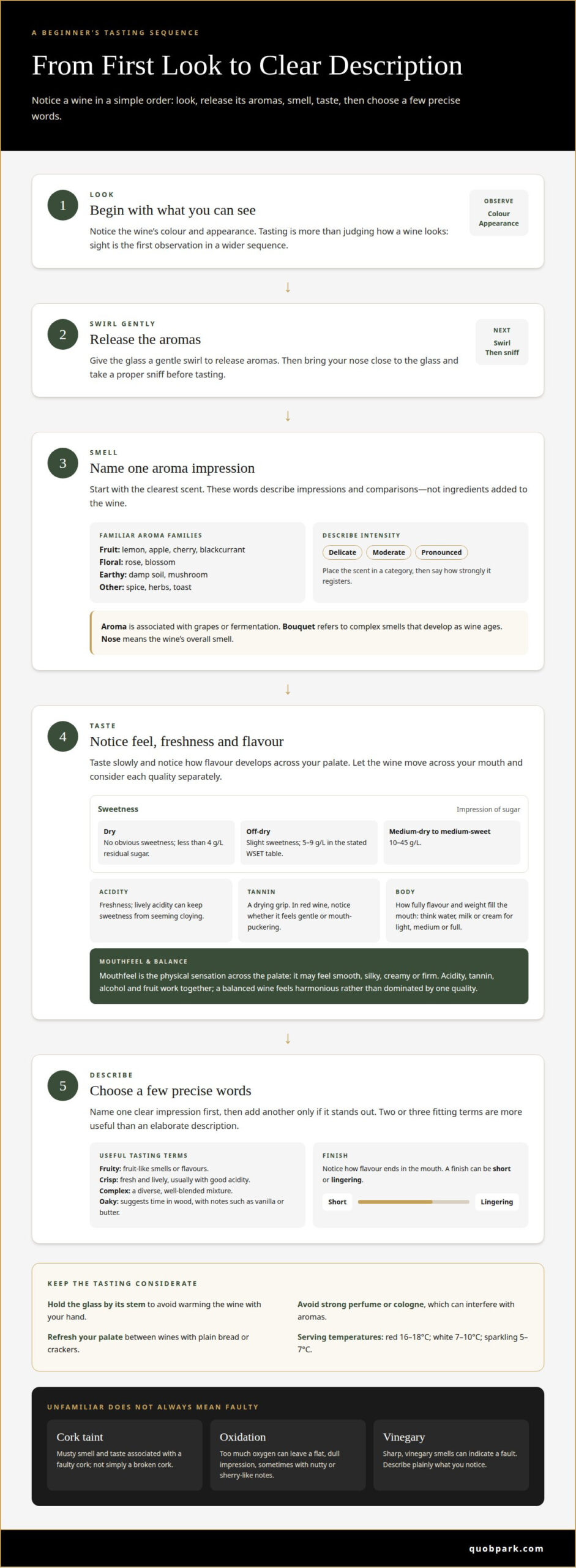
Smell the wine before tasting to notice its scents. Start by looking at the wine, then swirl gently to release the aromas. Bring your nose close to the glass and take a proper sniff. Finally, taste and notice how the flavour develops across your palate. Name one clear impression first, such as lemon, rose or earth, then add another only if it stands out. This sequence makes your observations easier to describe without searching for elaborate terms.
Evaluating sweetness, acidity, tannin and body
These qualities describe a wine’s structure and the sensations it leaves on your palate. Taste slowly, noticing sweetness first, then freshness, grip and weight.
Evaluating Sweetness, Acidity, and Tannin
Sweetness is the impression of sugar in a wine; acidity brings freshness, while tannin creates a drying grip. A dry wine has no obvious sweetness, and dry wine contains less than 4 g/L residual sugar. Off-dry wines have slight sweetness, with 5-9 g/L in the stated WSET table. Medium-dry to medium-sweet spans 10-45 g/L. Compare these impressions with acidity: lively freshness can keep sweetness from seeming cloying. In red wine, notice whether tannin feels gentle or mouth-puckering.
Body and Structure
Body describes how fully a wine’s flavour and weight fill the mouth; structure is the combined framework of qualities such as acidity, tannin and alcohol. Think of water for light-bodied, milk for medium-bodied and cream for full-bodied. These comparisons describe sensations, not ingredients. A light-bodied white wine may feel delicate, while a full-bodied example can seem richer and more substantial. Notice how these qualities continue after each sip, rather than judging body from one flavour alone.
Texture and Mouthfeel
Mouthfeel is the physical sensation of wine across the palate, including its texture and weight. Take a small sip and let it move across your mouth; note whether it feels smooth, silky, creamy or firm. Tannin can add a drying, grippy texture, while acidity gives a sharper, mouth-watering impression. Body describes overall fullness, so don’t confuse a rich flavour with a heavy feel. Consider each element separately, then decide how sweetness, acidity, tannin and body work together. A balanced wine feels harmonious rather than dominated by one quality.
Wine tasting vocabulary and etiquette
A useful UK beginner guide is a glossary that groups familiar tasting terms by meaning. Notice cork taint’s musty smell and oxidation’s flat, dull character, sometimes with nutty notes.
Beginner-Friendly Tasting Vocabulary
Wine tasting vocabulary gives concise names to recognisable qualities. “Fruity” suggests fruit-like smells or flavours, while “complex” describes a diverse, well-blended mixture. “Crisp” means fresh and lively, usually with good acidity; “oaky” suggests time in wood, with notes such as vanilla or butter. A “finish” is how flavour ends in the mouth, and can be short or lingering. Choose two or three fitting terms rather than reaching for an elaborate description.
Wine Tasting Etiquette
Wine tasting etiquette means behaving considerately so each glass can be appreciated. Hold the glass by its stem to avoid warming the wine with your hand, and avoid strong perfume or cologne, which can interfere with aromas. Between wines, plain bread or crackers can refresh the palate. Serving temperature also shapes what you notice: the guide recommends red wines at 16-18°C, white wines at 7-10°C, and sparkling wines at 5-7°C.
Common Wine Faults
A wine fault is an undesirable smell or flavour that can signal a problem with the wine. Corked wine has a musty smell and taste associated with a faulty cork; it doesn’t simply mean the cork broke during opening. Oxidation from too much oxygen can strip away fresh fruit character, leaving a flat, dull impression and sometimes nutty or sherry-like notes. Sharp, vinegary smells can also indicate a fault. Describe what you notice plainly rather than treating every unfamiliar aroma as a flaw.
Wine Tasting Glossaries and Guides
A tasting glossary is a reference that explains wine terms in clear, short definitions. For a UK beginner, use one organised by concepts such as aroma, texture, faults and finish, then look up unfamiliar words as they arise. An alphabetical A-to-Z arrangement helps locate terms quickly; a themed arrangement makes related characteristics easier to compare. Keep a tasting note with the wine’s aromas, flavours and distinctive qualities, using a few precise words rather than a long list.
Balance of fruit, acidity, alcohol and tannin
Balance describes how fruit, acidity, alcohol and, in red wines, tannin work together. Look for harmony rather than expecting one quality to dominate.
Sweetness, Acidity, and Tannin
Sweetness is the impression of sugar; acidity adds freshness, and tannin brings a drying grip. Consider how these sensations interact rather than judging each in isolation. A wine can taste sweet yet lively when acidity offsets its fruit, while sweetness without enough acidity may seem cloying. In red wines, firm tannin can frame ripe fruit, but excessive grip or sharp acidity may make the wine feel aggressive.
Acidity and Freshness
Acidity gives wine brightness and a mouth-watering sensation. A crisp Sauvignon Blanc, for example, may taste lively because its acidity lifts the fruit flavours. Acidity can also make a wine feel refreshing alongside rich food, as its brightness cuts through weightier flavours. Notice whether the freshness supports the fruit or overwhelms it; that relationship shapes the wine’s overall character.
Alcohol contributes warmth and body, while fruit gives the wine its flavour core. A balanced wine brings fruit, acidity and alcohol into harmony, with tannin also contributing in red wines. Taste a sip slowly: does the fruit remain clear, does acidity keep the flavours fresh, and does alcohol feel integrated rather than hot? Wines above 14% abv are classified as high alcohol in the tasting guide; an alcoholic wine can taste hot and burn the palate when alcohol dominates. To explore these qualities in practice, EXPLORE ENGLISH ESTATE WINES and notice how their flavours meet acidity and structure.
Quob Park Estate, Hotel & Spa
Quob Park Estate, Hotel & Spa brings tasting vocabulary into focus through English sparkling wines and the Vineyard Tour & Tasting, set within its 180-acre estate. For a practical way to explore how aroma, acidity, texture and finish shape a glass, the tour and tasting offer a natural next step after learning the terms.
Quob Park Classic Cuvée, Quob Park Heritage Rosé Cuvée and Quob Park Blanc de Blancs each offer a different wine to observe and describe. Take your new vocabulary with you and notice the qualities that distinguish each tasting experience.
Contact Quob Park Estate, Hotel & Spa to enquire about the Vineyard Tour & Tasting.
Let Your Next Tasting Begin
The pleasure of tasting grows when you make space for curiosity. Rather than searching for a perfect description, follow the impressions that stay with you and put them into clear, personal words. With practice, wine tasting terms for beginners become a natural way to share what you notice, whether you’re exploring a new style or enjoying a favourite glass.
Quob Park Classic Cuvée, Quob Park Heritage Rosé Cuvée and Quob Park Blanc de Blancs offer distinct English sparkling wines to enjoy at your own pace. Let each glass prompt a fresh observation, and allow your vocabulary to develop alongside your palate. For a warm introduction to the estate’s wines and hospitality, CONNECT WITH QUOB PARK ESTATE, HOTEL & SPA. Your next tasting can begin with a single thoughtful sip.
Frequently Asked Questions
What are the basic Wine Tasting Terms for Beginners?
Start with a small set of terms: fruity, floral, dry, crisp, light-bodied and long finish. These words help organise an impression without specialist knowledge. For example, a note might read, “crisp, citrus-led, with a lingering finish.” Add only descriptors you genuinely notice, and use the same vocabulary across different glasses to make comparisons clearer.
What do aroma, bouquet and palate mean in wine tasting?
Aroma describes smells linked to grapes or fermentation, while bouquet refers to more developed scents associated with ageing; palate means the sensations and flavours experienced when tasting. Try writing “apple on the nose” before sipping, then note how the wine feels and tastes. This separates what you smell from what unfolds in your mouth.
What do dry, sweet, acidity, tannin and body mean in wine?
Dry and sweet describe perceived sweetness; acidity gives brightness, tannin can create grip, and body describes weight on the palate. Consider how each quality changes your impression of the same sip. For instance, a wine might feel generous in fruit yet still lively if freshness keeps the fruit from seeming heavy.
How do you describe wine flavours and aromas accurately?
Use familiar comparisons rather than searching for exact matches. After smelling and tasting, choose a broad family such as fruit, herbs or spice, then name a specific impression only if it feels clear. “Red fruit” is a useful note; “cherry” adds detail. Record the words promptly, before another wine or food changes your perception.
What are common terms for describing a wine’s finish?
Finish describes the impression left after tasting, while length refers to how long that impression remains. A short finish fades quickly; a persistent finish leaves a distinct flavour or sensation after the sip. You can also note whether the ending feels fresh, savoury, spicy or drying. Pair one finish word with its quality, such as “lingering citrus” or “drying grip”.
What UK wine tasting glossary or beginner guide is recommended?
Use a UK beginner glossary organised by concepts such as aroma, texture, faults and finish. An alphabetical arrangement helps locate terms quickly, while a themed guide makes related characteristics easier to compare.