
A UK wedding commonly takes around 12 to 18 months to plan, though the overall planning window can range from 12 to 24 months. These Peace of Mind...
A UK wedding commonly takes around 12 to 18 months to plan, though the overall planning window can range from 12 to 24 months. These Peace of Mind Wedding Planning Tips help you use that time well: set priorities early, divide decisions into manageable tasks and leave room in your budget for unexpected expenses. A clear plan can make the months ahead feel more considered and less consuming.
It’s natural to want your wedding day to feel special without letting every detail become a source of pressure. These peace of mind wedding planning tips will help you organise the work, choose suppliers with confidence, keep spending on track and decide whether a wedding coordinator could ease the practical demands of the day. They also show how to build in breathing space, so planning stays part of your story rather than taking it over.
Key Takeaways
- Turn the wedding plan into smaller tasks, assign clear responsibilities and give each decision a place on your timeline.
- Choose suppliers whose work and approach suit your priorities, then make space to understand their plans and expertise.
- Review your budget as bookings and decisions take shape, keeping your essential priorities and a contingency in view.
- If your venue doesn’t provide a coordinator, weigh the practical tasks you’ll need managed on the day against the support you’d value most.
1. Breaking wedding planning into manageable tasks
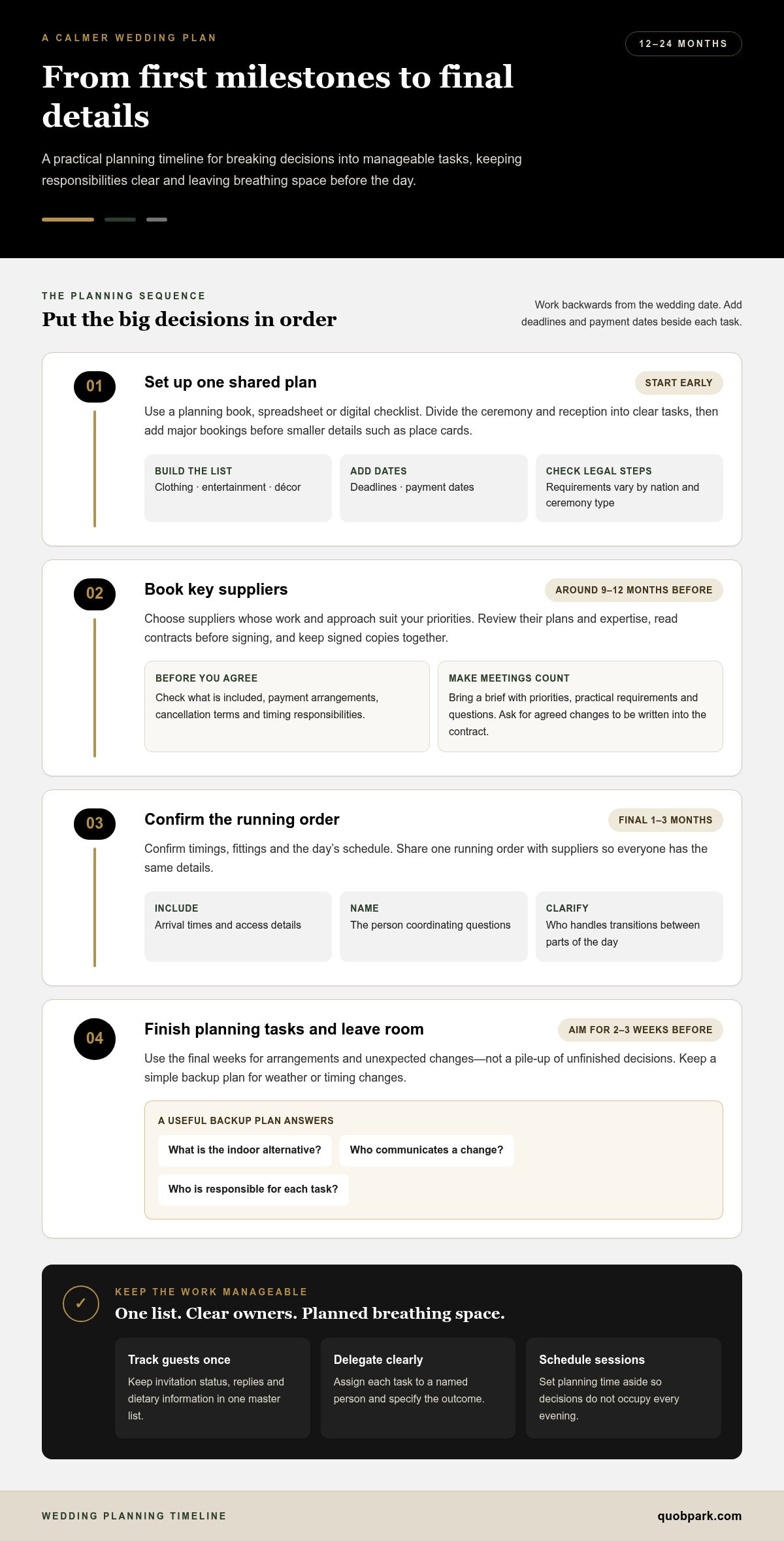
Start with one shared wedding-planning book, spreadsheet or digital checklist. Divide the ceremony and reception into clear tasks, such as choosing clothing, entertainment and décor. Work backwards from the wedding date, adding deadlines and payment dates beside each task. A typical UK planning window is 12 to 24 months, so early milestones can prevent decisions from piling up. Add major bookings first, then smaller details such as place cards.
For a wedding in England, Wales, Scotland or Northern Ireland, legal requirements depend on the nation and ceremony type. Make it an early task to find the applicable notice, documentation and registration steps, then record the relevant authority’s instructions in your planning book.
For guest lists, RSVPs and seating, keep one master list showing each guest’s invitation status, reply and dietary information. Set a reply-by date and record responses in the same place, rather than scattering them across messages and paper notes. Once replies arrive, group guests by relationship or shared interests, and keep the seating plan editable until you’re ready to finalise it.
Divide responsibilities between the couple and the people who have agreed to help. Assign each task to a named person and specify the outcome. For example, ask a sibling to collect place cards and deliver them to the venue. Friends could make decorations at a craft night, while family members might track guest replies. Clear instructions make delegated work easier and reduce last-minute confusion.
Set aside planning sessions in the calendar, so decisions don’t occupy every evening. Use each session to complete a manageable group of tasks, such as reviewing supplier details or confirming transport. Aim to finish planning tasks 2-3 weeks before the wedding, leaving time for final arrangements and unexpected changes. A simple wet-weather or timing backup plan can help the couple adapt without reopening every decision.
2. Choosing suppliers and trusting their expertise
Choose suppliers whose work suits the atmosphere you want, rather than simply following current trends. Review complete photography galleries, not just a favourite image, and compare how photographers capture ceremonies, portraits and changing light. Ask friends for recommendations, then meet promising suppliers to discuss their approach and communication style. A conversation can show whether their ideas complement yours and whether you trust their judgement.
Make each meeting useful by bringing a short brief covering your priorities, practical requirements and questions. For catering, arrange a tasting where possible and note which dishes suit your preferences. If a supplier suggests a different approach, consider their reasoning before deciding. Clear expectations and an understanding of the expertise behind a suggestion can build trust and ease stress as the day approaches.
Read every venue and supplier contract before signing. Check what services and items are included, payment arrangements, cancellation terms, timing responsibilities and what happens if either party cannot fulfil the agreement. Compare the written details with your discussions, and ask for agreed changes to be included in the contract. Keep signed copies together so you can refer to the same terms.
Book key suppliers around 9-12 months before the wedding, then use the final 1-3 months to confirm timings, fittings and the day’s schedule. Share a single running order with suppliers, including arrival times, access details and the person coordinating questions. Confirm who handles transitions, such as moving guests from the ceremony to the reception, rather than assuming another supplier will take charge.
Make a practical contingency plan for bad weather or a supplier cancellation. For rain, identify an indoor alternative and decide who will communicate the change. For a cancellation, keep the agreed replacement or cancellation process with a named contact. Record decisions in one document and share relevant details with the people responsible. A clear plan helps everyone respond without expecting the couple to solve every disruption during the celebration.
3. Setting a wedding budget and reviewing it
One of the most useful peace of mind wedding planning tips is to start with the amount you can genuinely spend. List available funds and agreed contributions, then set a firm overall limit. This gives every decision a clear financial frame.
Next, identify what will make the day special to you both. You might prioritise a particular venue and meal, or value photography, music or guest accommodation more. Mark these priorities before allocating money elsewhere. If a traditional detail doesn’t matter to you, leave it out. Your budget should reflect the moments you’ll remember, not every expected wedding feature.
Create a working budget with a line for each element, such as the venue, food, clothing, flowers and entertainment. Record estimated and confirmed costs, payment dates and remaining balances. Set aside a contingency for unexpected expenses within the total, rather than treating every pound as available. This reserve can help absorb a change without sacrificing a priority at the last minute.
Review your budget whenever you receive a quote, sign an agreement or change a decision. Compare each new commitment with the total, then adjust another category if needed. If you choose more elaborate flowers, for example, decide whether to simplify another decorative detail. Keep receipts and payment confirmations together to see what’s paid and what remains due.
Make regular budget reviews part of your peace of mind wedding planning tips. Give each conversation a clear purpose, such as checking upcoming payments or revisiting priorities. If you disagree, pause before booking and return to your shared list. A brief review can reveal a missed cost early, while there’s still time to make a considered adjustment.
4. Hiring a wedding coordinator when the venue does not provide one
If your venue doesn’t provide a coordinator, decide who will oversee the day’s moving parts. List duties such as receiving suppliers, guiding guests between spaces, keeping the ceremony on schedule and responding to changes. If you and your wedding party would otherwise manage these tasks yourselves, a coordinator can take responsibility for the agreed running order. That leaves you more opportunity to be present with friends and family.
One practical peace of mind wedding planning tip is to distinguish a coordinator’s role from each supplier’s work. A photographer handles photography, while the coordinator can help the day’s transitions run smoothly. Agree responsibilities in writing, including the coordinator’s decision-making authority and who to contact if plans change. Clear boundaries help prevent tasks from being missed or duplicated.
Consider the shape of your celebration, not just the guest count. A ceremony and reception in one space may need less transition management than a day involving multiple locations, deliveries and several suppliers. Think through each stage, from guest arrival to the final departure. If you want to manage the logistics together, you may not need extra support. If you’d rather enjoy the day without directing every detail, coordination may be valuable. These peace of mind wedding planning tips can help you decide what suits you.
Before hiring a coordinator, share your plans and ask how they would manage practical handovers. Clarify the duties they’ll take on, how they’ll communicate with your chosen point person and how they’ll respond when a decision is needed. Make sure the arrangement matches the support you want, rather than assuming every coordinator has the same responsibilities. Keep the final agreement accessible to everyone involved.
For couples choosing a venue to anchor the day, WEDDING VENUE HIRE can be part of those planning choices. The right arrangement helps you welcome guests, share the occasion and feel present once you’re married.
Quob Park Estate, Hotel & Spa: Quob Park Classic Cuvée
Quob Park Estate, Hotel & Spa offers a thoughtful next step if you’re considering English sparkling wine for your wedding celebration. Quob Park Classic Cuvée, Quob Park Heritage Rosé Cuvée and Quob Park Blanc de Blancs give you distinct options to explore as you shape the occasion around your preferences.
If wine is part of your plans, a Vineyard Tour & Tasting gives you an opportunity to experience the estate’s wines together and make a considered choice. It can also turn planning into a shared occasion, with time to enjoy the process beyond schedules and spreadsheets.
For another occasion centred on food and wine, the Gourmet Tasting Menu offers a way to savour the estate’s hospitality. Explore these offerings and decide what suits your plans by contacting Quob Park Estate, Hotel & Spa.
Let the next decision feel considered
The final details don’t need to occupy every conversation or define the celebration. As you move from planning to anticipation, choose one small moment to enjoy together without discussing schedules or spending. That pause can help the wedding feel like yours, rather than a project to manage.
For a celebratory glass, Quob Park Estate, Hotel & Spa offers Quob Park Classic Cuvée, Quob Park Heritage Rosé Cuvée and Quob Park Blanc de Blancs. Let your own taste guide your choice, whether you prefer a classic style, rosé or Blanc de Blancs.
If you’d like to explore the estate’s offerings or make an enquiry, CONTACT QUOB PARK ESTATE, HOTEL & SPA. With thoughtful choices behind you, there’s more room to savour the gathering, the company and the moments that make the day meaningful. May the planning now give way to a celebration you can enjoy wholeheartedly.
Frequently Asked Questions
How Long Does it Take to Plan a Wedding?
Wedding planning commonly takes 12-18 months in the UK, though the full planning window can range from 12 to 24 months. The time needed depends on your date, venue, guest arrangements and how much you’re organising yourselves. A shorter engagement can still work if you simplify choices, act promptly on essential bookings and divide responsibilities clearly.
What are the best ways to reduce stress when planning a wedding?
Reduce stress by keeping planning sessions focused and protecting time together that isn’t about the wedding. At each session, choose one decision, such as transport or ceremony music, and note what remains unresolved. If you feel stuck, pause and return to it later with fresh perspective. A simple wet-weather alternative can also help you respond calmly if plans change.
How do you create a realistic wedding budget in the UK?
Start with the total amount you can genuinely commit, including contributions you’ve both agreed. Estimate the main categories and compare quotes with your limits before booking. Set aside a reserve for unexpected costs, and update the figures when plans change. For example, if a menu choice exceeds its allowance, adjust another category together rather than quietly increasing the overall budget.
What is a wedding planning timeline for the UK, month by month?
Use planning stages rather than treating every month as a separate deadline. At 12-18 months, set the budget, shape the guest list and book the venue and registrar or celebrant. At 9-12 months, book key suppliers. At 6-9 months, focus on outfits, save-the-dates and accommodation; at 3-6 months, handle invitations, transport and supplier details. In the final 1-3 months, confirm timings, fittings and the schedule.
Which wedding tasks should you delegate to family, friends or a wedding planner?
Give friends and family self-contained tasks that suit their skills, such as collecting place cards, tracking replies or delivering agreed décor. Name one person for each responsibility and explain the result you need. A wedding planner can support broader organisation, while a day-of coordinator can manage practical running-order tasks. Decide together which decisions you want to keep as a couple.
How do you choose reliable wedding suppliers and avoid scams in the UK?
Look for consistent examples of a supplier’s work, independent reviews and clear communication before booking. Meet to discuss your plans, then read the contract carefully for services, payment arrangements, cancellation terms and timing responsibilities. Compare it with your discussions, and keep written records of changes. Be wary of pressure to pay before you understand the agreement.