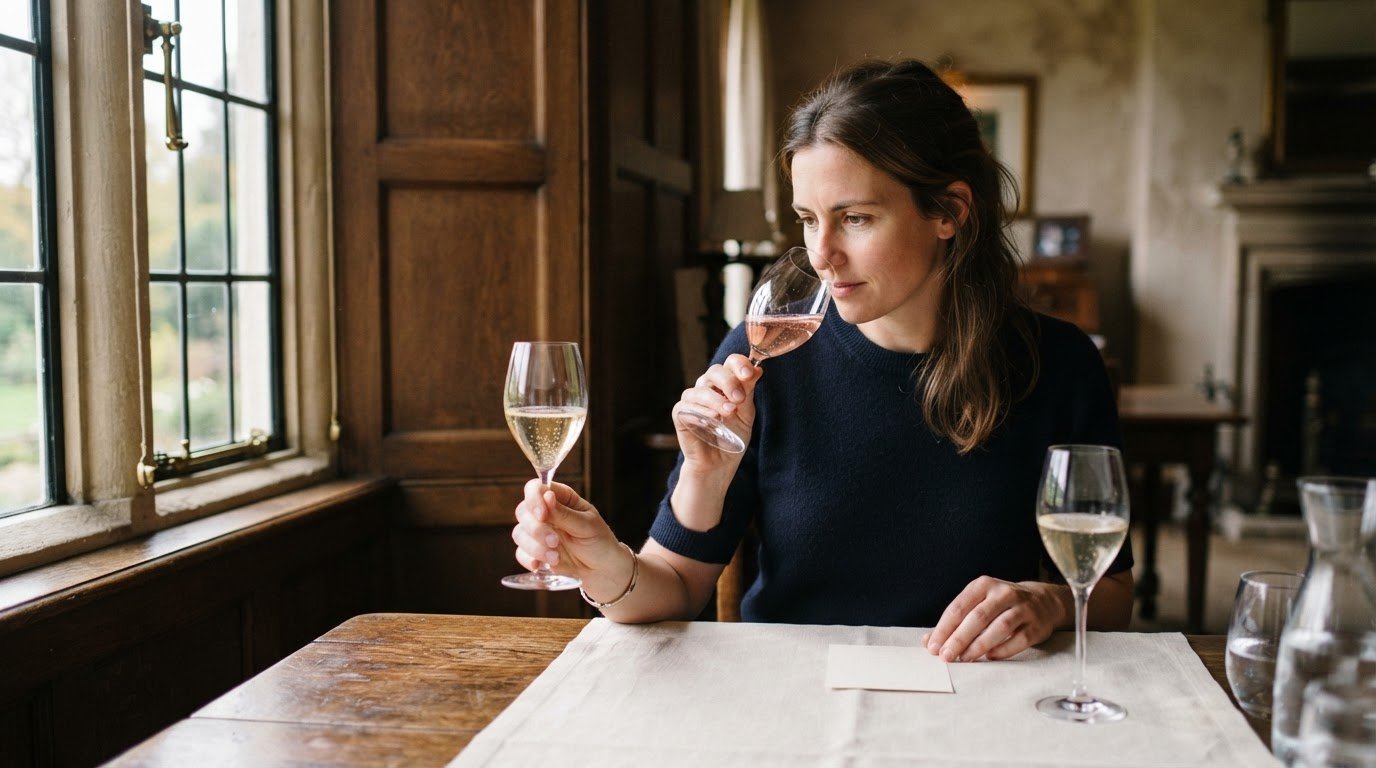
What if the secret to tasting wine with confidence is not finding the “right” words, but noticing more? Learning HOW TO TASTE WINE LIKE A SOMMELIER...
What if the secret to tasting wine with confidence is not finding the “right” words, but noticing more? Learning HOW TO TASTE WINE LIKE A SOMMELIER means following a simple sequence: look at the wine, explore its aromas, then assess its flavour, structure and finish.
It’s natural to focus first on whether a wine tastes good. A more attentive tasting helps explain why: colour offers visual clues, aromas suggest fruit, floral or savoury notes, and acidity, tannin, body and sweetness shape the experience on the palate.
This guide shows you how to follow that sequence without specialist vocabulary. You’ll learn to look closely at the wine, trace its aromas before and after swirling, assess its structure and sweetness, and make useful side-by-side comparisons. Practising with other tasters can sharpen your observations, too, turning a glass shared over dinner into a richer appreciation of its character and craft.
Key Takeaways
- Begin with the wine’s colour and clarity, viewed against a pale background, to notice visual clues before tasting.
- Pause to identify aromas before and after gently swirling, and build a personal vocabulary for what you smell.
- Assess body, acidity, tannin and sweetness together to understand how they shape the wine’s balance and finish.
- Taste wines side by side and share impressions with others to spot differences and strengthen your tasting skills.
Assessing wine colour
Sommeliers describe appearance in terms of clarity, intensity, hue and opacity. During tasting, they may also note a wine’s body, acidity, tannin, sweetness and finish, using words such as bright, supple or persistent to describe its character.
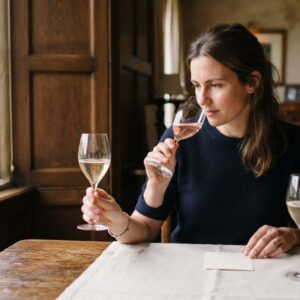
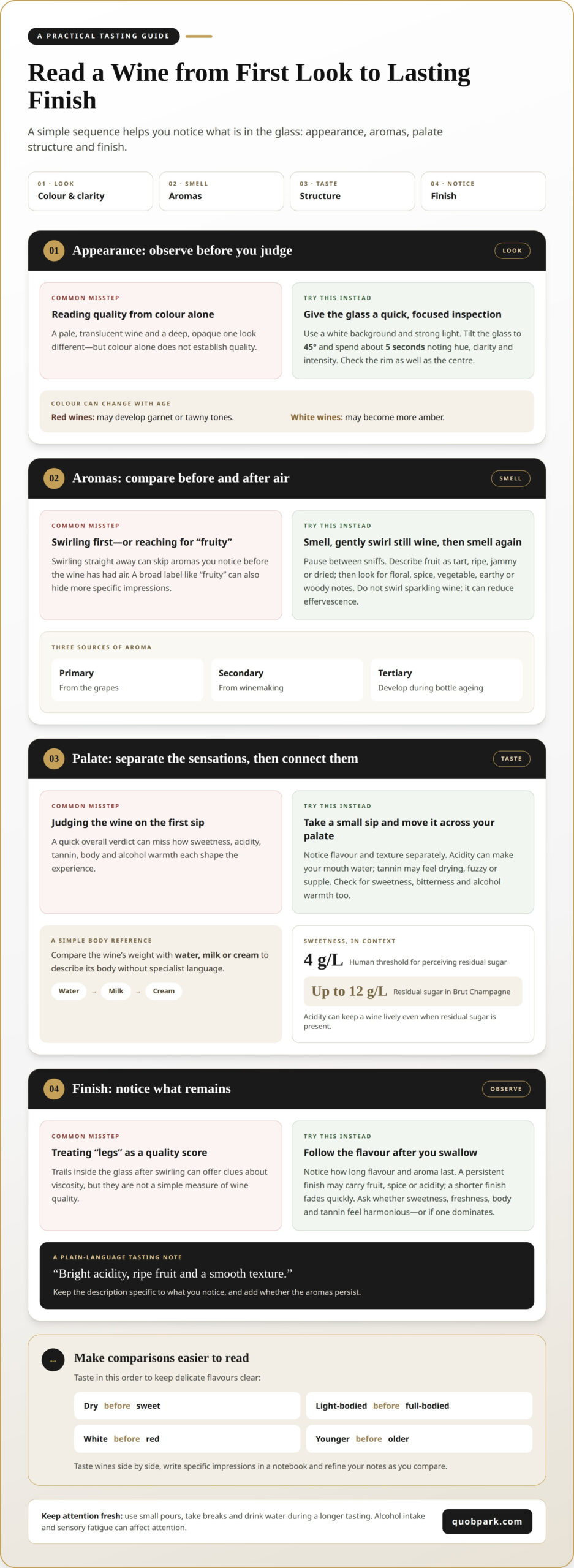
- Place the glass against a white background in strong light, then tilt it to 45 degrees. In a quick five-second inspection, note the hue, clarity and colour intensity. A pale, translucent wine looks different from a deep, opaque one, but colour alone doesn’t establish quality.
- Look at the rim as well as the centre of the glass. Red wines can develop garnet or tawny tones with age, while white wines may become more amber. Record what you see rather than assuming that wines of the same colour will taste alike.
- Swirl still wine gently, then take a small sniff. Pause and sniff again to notice aromas that emerge with air. Try describing fruit as tart, ripe, jammy or dried, then consider floral, spice, earthy or woody notes. Don’t swirl sparkling wine, as this can reduce its effervescence.
- Take a small sip and let the wine move across your palate. Assess sweetness, acidity, tannin, body and alcohol warmth. Acidity can make your mouth water, while tannin may feel drying. Compare the texture with water, milk or cream, then notice how the flavours balance and what remains after you swallow.
- Observe the wine’s “legs” or “tears”, the trails that form inside the glass after swirling. They can offer clues about viscosity, but they are not a simple quality score. Finish by describing the wine in plain language, such as “bright acidity, ripe fruit and a smooth texture”, and note whether its aromas persist.
Where Do Wine Aromas Actually Come From?
- Prepare a quiet tasting space, away from food, perfume and scented candles. Use a clean, stemmed glass if available; a stemless glass works too. Pour wine to about a third of the glass, leaving room to explore its aromas without spilling.
- Smell first without swirling, then gently swirl still wine and sniff again. Look for fruit, floral, spice, vegetable, earthy or woody aromas. Primary aromas come from grapes, secondary aromas from winemaking, and tertiary aromas develop during bottle ageing.
- Train your aroma memory with a notebook. Write specific examples, such as lemon, apple, elderflower or black pepper, rather than simply “fruity”. Note whether the fruit seems tart, ripe, jammy or dried, and record new impressions after swirling. Pause between sniffs so familiar aromas remain easier to detect.
- Taste wines in a sequence that keeps delicate flavours clear: dry before sweet, light-bodied before full-bodied, white before red, and younger before older. Take a small sip and notice sweetness, mouth-watering acidity and any bitter edge. Then consider how these sensations work together.
- Blind tasting means assessing wine without seeing its label; tasting with the label visible gives you clues about its grape, origin or producer. Blind tasting can help limit expectations, while a visible label provides context for learning afterwards. Compare your first impressions with what you learn from the label.
- Swallowing reveals the finish, but spitting samples can help you stay focused during a longer tasting. Alcohol intake and sensory fatigue can affect attention, so keep pours small, take breaks and drink water. Common aromas and flavours become easier to identify through repeated comparisons: describe what you detect, then refine your note with a precise example.
Evaluating body, acidity, tannins and sweetness
Move from the wine’s aromas to the sensations it creates on your palate. Assess each element separately, then consider how they combine in the wine’s overall structure and finish.
-
Evaluate Taste and Mouthfeel
Take a small sip and move the wine across your palate, noticing flavour and texture rather than judging it immediately. Look for fruit, savoury notes, bitterness or alcohol warmth, and observe whether the texture feels smooth, grippy or drying. A red wine, for example, may leave a fine, drying sensation from tannin. Keep the setting calm and your attention on the wine so competing flavours don’t obscure its detail.
-
Assess Body and Structure
Consider the wine’s weight as it moves through your mouth. Does it feel closer to water, milk or cream? This comparison helps you describe its body without specialist language. Then assess how its elements fit together: a fuller-bodied wine may feel rich, while a lighter one may seem more delicate. Notice whether alcohol warmth supports the flavour or feels prominent, and whether the texture stays consistent from the first sip through the finish.
-
Assess Acidity, Tannins and Sweetness
Check how your mouth responds after each sip. Acidity encourages salivation, while tannin, especially in red wine, can feel drying, fuzzy or supple. Sweetness is a separate impression from ripe fruit; residual sugar can be present even when acidity keeps the wine lively. The human threshold for perceiving residual sugar is 4 g/L, and Brut Champagne can contain up to 12 g/L. Judge the sensations together, not in isolation.
- Assess length by noticing how long the flavour and aroma remain after you swallow. A persistent finish may carry fruit, spice or acidity, while a shorter one fades quickly. Ask whether sweetness, freshness, body and tannin feel harmonious or whether one dominates. For example, bright acidity can balance richness, while harsh dryness may interrupt it. Record a simple conclusion, such as “smooth texture, lively acidity and a lingering finish”, to capture the wine’s overall balance.
Practising with classes, other tasters and side-by-side comparisons
Build your skill through deliberate comparisons, rather than trying to name every aroma at once. Tasting two wines side by side gives your observations a clear point of reference.
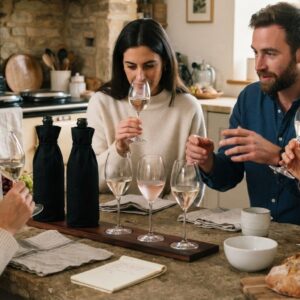
- Choose two wines and taste them in the same setting, using similar glasses and modest pours. For a blind comparison, cover the labels, then write down your first impressions before discussing either bottle. This helps separate what you sense from what you expect based on a grape, region or producer.
- Compare one feature at a time. Notice which wine has brighter acidity, more body, firmer tannin or a longer finish. Then smell each again, gently swirling still wine to release aromas. Focus on specific contrasts, such as fresh citrus against ripe apple, rather than deciding which wine is “better”.
- Share notes before revealing the labels. Ask each taster to name a few aromas and describe the wine’s texture; different impressions can reveal details you missed. If one person detects spice and another notices dried fruit, return to the glass and see whether both observations fit.
- A class or guided tasting can help you learn unfamiliar terms and practise a consistent technique—whether at a local workshop or on a social group tour with providers such as sipsedona.com. Listen to how the host connects a flavour or mouthfeel to the wine, then test that observation yourself. Try tasting two contrasting styles and explaining the difference in plain language, such as “lighter and sharper” or “rounder with a persistent finish”.
- Keep a record of each comparison, including the wines, your notes and what changed after revealing the labels. Revisit those notes when you taste similar styles again. Over time, repeated examples help you recognise patterns without treating any single aroma as a fixed rule for every bottle.
Put the method into practice with EXPLORE QUOB PARK CLASSIC CUVÉE, then compare your impressions with another wine you know.
Quob Park Estate, Hotel & Spa
Quob Park Estate, Hotel & Spa offers a way to put your tasting practice into context. A Vineyard Tour & Tasting brings together the techniques you’ve explored here and the character and craftsmanship of English sparkling wine. Apply the same thoughtful sequence as you taste: observe, notice aromas, assess structure and compare impressions. Quob Park Classic Cuvée, Quob Park Heritage Rosé Cuvée and Quob Park Blanc de Blancs each offer a fresh opportunity to pay attention to what’s in the glass. To deepen your appreciation through guided tasting, book a Vineyard Tour & Tasting with Quob Park Estate, Hotel & Spa.
Let Curiosity Shape Your Next Tasting
Let your next tasting be an occasion to notice how your preferences develop, rather than a test with one perfect answer. An impression that once seemed elusive may become familiar, while a wine you overlooked may invite a second look in a different setting. That curiosity is at the heart of learning HOW TO TASTE WINE LIKE A SOMMELIER: attentive, open-minded and guided by your own senses.
To continue exploring English sparkling wine, try Quob Park Classic Cuvée, Quob Park Heritage Rosé Cuvée and Quob Park Blanc de Blancs. Each gives you another wine to experience at your own pace, bringing fresh impressions to the glass without elaborate vocabulary or a single definitive verdict.
Let curiosity lead, and give yourself room to keep learning. CONTACT QUOB PARK ESTATE, HOTEL & SPA to take your next step in your wine journey.
Frequently Asked Questions
What are the steps for tasting wine like a sommelier?
Use the same sequence for each wine: observe it, smell it, taste it, then record your impression. For a practical exercise, choose two contrasting wines and note one difference at each stage, such as colour depth, a fruit aroma or a drying sensation. This gives your tasting a clear focus and helps build confidence without specialist terms.
How do sommeliers assess a wine’s appearance, aroma and taste?
Sommeliers consider appearance, aroma and palate together, rather than treating any single clue as a verdict. A pale wine, for example, may still have pronounced aromas or a lasting flavour. They look for clarity and colour, explore aromas in the glass, then assess flavour, texture and balance. The aim is to describe the wine accurately, not guess its quality from appearance alone. For those interested in how these professionals differ from other industry experts, WTOL Academy outlines the distinctions between sommeliers, vinologists, and oenologists.
What is the correct way to swirl and smell wine?
For still wine, keep the glass on a stable surface and move it in small circles to release aromas without risking a spill. Bring it towards your nose and take a gentle, unhurried sniff. If the first impression is unclear, pause before smelling again. Avoid strong perfume, which can compete with delicate notes such as citrus, blossom or spice.
How do acidity, tannin, sweetness, alcohol and body affect wine tasting?
These elements shape how a wine feels and tastes, and their interaction matters. Lively acidity can make a rich wine seem fresher; tannin can add grip, while sweetness softens sharp impressions. Alcohol may create warmth, and body describes weight on the palate. Compare two wines, notice which element stands out, then consider whether the others bring it into balance.
How do you assess a wine’s finish and overall quality?
After swallowing, notice which flavours remain and whether they fade cleanly or develop into another impression. A lingering finish is useful to note, but it doesn’t determine quality on its own. Also consider whether the wine feels balanced, whether its aromas and flavours remain coherent, and whether anything seems out of place. Write down these impressions before deciding how much you enjoyed it.
What temperature should different wines be served at for tasting?
Serve red wines at 16-20°C and white wines at 9-13°C. Temperature affects how readily aromas emerge and how the wine feels on the palate, so a wine served too warm or too cold may seem less expressive. If you’re tasting several wines, allow each glass to approach its suitable serving temperature before comparing it, rather than judging them at different stages of warming.