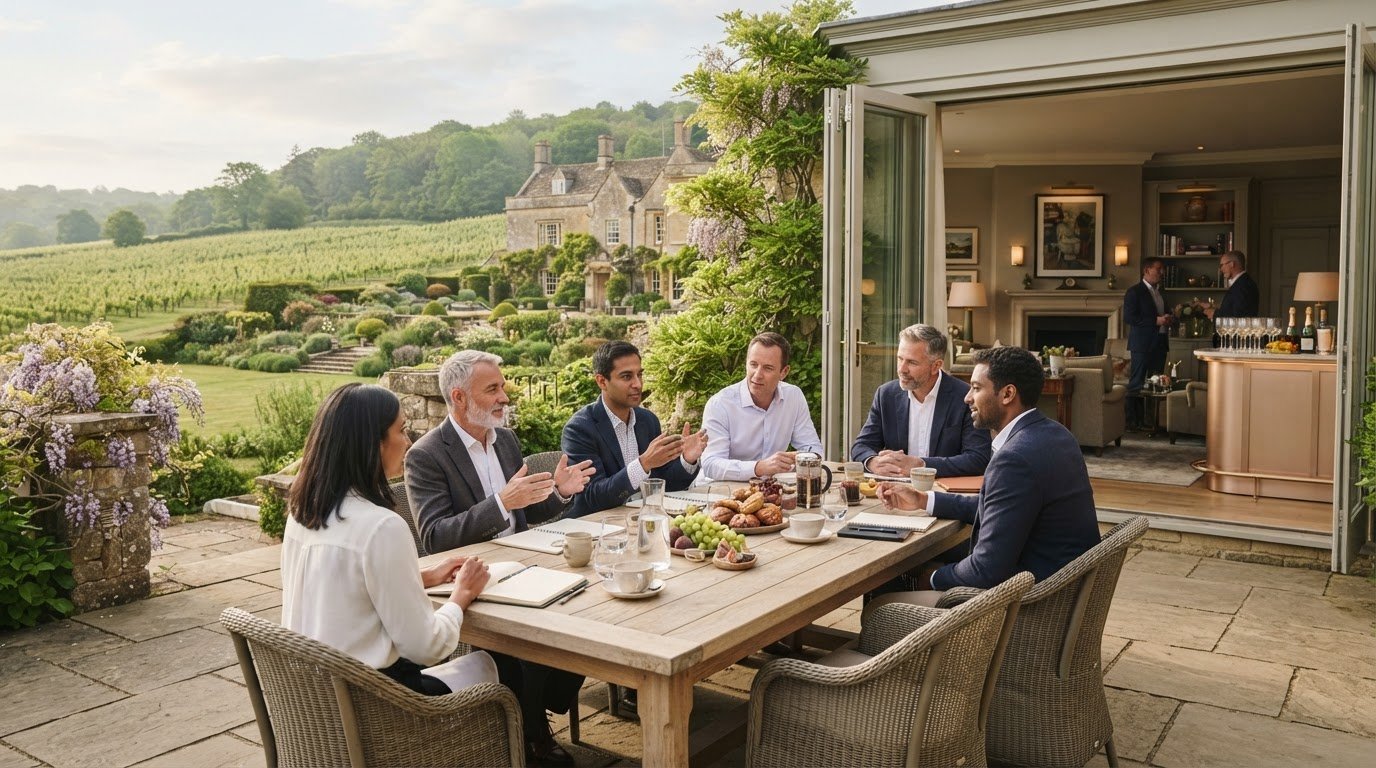
When comparing EXECUTIVE RETREAT VENUES, look beyond the meeting room. A change of pace can give leadership teams room to think clearly, reconnect...
When comparing EXECUTIVE RETREAT VENUES, look beyond the meeting room. A change of pace can give leadership teams room to think clearly, reconnect and return to strategic questions with fresh perspective. The setting should support focused work while making space for restorative hospitality.
It’s understandable to want practical details to feel seamless, from accommodation and dining to the shape of the event, without letting logistics take over the agenda. The right venue brings these elements together around your team’s objectives. At Quob Park Estate, Hotel & Spa, a 180-acre estate, corporate event packages sit alongside hotel accommodation, spa experiences, gourmet dining and estate-produced English sparkling wine.
This guide will help you assess a retreat setting, balance purposeful sessions with breathing room, and plan an experience your team will value. Use the practical framework to compare the whole stay, shape an agenda that protects strategic focus and create opportunities for connection and fresh thinking.
Key Takeaways
- Start with the leadership outcomes you want, then use them to shape the retreat agenda and venue criteria.
- Compare venues by objectives, atmosphere, hospitality, accommodation and planning fit, not by a single standout feature.
- Decide which venue qualities are essential and which are preferences before weighing up your options.
- Give strategic sessions space to breathe by balancing them with pauses and considered hospitality.
- Use a clear planning sequence to keep practical details aligned with the retreat’s purpose and the experience you want your team to remember.
What Makes an Executive Retreat Venue Worthwhile?
An executive retreat gives a leadership team dedicated time to step away from daily routines and focus on its priorities. It might centre on a strategic decision, shared direction after a period of change, or an honest review of how the team works together. Unlike an ordinary meeting, a retreat creates room to explore issues that are difficult to address between routine commitments. Unlike a social away day, it has a clear purpose that shapes the experience from the first session to the final conversation.
The setting matters because a change of pace can help leaders look at familiar challenges from a different perspective. A retreat can also make room for open exchange, strengthen understanding across roles and help colleagues build working relationships beyond their usual meeting patterns. These are opportunities, not guaranteed outcomes: the agenda, the people in the room and the atmosphere all contribute. A general overview of the CORPORATE RETREAT concept offers useful context, but a worthwhile executive gathering should be designed around its own leadership priorities.
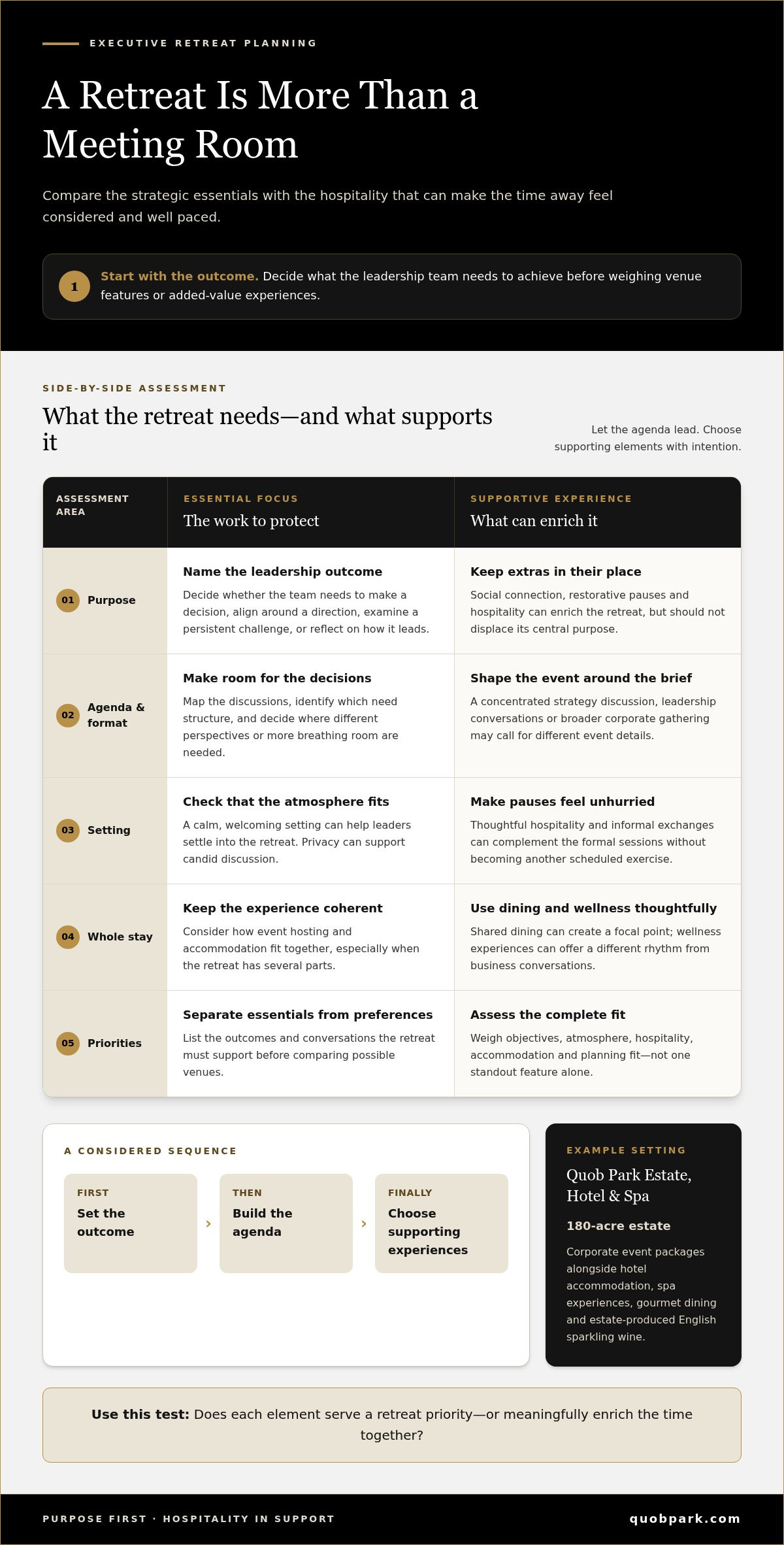
Start with the outcome, not the venue
Before comparing executive retreat settings, write down what the team needs to achieve. Be specific: does the group need to make a decision, align around a direction, examine a persistent challenge, or reflect on how it leads? A clear outcome helps distinguish essential strategic work from experiences that would be welcome but are not central to the retreat.
Separate those priorities into two lists:
- Essential outcomes: the decisions, conversations or shared understanding the retreat needs to support.
- Added-value experiences: social connection, restorative pauses or moments of hospitality that can enrich the time together.
This distinction prevents the event from becoming a packed schedule of appealing activities with too little space for its central purpose. It also gives organisers a practical way to assess options: the venue, agenda and experience should serve the outcomes, while preferences enhance rather than displace them.
Why the setting shapes the experience
A considered setting signals a departure from business as usual. A calm atmosphere and a comfortable welcome can help leaders settle into the retreat’s purpose rather than carry the pace of the working week into every conversation. Privacy can support candid discussion, while thoughtful hospitality gives participants room to pause and reconnect between sessions.
These details matter because a retreat is more than a room and a timetable. A welcoming, unhurried setting can make reflection and connection part of the day, not an afterthought. Clearly defined retreat outcomes make it easier to build a focused agenda and choose experiences that support it. Use that principle as a touchstone: if an element does not serve a priority or meaningfully enrich the time together, reconsider whether it belongs.
What Should an Executive Retreat Venue Bring Together?
A well-rounded executive retreat brings focused corporate time together with hospitality and restorative experiences, each chosen to serve the team’s purpose. Event hosting gives the gathering structure; accommodation can make a retreat with several parts feel coherent; dining creates a natural pause for conversation; and wellness can offer a change of pace. The value lies not in fitting everything into the programme, but in making each element intentional.
For organisers comparing executive retreat settings, this means looking at the whole experience rather than assessing the event in isolation. A leadership team working through a complex decision may need ample discussion time and unhurried breaks. A gathering focused on connection might place more emphasis on shared dining and informal conversation. In either case, let the agenda lead and hospitality support it.
Create space for focused work and conversation
Map the discussions and decisions the retreat needs to make room for before building its schedule. Identify which sessions need a clear structure, where different perspectives should be heard, and which conversations may benefit from more breathing room. Then balance planned work with unhurried intervals. Informal exchanges over a meal or during a pause can complement formal discussion without becoming another scheduled exercise.
Shape the event details around the project’s format and priorities. The brief might call for a concentrated strategy discussion, a sequence of leadership conversations or a broader corporate gathering. Defining this early helps organisers decide what the event needs, rather than assuming one room arrangement or technical setup will suit every retreat.
Make hospitality part of the experience
Accommodation can give a multi-part retreat a sense of continuity, helping the transitions between working sessions, meals and moments of rest feel considered. Gourmet dining can offer a shared focal point, while wellness experiences provide a different rhythm from business conversations. Neither needs to be an elaborate distraction: their purpose is to make the time away feel welcoming and well paced.
At Quob Park Estate, Hotel & Spa, set across 180 acres, corporate event packages sit alongside the Old House Hotel & Spa, gourmet dining, wellness treatments and estate-produced English sparkling wine. Wine can be part of the estate’s hospitality without crowding the programme. For example, a shared tasting may suit a retreat focused on social connection, if it fits the organiser’s brief. The QUOB PARK ESTATE WINES reflect this sense of place.
Think of the components as a sequence rather than a checklist: focused work, a proper pause, good food and time to reconnect. Each choice should support the team’s objectives or make the experience more restorative. That balance allows a retreat to feel purposeful and generous, with enough structure to guide the work and enough ease for conversation to unfold naturally.
How to Compare Executive Retreat Venues Without Losing Sight of Purpose
A polished setting can make an immediate impression, but the strongest comparison begins with the retreat brief. Before reviewing EXECUTIVE RETREAT VENUES HAMPSHIRE, list the outcomes the leadership team needs, then separate non-negotiable requirements from preferences. A practical requirement might be accommodation for an overnight programme; a preference could be a particular atmosphere or style of dining. Keeping these distinct stops attractive extras from outweighing what the retreat is meant to achieve.
Assess each option against the priorities that matter to your team, rather than relying on a generic checklist. Keep practical logistics separate from qualities such as tone and pace, then consider how the experience as a whole would feel to participants.
Objectives: Does the proposed experience support the decisions, discussions or reflection the retreat is designed for?
Atmosphere: Does the setting suit the intended tone, whether that calls for quiet concentration, open conversation or a more celebratory gathering?
Hospitality: How do dining and restorative experiences fit around the working agenda?
Accommodation: If the retreat spans more than one part of the day, does accommodation help create a coherent experience?
Planning fit: Can the event format and details be shaped around the project’s priorities?
Use a decision framework that reflects the brief
Give each criterion a simple rating, such as strong fit, partial fit or not a fit, and note the reason beside it. A venue might suit a reflective leadership discussion but feel less aligned with a high-energy celebration. A written rationale makes comparisons easier to revisit and keeps the decision anchored to the brief, rather than to whichever feature made the best first impression.
Then identify any gaps that could affect delivery. Keep practical needs, such as the event format and accommodation requirements, distinct from preferences for ambience, dining or a slower pace. If the essential needs are met, preferences can help distinguish between suitable options without becoming hidden requirements.
Look beyond the headline venue offer
Compare like with like. For each proposal, note what the experience covers across the schedule and how its separate elements fit together. Does the hospitality support the planned rhythm, or would dining and wellness feel disconnected from the central purpose? Accommodation may be valuable for a retreat unfolding over several sessions, while a shorter gathering might place greater weight on the event itself. Judge each element by its relevance to this group.
Premium value isn’t simply a question of choosing the most elaborate offer. It’s whether the experience meaningfully supports the retreat’s intended outcomes. Spending on features the team won’t use can dilute the brief; investing in elements that help create the right pace and setting may feel more worthwhile. For a broader perspective on venue planning, explore the LUXURY CORPORATE EVENT VENUES GUIDE.
Planning an Executive Retreat: Brief to Experience
A smooth retreat begins well before the first conversation. Turn the leadership team’s purpose into a concise brief, use it to shape the schedule, and give one organiser responsibility for keeping decisions, attendee information and changes aligned. This creates a clear thread from the initial idea to the experience participants arrive to find.
- Agree the outcomes. Identify the decisions, alignment or reflection the retreat should support. Make the purpose specific enough to guide choices, rather than relying on a broad aim such as “team development”.
- Write the brief. Record the purpose, intended outcomes, desired atmosphere and practical requirements. Keep essential needs separate from optional experiences so the priorities remain visible as plans develop.
- Choose the event format. Decide how the team needs to work together, for example through a facilitated discussion, a sequence of strategic conversations or time focused on a particular decision. Let this format guide the event enquiry and the details shaped around the project.
- Build the working agenda. Place the strategic sessions and decision points first. Estimate the time each conversation needs, allow transitions between topics and leave breathing room rather than filling every moment.
- Layer in hospitality. Once the working rhythm is clear, consider where meals, accommodation or restorative experiences naturally belong. Each should complement the purpose and tone of the retreat, not compete with its central work.
- Communicate and coordinate. Assign one organiser to manage the schedule, attendee information and updates. Share the final plan clearly, and give participants a single point of reference if arrangements change.
Build the brief and shape the agenda
A useful brief is concise but practical. State what the group needs to address, what a valuable outcome would look like and the atmosphere you want to create. For example, a retreat centred on a difficult decision may need space for careful discussion, while a leadership reset may call for reflection alongside structured work. Set the essential sessions before adding optional hospitality, then check that the pace feels considered rather than overfilled.
Keep some flexibility in the schedule. A conversation may need more time than expected, or a pause may be especially welcome after a demanding session. Protecting breathing space gives the organiser room to adjust without allowing the retreat’s priorities to disappear.
Prepare attendees for a considered experience
Send participants the purpose, schedule and practical information in clear language before the retreat. Explain which discussions or decisions are planned and what preparation, if any, would help them contribute. This gives attendees time to arrive ready to engage, rather than trying to infer the purpose from a crowded itinerary.
As you finalise the plan, keep the experience aligned with the project’s requirements. A clear brief makes it easier to shape a balance of corporate time and hospitality. To discuss a retreat shaped around your objectives, EXPLORE CORPORATE EVENT PACKAGES.
Experience a More Considered Executive Retreat at Quob Park
A leadership retreat can bring strategic conversation and a restorative change of pace together in one distinctive setting. Quob Park Estate, Hotel & Spa offers corporate event packages and wine-led weekend retreats on a 180-acre estate, where the experience can be shaped around the organiser’s objectives. The aim is not to add hospitality for its own sake, but to make each part of the programme feel connected to the team’s brief.
Bring work and hospitality into one retreat setting
Corporate event hosting can sit alongside the estate’s hospitality, including the Old House Hotel & Spa, gourmet dining and wellness treatments. These elements offer different ways to shape time together: a focused programme can remain central, with dining providing a shared pause and wellness bringing a gentler rhythm when it suits the retreat’s aims. The setting supports a considered blend of work and restoration without requiring every experience to feature in every programme.
Wine-led elements can add a sense of place when they align with the group’s objectives and desired atmosphere. Quob Park produces English sparkling wine using traditional methods, offering an expression of the estate. Organisers can decide whether wine belongs in the retreat’s social or hospitality experience, rather than treating it as an automatic addition. For more context on the event offer, explore EXCLUSIVE CORPORATE EVENT PACKAGES.
This combination gives organisers scope to think beyond the working session alone. The right balance depends on the brief: a leadership team seeking concentrated discussion may favour a measured schedule with considered breaks, while a retreat with a stronger focus on connection may give shared hospitality a more prominent role. In either case, the venue experience should complement the team’s purpose, not dictate it.
Take the next step with a clear brief
As you explore EXECUTIVE RETREAT VENUES HAMPSHIRE, bring a short outline of what your team wants from its time together. Include the intended outcomes, the atmosphere you have in mind and which components matter most, such as corporate event hosting, dining, accommodation or wellness. This gives the planning conversation a useful starting point and keeps decisions anchored to the project.
At Quob Park, the retreat experience is shaped around the project’s requirements, so the brief can guide how work and hospitality come together. Start with what the leadership team needs, then consider which experiences will support that aim and give the gathering its own character.
EXPLORE A QUOB PARK RETREAT EXPERIENCE and start shaping a considered gathering around your team’s brief.
Give Your Leadership Team Space to Move Forward
The most valuable retreat doesn’t end when the gathering does. Carry its momentum into the weeks that follow by capturing decisions, assigning ownership and setting a clear point to revisit progress. That simple next step can help turn focused conversations into shared direction.
As you weigh up EXECUTIVE RETREAT VENUES HAMPSHIRE, consider what kind of setting will help your team arrive ready to think, speak openly and reconnect with its priorities. Quob Park offers a distinctive backdrop for that time together, with corporate event packages and wine-led weekend retreats on a 180-acre estate. The Old House Hotel & Spa, dining and wellness bring hospitality into the experience, shaped around your team’s brief.
Let your leadership team’s purpose guide the first conversation, then explore a setting that brings work and considered hospitality together. EXPLORE AN EXECUTIVE RETREAT AT QUOB PARK and take the next step towards a gathering designed around what matters to your team.
Frequently Asked Questions
What is the difference between an executive retreat and a corporate away day?
An executive retreat generally gives leadership teams dedicated time to work through priorities, while a corporate away day may be shorter or centre on a particular activity. The distinction depends on the purpose, not the label. For example, a team resolving competing strategic priorities may need sustained discussion and space to record decisions; a group seeking informal connection may choose a lighter format. Define the desired outcome before deciding what to call the event.
How long should an executive retreat last?
There’s no ideal duration for every leadership team; the right format depends on the work to be done and the experience planned around it. A single decision-making session may suit a shorter gathering, while adding overnight accommodation, dining or wellbeing changes the shape of the programme. As you assess EXECUTIVE RETREAT VENUES HAMPSHIRE, map the necessary discussions and transitions first, then choose a duration that gives them room without adding time simply to fill it.
Can an executive retreat include both work and relaxation?
Yes, work and restorative time can sit together if each has a clear place in the experience. For example, a team might reserve its most demanding discussion for the morning, then allow a pause before a shared meal or optional wellness experience. Keep the strategic work as the anchor and treat relaxation as a considered complement, not a reward participants must earn or another activity everyone is expected to join.
What should attendees bring to an executive retreat?
Attendees should follow the organiser’s guidance, which can be tailored to the confirmed programme. If participants are preparing to discuss a proposal, for instance, they may need to read the relevant material beforehand and bring any notes they’ll use. Practical belongings should reflect the planned stay and activities. A concise message with what to prepare, what to bring and whom to approach with questions is more useful than a generic packing list.
When should an organisation start planning an executive retreat?
Begin once there’s a clear reason for bringing the leadership team together and an initial sense of the format. That gives the organiser time to coordinate decision-makers, attendee needs and the experience without relying on a one-size-fits-all lead time. Planning can start with a short brief, even while some details are still evolving. Record open questions and assign someone to resolve them as the retreat’s purpose and requirements become clearer.
How can a leadership team measure whether its retreat was successful?
Measure success against outcomes agreed before the retreat, then record what changed or was decided. A practical record might capture each decision, the person responsible for the next action and when the team will review progress. For reflective aims, invite participants to note what became clearer or what needs further discussion. A follow-up review helps distinguish a pleasant experience from one that also gave the leadership team useful direction.