A wine list needn’t dictate what you enjoy drinking. If you don’t like the venue’s wine list, tell the sommelier your budget and describe the...
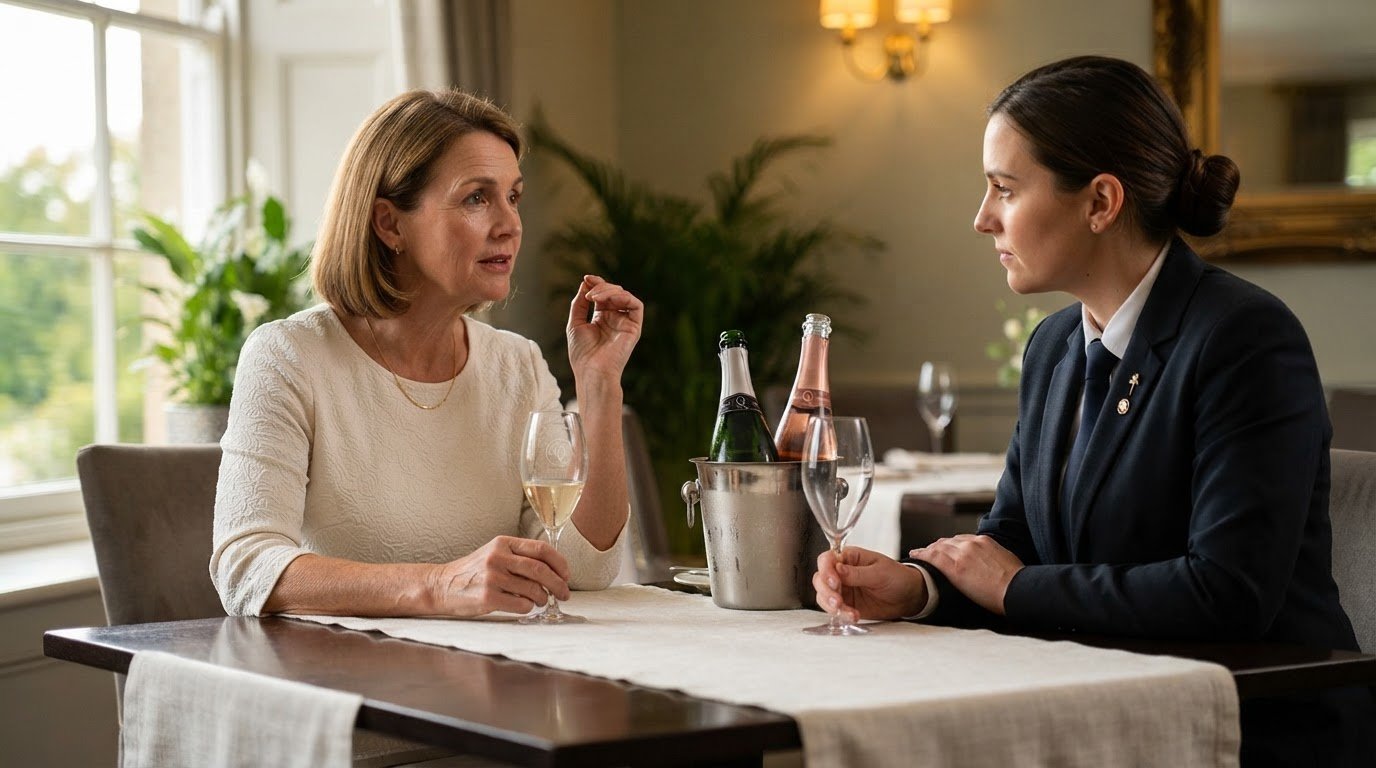
A wine list needn’t dictate what you enjoy drinking. If you don’t like the venue’s wine list, tell the sommelier your budget and describe the flavours and styles you enjoy, along with anything you’d rather avoid. A thoughtful recommendation can make choosing a wine part of the pleasure of dining, rather than a compromise.
It’s perfectly reasonable to ask for guidance, even if the wines feel unfamiliar or none immediately appeals. Share your budget, describe your preferences in practical terms and ask the sommelier to suggest an alternative. You can also make an extensive list easier to navigate by asking for a glass or bottle that suits your palate and meal, without spending more than you intended.
Key Takeaways
- Make it easier for the sommelier to guide you by sharing your budget and describing flavours or styles you enjoy.
- If the list feels unfamiliar, ask for a recommendation that suits both your palate and the meal.
- Before bringing your own bottle or requesting a different wine, speak with the restaurant about what it can accommodate.
- For wedding celebrations, explore WEDDING VENUE HIRE at Quob Park Estate, Hotel & Spa, with English sparkling wines including Quob Park Classic Cuvée and Quob Park Heritage Rosé Cuvée.
1. Asking a sommelier for advice
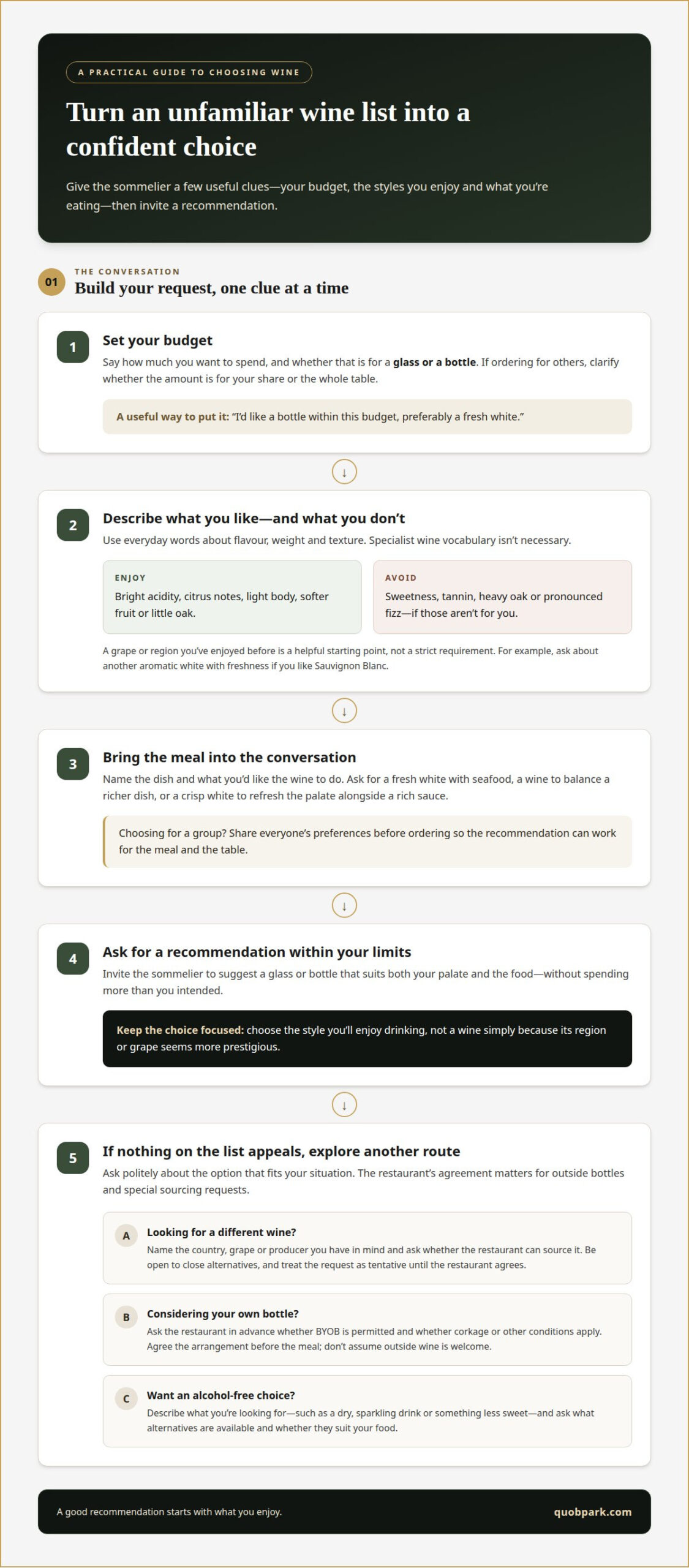
If you’re deciding WHAT TO DO IF YOU DON’T LIKE THE VENUE’S WINE LIST, start by describing what you like. Tell the sommelier your preferred style, favourite flavours and any you avoid. For example, say you enjoy crisp, citrus-led whites but not heavily oaked wines. Give your budget for a glass or bottle, then ask for a recommendation within it. This provides useful guidance without requiring specialist vocabulary.
Use the food menu to guide the conversation. With seafood, you might ask for a fresh white; with a richer dish, ask which wine would balance its texture. If the list is organised by country or grape variety, point to a section that interests you. A familiar grape can be a starting point, not a limit: if you enjoy Sauvignon Blanc, ask about another aromatic white with similar freshness. You can also ask what makes an unfamiliar bottle distinctive.
Before bringing your own wine, ask the restaurant about its BYOB and corkage policy. The venue decides whether outside wine is allowed and whether a charge applies. Don’t assume you can bring a bottle to the table without prior agreement.
You can ask whether the restaurant can source a wine that isn’t on the menu. Name the country, grape variety or producer you have in mind, and ask whether its suppliers can provide it. You can also politely ask whether a small taste is possible before ordering, rather than assuming a sample is included.
If the list has no alcohol-free choice that appeals, tell your server what you’re looking for, such as a dry, sparkling drink or something less sweet. Ask what alcohol-free alternatives are available and whether they suit your food. If none appeals, choose another drink from the menu instead of settling for a wine you won’t enjoy.
2. Explaining your budget and wine preferences
Give the sommelier a clear spending limit in pounds, and say whether it’s for a glass or bottle. If you’re ordering for guests, clarify whether the amount covers your share or the whole table. For example: “I’d like a bottle within this budget, preferably a fresh white.” This keeps the choice focused without suggesting that price alone determines quality.
Describe what you enjoy in terms of flavour, weight and texture. For example, say you prefer bright acidity, citrus notes and a light body, or softer fruit with little oak. Be just as clear about what you dislike: sweetness, tannin, heavy oak or pronounced fizz can quickly rule out styles. If you’ve enjoyed a particular grape variety or region before, mention it as a starting point, not a strict requirement.
For a food pairing, name the dish and what you’d like the wine to bring to it. A crisp white can refresh the palate alongside a rich sauce; a softer red may suit delicate flavours. If you’re choosing for a group, share everyone’s preferences before ordering. The recommendation should work for the meal and the table, not just one person’s favourite style.
There’s no need to choose a wine you dislike because it seems more prestigious. Some diners who enjoy Picpoul may prefer a mediocre glass of Picpoul or another crisp, cold white to a bargain white Burgundy. The useful comparison is which style you’ll enjoy drinking, not the reputation of a region or grape.
You can bring wine purchased elsewhere to a restaurant only if the venue allows it. Ask before buying and clarify whether corkage or other conditions apply. Don’t assume outside bottles are welcome.
3. Can you bring your own wine to a restaurant in the UK?
Agree on bringing your own wine with the restaurant in advance. Each venue sets its own policy on outside bottles and corkage. Before buying or carrying a bottle, call or message the restaurant to ask whether BYOB is permitted for your table. This avoids arriving with a wine the team can’t serve.
Ask whether corkage applies, how the charge is calculated and when it’s collected. Don’t assume the charge is waived because the wine list doesn’t suit you or because the bottle is for a special occasion. If you’re dining with a group, say how many bottles you have in mind and ask whether the same terms apply to each. Settle the arrangement before the meal.
Make the request easy to answer: “Could we bring a bottle of our own wine, and do you charge corkage?” If you have a particular bottle in mind, describe its style or format. Ask how to bring it and when the team would like to receive it. Don’t arrive expecting staff to open or store it without prior agreement.
Consider whether BYOB is necessary before choosing that route. If you want a crisp white with seafood, the sommelier may suggest an alternative already available by the glass or bottle. If you have a rare bottle in mind for a celebration, explain why it matters and ask about the venue’s policy. If the restaurant declines, return to the menu and ask for a recommendation within your preferred style and budget. That keeps the evening gracious, whatever the answer.
4. How to ask a restaurant to bring in a different wine
If you have a particular bottle in mind, contact the restaurant before your visit. Give its name, producer and vintage, if known, or describe the grape variety and region. For example, ask whether the restaurant could source a dry Riesling from the Mosel. A precise request gives the team useful details to discuss with its suppliers.
Be open to close alternatives. You might enjoy Chablis for its freshness but consider another unoaked Chardonnay, or look for a light-bodied Pinot Noir from a similar region. Explain the qualities you want, such as bright acidity or soft tannins. The restaurant can then suggest whether an available alternative could suit your taste and meal.
Make clear whether you’re asking about a future visit or the current meal. Sourcing a specific wine may take time, and the decision can depend on supplier stock and how the wine fits the selection. Ask whether the restaurant can obtain it, when it could be served and what the arrangement involves. Treat the request as tentative until the restaurant agrees.
Keep your request courteous and give the team room to suggest options. For example: “I’m looking for a dry, mineral white to pair with seafood. Could you source a Chablis, or recommend a similar wine?” If the answer is no, ask about the closest match on the list. This keeps the discussion focused on flavour and food without making the restaurant feel obliged to add a particular bottle for one occasion. For a celebration, raise the request while arranging the booking to give the restaurant time to respond.
Restaurant wine lists should include varied options to accommodate guests’ different tastes, so a request can open a conversation rather than narrow the choice. The author describes spending 20 minutes reviewing a restaurant wine list, but diners should prioritise a style they and their companions enjoy and make the choice quickly.
A restaurant may choose to feature a small number of premium wines, or include a lesser-known bottle because someone on the team enjoys it. Staff should be ready to explain the selection when guests need help choosing.
Quob Park Estate, Hotel & Spa: Wedding Venue Hire
Quob Park Estate, Hotel & Spa offers WEDDING VENUE HIRE for couples planning a celebration where wine is part of the occasion. If you’re choosing wines for your wedding, consider how the selection will suit your menu and guests’ tastes. Quob Park Classic Cuvée, Quob Park Heritage Rosé Cuvée and Quob Park Blanc de Blancs offer distinct English sparkling wine choices to consider for the day.
If you want the setting, food and wine to feel connected, venue hire may be a natural next step. Explore the wedding option as you shape your plans, then decide which details matter most for your celebration.
CONTACT QUOB PARK ESTATE, HOTEL & SPA to discuss WEDDING VENUE HIRE.
Make the next occasion your own
When deciding WHAT TO DO IF YOU DON’T LIKE THE VENUE’S WINE LIST, think beyond the immediate choice. A celebration is an opportunity to shape the atmosphere around the wines and flavours you genuinely enjoy. For a wedding or special gathering, choosing the setting and wine together can make the experience more personal, from the first glass to the final course.
Quob Park Estate, Hotel & Spa offers English sparkling wines including Quob Park Classic Cuvée, Quob Park Heritage Rosé Cuvée and Quob Park Blanc de Blancs. Consider them when planning an occasion where wine has a place in the welcome or celebration.
If you’re considering WEDDING VENUE HIRE, take the next step at your own pace. CONTACT QUOB PARK ESTATE, HOTEL & SPA to explore the possibilities for your occasion, and start shaping a gathering that feels distinctly yours.
Frequently Asked Questions
What are good alternatives if you dislike a venue’s wine list?
Choose another drink from the menu, or ask whether the restaurant offers a non-alcoholic option to suit your meal. If you still want wine, ordering a glass instead of a bottle lets you try a style without committing to more than you want. You can also ask for a different drink with a particular course, such as sparkling water with a delicate dish.
How do you choose a wine from an unfamiliar restaurant list?
Start with the dish and the experience you want, rather than trying to decode every wine name. Ask the server to explain unfamiliar descriptions in terms of flavour and texture, then consider how the suggested wine would work with your meal. If you’re unsure WHAT TO DO IF YOU DON’T LIKE THE VENUE’S WINE LIST, ask for one recommendation and why it might suit. Choose it only if it appeals to you.
What is corkage and how much does it cost in UK restaurants?
Corkage is a charge a restaurant may apply when you bring your own wine. Each venue sets its own policy, so ask whether corkage applies and how the charge is calculated before bringing a bottle.