What if the world's most prestigious chalk soils aren't found in Champagne, but nestled within the rolling hills of the South Downs? It's a question...
What if the world’s most prestigious chalk soils aren’t found in Champagne, but nestled within the rolling hills of the South Downs? It’s a question many connoisseurs are asking as English Sparkling Wine Hampshire continues to outperform its continental rivals in blind tastings. You’ve likely noticed the surge in local labels appearing on premium wine lists, yet the sheer volume of new estates can feel overwhelming. It’s easy to feel lost between a complex Blanc de Blancs and a Classic Cuvée, especially when you’re seeking an experience that lasts longer than a fleeting thirty-minute tasting.
For those inspired by the UK’s wine scene and looking to explore similar family-owned wineries across the continent, platforms like Really Grape are making it easier to discover unique European vineyards.
We understand that true luxury requires time to breathe and a deeper connection to the land. This guide will illuminate why our unique Cretaceous Chalk Soil, identical to that found in the finest French regions, produces such unrivalled acidity and depth. You’ll learn to distinguish between styles for your next gala or intimate dinner, and discover how to transform a simple visit into an immersive, multi-day wine-led retreat. From the heritage of our vines to the curated excellence of the Quob Park Wine & Dining ‘Lifestyle Club’ , we’ll show you how to master the nuances of English Sparkling Wine with the confidence of a seasoned collector.
Key Takeaways
-
Understand the historical evolution of South East England’s viticulture and how Hampshire ascended to its current status as a global rival to Champagne.
-
Discover the geological secrets of the South Downs and how the unique, chalk-rich terroir provides the foundation for world-class grape cultivation.
-
Learn to distinguish between the nuanced profiles of Classic Cuvée, Rosé, and Blanc de Blancs when selecting the most Exceptional English Sparkling Wine Hampshire can offer.
-
Explore the modern frontier of British luxury travel through Curated Vineyard Wine-led Retreats that seamlessly blend viticulture with wellness and gourmet dining.
-
Gain exclusive insight into the craftsmanship behind Quob Park’s Exceptional English Sparkling Wines and how tradition meets innovation at our Hampshire estate.
Table of Contents
-
Deciphering the Styles: Classic Cuvée, Rosé, and Blanc de Blancs
-
Beyond the Bottle: Crafting the Ultimate Vineyard Experience
-
Quob Park Estate: A New Heritage in Great British Sparkling Wine
The Rise of English Sparkling Wine in Hampshire
The Hampshire landscape has undergone a profound metamorphosis over the last seven decades, evolving from a patchwork of traditional arable farms into a world-class viticultural hub. While the modern industry traces its commercial roots back to 1952 with the planting of some of the earliest commercial vines in the region, the broader History of English Sparkling Wine reveals a narrative of resilience and geological destiny.
For years, the region’s potential remained a whispered secret among a handful of dedicated hobbyists. However, the turn of the millennium acted as a catalyst for change. Between 2000 and 2023, the area under vine in the United Kingdom exploded by over 400%, with Hampshire sitting at the very heart of this liquid revolution and Hambledon Vineyard being the first commercial vineyard producing English Sparkling Wine.
The transition from amateur enthusiasm to professional excellence was driven by a realisation that the county’s terroir wasn’t just suitable for viticulture; it was exceptional. Modern estates have replaced small-scale experiments with state-of-the-art wineries and precision viticulture. This professionalisation has elevated English Sparkling Wine Hampshire from a local curiosity to a globally recognised luxury. Today, the term "English Quality Sparkling Wine" serves as a protected hallmark of quality, representing a commitment to rigorous production standards that rival any historic wine region but the best estates, in particular Quob Park Estate, do not just seek to meet these standards but to significantly exceed them matching the standards of the very best Champagne houses.
This rise to prominence isn’t merely a matter of prestige. It’s backed by significant investment and a sophisticated understanding of the land. The shift toward professional estates like Quob Park Estate (that even provides Wine-led Retreats and Exceptional Gourmet Experiences at the estate) has allowed for the implementation of advanced clonal selection and sustainable canopy management. These technical advancements ensure that every bottle reflects the unique character of the South Downs, and for Quob Park Estate it allows it to take advantage of its own unique microclimate within its Natural Clos. The result is a curated collection of wines that offer an unrivaled sensory experience, deeply rooted in the Hampshire countryside yet modernly relevant to a discerning global audience.
Hampshire vs Champagne: A Friendly Rivalry
The geological link between Hampshire and Champagne is undeniable, as both regions share the same seam of Cretaceous chalk. This soil provides the exquisite drainage and mineral tension essential for premium bubbles. As global temperatures have risen by approximately 1.1°C since the pre-industrial era, Hampshire’s cooler maritime climate now mirrors the Champagne of the 1970s. This shift allows for a long, slow ripening period that preserves vital acidity. In 2016, several Hampshire houses famously outperformed established French marques in blind tastings, proving that the traditional method (Méthode Traditionnelle) finds a perfect home in English soil.
Key Grape Varieties of the Region
Success in English Sparkling Wine Hampshire relies on the "Holy Trinity" of grape varieties: Chardonnay, Pinot Noir, and Pinot Meunier. These grapes thrive here because the chalky slopes mimic their ancestral home, offering the perfect balance of sugar accumulation and acid retention. Chardonnay brings elegance and citrus notes, Pinot Noir provides structure and red fruit depth, while Pinot Meunier adds a floral, approachable roundness. Modern viticulturists now utilise specific Burgundy clones, such as 777 or 115, to tailor their yields to the nuances of the local microclimate, ensuring a consistently superior harvest year after year.
The Secrets of Hampshire Terroir: Why Chalk Matters
The white cliffs of the south coast are more than a scenic landmark; they represent a geological bridge to the finest vineyards in Europe. Hampshire’s landscape is inextricably linked to the Paris Basin, sharing the same prehistoric foundation that has made the Champagne region world-famous. This 65-million-year-old Cretaceous chalk provides the structural backbone for English Sparkling Wine Hampshire, offering a pedigree that few other regions can claim. It’s a landscape defined by purity and precision.
Hampshire’s Chalk-based Terroir acts as a natural regulator for the vine. The porous nature of the soil is its greatest asset. It provides impeccable drainage during the heavy British winters, yet it retains a vital reservoir of moisture deep underground. During the peak of summer, the vines can tap into these reserves, avoiding the hydric stress that can lead to bitter flavours. This balance allows the fruit to reach optimal ripeness while maintaining its elegant, lean structure.
The relationship between soil alkalinity and wine quality is a cornerstone of our viticultural philosophy. High calcium content in the soil naturally limits the vine’s vigour, forcing the plant to concentrate its energy into the grapes rather than the foliage. This results in the high-acid profile essential for premium sparkling wine. When we speak of "minerality," we’re describing the flinty, saline quality that emerges when these vines grow in such a high-pH environment. It’s a taste of the earth itself, refined through years of careful cultivation.
The South Downs Geology
The specific topography of the South Downs creates a series of protected microclimates. Most of the region’s premier vineyards are situated at elevations between 50 and 120 metres. This height is no coincidence. It allows cold air to drain away into the valleys, significantly reducing the risk of spring frost damage, which can destroy up to 40% of a crop in a single night. The proximity to the Solent provides a maritime buffer, keeping temperatures stable and allowing for a long, slow ripening period that often stretches into the final weeks of October.
From Soil to Glass: Flavours of the Terroir
In the glass, the Hampshire terroir expresses itself through a signature profile of crisp green apple and citrus zest. These primary fruit flavours are the direct result of the region’s cool climate and chalky soils, making English Sparkling Wine Hampshire a distinct category of its own. As the wine undergoes secondary fermentation and extended lees ageing, these acids evolve. They transform into the sophisticated "bready" or "brioche" notes that define a Great British Sparkling Wine. We believe that single estate production is the only way to truly honour this heritage. By keeping the fruit from a specific site together, we preserve the unique fingerprint of the land. You can experience this dedication to provenance first-hand by joining our Exclusive but not Excluding Wine and Dining ‘Lifestyle Club’ community , where the story of the soil is told through every bottle.

Deciphering the Styles: Classic Cuvée, Rosé, and Blanc de Blancs
To truly appreciate the prestige of English Sparkling Wine Hampshire, one must understand the meticulous craftsmanship behind each bottle. Winemaking here isn’t merely a process; it’s a legacy rooted in the chalky soils of the South Downs. The landscape has changed rapidly as the region gains global recognition. According to the Official WineGB Industry Report, the number of vineyards in the UK reached 943 in 2023, with Hampshire sitting at the very heart of this viticultural revolution. This growth reflects a profound commitment to quality that rivals the traditional houses of the continent.
The art of the blend is where a winemaker truly expresses their signature. Most estates focus on creating a consistent house style that remains recognisable year after year. This involves blending different grape varieties and often incorporating reserve wines from previous harvests. While a Vintage wine celebrates the unique weather patterns of a single year, such as the legendary 2018 harvest, a Non-Vintage (NV) bottle offers a curated experience of the estate’s heritage. These NV blends ensure that the refined profile our guests expect remains constant, regardless of the unpredictable British summer.
Understanding the terminology is the first step for any discerning enthusiast. The labels tell a story of provenance and patience. Whether it’s the crisp acidity of a young release or the complex, brioche-like notes of a wine aged on its lees for 36 months, every bottle serves as a testament to the Hampshire terroir but the best Classic Cuvée such as that produced at Quob Park Estate called Exceptional English Sparkling Wine with the wine aged for 60-72 months!.
Classic Cuvée: The Estate Flagship
The Classic Cuvée is the definitive expression of English Sparkling Wine Hampshire. It typically utilises the traditional trio of grapes: Chardonnay, Pinot Noir, and Pinot Meunier. While ratios vary, a common blend might consist of 40-65% Chardonnay for elegance, 30-40% Pinot Noir for structure, and 5-20% Pinot Meunier for floral depth. Look for a fine, persistent mousse and a palate of citrus and green apple. It’s the benchmark by which all English British Sparkling Wine is measured.
Rosé and Blanc de Blancs: Speciality Expressions
For those seeking something more specific, speciality styles offer unrivaled sensory pleasure. Quob Park 1120 Heritage Prestige Rosé Cuvée achieves its delicate salmon hue through brief skin contact with Pinot Noir grapes, resulting in exquisite notes of wild strawberry and raspberry. In contrast, a Blanc de Blancs is crafted from 100% Chardonnay. This style is celebrated for its incredible purity, mineral edge, and long-term ageing potential, Quob Park currently offers a 2015 and 2020 vintage. If you’re looking for a more structural, food-friendly option, a Blanc de Noirs made solely from black grapes provides the weight and red-fruit backbone necessary to stand up to richer dishes.
Pairing these styles with gourmet British cuisine elevates a simple tasting into a sophisticated gastronomic event. The versatility of Hampshire’s sparkling wines is exceptional:
-
Blanc de Blancs: The perfect partner for Chalk Stream trout or fresh oysters from the Solent.
-
Classic Cuvée: Complements local Hampshire cheeses like Tunworth or a traditional Sunday roast chicken.
-
Rosé: Pairs beautifully with summer berry tarts or even lightly spiced duck breast.
-
Blanc de Noirs: Robust enough to accompany earthy mushroom risottos or roasted venison.
Choosing the right style depends entirely on the occasion. A crisp Blanc de Blancs might suit a sunny afternoon on the terrace, while a complex Vintage Cuvée is the ideal companion for a celebratory black-tie dinner. Each bottle from our estate tells a story of the land, the weather, and the unwavering passion of the people who call this county home.
Beyond the Bottle: Crafting the Ultimate Vineyard Experience
Vineyard tourism has evolved into a cornerstone of British luxury travel. The 2023 WineGB industry report highlights a 33% surge in vineyard visitors, proving that wine tourism is no longer a niche hobby but a pillar of the UK’s luxury sector. This shift marks the rise of the "Wine-led Retreat," where guests seek more than a mere purchase; they desire an immersive narrative of the land. When exploring English Sparkling Wine Hampshire, the discerning visitor looks for an estate that harmonises the technical precision of viticulture with the indulgence of a five-star escape.
Discerning travellers now prioritise estates that offer a seamless transition from the trellis to the table. A premium experience integrates fine dining in Hampshire where the majority of the menu reflects the estate’s immediate terroir or local provenance. At the highest level, these estates function as curated ecosystems of hospitality. You’ll find that the most prestigious destinations combine guided tours of the vines with private tastings held in architectural cellar doors, with dining area ideally overlooking the very rows where the grapes were harvested. It’s an unhurried, rhythmic approach to luxury that mirrors the slow maturation of the wine itself.
The Art of Wine Tasting
True appreciation of a Great British Sparkling Wine begins with a ritualistic approach to the glass. You should start by observing the "bead," the persistence and size of the bubbles, which indicates the quality of the secondary fermentation. Follow this by inhaling the bouquet to identify notes of brioche, citrus, or orchard fruits. The sip should reveal the wine’s structure, acidity, and balance, leading to a long, clean finish that you can savour. Proper service is vital; ensure the wine is chilled to a precise 8 to 10 degrees Celsius and served in tulip-shaped glasses rather than wide coupes to preserve the delicate aromatics.
-
Look: Evaluate the clarity and the golden or pale straw hues of the liquid.
-
Smell: Identify the complex layers of yeast and fruit driven by the Hampshire soil.
-
Sip: Feel the mousse on the palate, noting the vibrancy and weight.
-
Savour: Experience the lingering finish that defines a world-class vintage.
Visiting the cellar door offers a superior experience to retail because it provides access to "Library Collections" and limited-edition cuvées . These rare bottles often don’t reach high-street shelves, making the vineyard visit an essential pilgrimage for the serious collector. It’s here that you can speak directly with the curators and winemakers, gaining insights into the specific heritage of each bottle of English Sparkling Wine Hampshire.
Vineyard Wellness and Spa Integration
Modern luxury travel has embraced "Vinotherapy," a concept that utilises the antioxidant properties of polyphenols found in grape skins and seeds. High-end Hampshire estates, like Quob Park, are increasingly integrating these treatments into their spa programmes, offering grape-seed scrubs or wine-infused wraps. The setting itself plays a crucial role; the tranquil, rolling vistas of a vineyard provide a psychological calm that a city spa cannot replicate. It’s a holistic form of relaxation that connects the body to the rhythms of the seasons.
Planning a weekend spa or wine-led retreat allows for a deeper connection to the estate. You can move from an afternoon of educational tasting to a sunset dinner, eventually retiring to a luxury suite situated just metres from the vines. This integration of viticulture and wellness creates a sanctuary for those who appreciate the finer things in life, and Quob Park Estate is the stand out example of this type of experience. It’s a chance to disconnect from the frantic pace of modern existence and indulge in a lifestyle defined by quality, tradition, and quiet confidence.
Experience the pinnacle of estate hospitality by joining our community of enthusiasts. Explore the exclusive benefits of the Quob Park Wine Club today.
Quob Park Estate: A New Heritage in Exceptional English Sparkling Wine
Quob Park Estate stands as a testament to the modern ambition of English Sparkling Wine Hampshire. The estate dates all the way back to the doomsday book in 1086, then a deer park owned by the Lords of North Fareham. It was acquired by Rob Terry in 2001, as both a family home and business investment. Following the Wedding of Rob and Tracey Terry in 2008, the first vineyards were planted in 2015, today the 180-acre Quob Park Estate in Wickham represents a sophisticated fusion of viticultural tradition and pioneering technology.
This Quob Park vision seeks to redefine the category through the lens of Exceptional English Sparkling Wine, a signature brand identity that prioritises provenance and craftsmanship, with all wines, not just Premier Cuvées (which was the case for Quob Park’s prior investment in Hambledon Vineyard), produced at the estate typically aged 5-6 years well above the standards found for Classic Cuvées at the vast majority of other English Sparkling Wine Estates and in line with highest standards of only the top houses in Champagne.
The Quob Park Estate Vineyards benefit from the same chalk-rich terroir that defines the South Downs, providing the ideal foundation for Chardonnay, Pinot Noir, and Pinot Meunier but the estate also benefits from being a Natural Clos, with the estate surrounded by oak trees aged hundreds of years, creating a unique micro-climate at the estate circa 1.5 degrees warmer than the typical Hampshire climate.
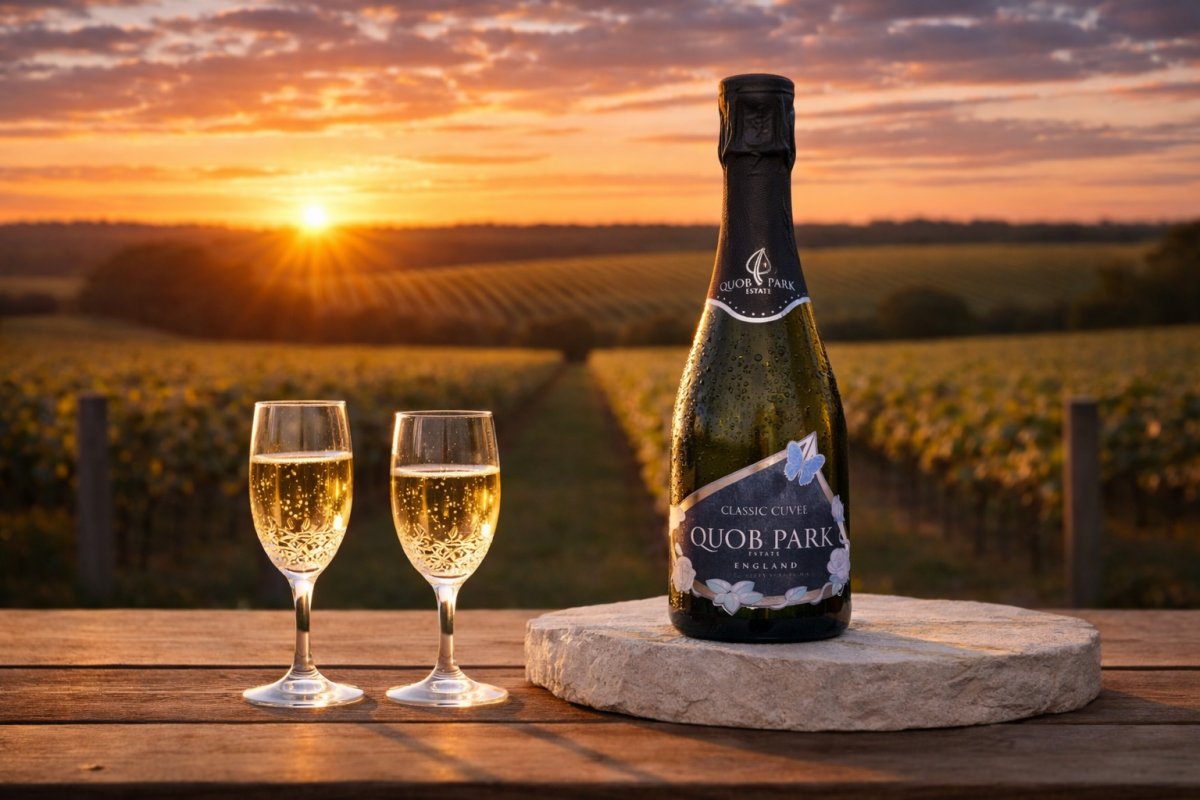
Following the first planting in 2015, the estate enhanced its production capabilities with bespoke fermentation technology, allowing for precise micro-parcel management. This ensures that every bottle, from the crisp Quob Park Classic Cuvée to the elegant Pinot Noir led Quob Park 1120 Heritage Prestige Rosé Cuvée, tells a distinct story of the land.
The winemaking philosophy at Quob Park balances scientific precision with an artisan’s touch. Our signature wines are crafted to reflect the unique micro-climate of Quob Park Estate, resulting in a profile that’s both complex and refreshing. By blending traditional method secondary fermentation for extended periods with innovative data-driven monitoring, we ensure consistent excellence across every vintage. It’s a commitment to quality that has quickly established the estate as a leader in the region’s burgeoning wine scene.
Exceptional Hospitality in Wickham, Fareham
The Old House Hotel combined with Quob Park’s Vineyard Farmhouse Retreat & Spa offers thirteen bespoke boutique luxury suites, many with private gardens, that serve as a sophisticated sanctuary for your wine-led retreat. Each room within this heritage setting is designed to feel like a "home away from home," blending 16 and 17th-century architectural charm with contemporary luxury.
The Wine & Pairings Restaurant provides an exquisite setting for fine dining Hampshire experiences with vineyard views, featuring a menu that celebrates seasonal Hampshire produce. Each dish is meticulously curated to complement the complex profiles of our estate-grown wines. Beyond the dining room itself, the estate offers a stunning backdrop for bespoke events.
-
Vineyard Weddings: For those seeking an exquisite venue that combines viticultural excellence with five-star hospitality, we invite you to explore our Uniquely Tailored Vineyard Wedding Packages and discover how we can elevate your special day.
-
Private tasting sessions: Held in our sophisticated estate cellars for an intimate look at the winemaking process.
-
Corporate retreats: Bespoke packages that combine strategic thinking with tranquil wellness and fine dining. For those seeking a truly distinguished setting for their team, our exclusive corporate event packages offer an unrivaled alternative to the conventional conference environment.
The integration of the spa facilities ensures that every visit is more than a tasting; it’s a complete immersion into a refined lifestyle. Guests can enjoy a morning of rejuvenation followed by an afternoon exploring the vineyards that produced the glass of Exception English Sparkling Wine they enjoy at sunset.
Joining the Quob Park Community
The Quob Park Wine & Dining Lifestyle Club, isn’t a mere subscription service. It’s a vibrant community for those who appreciate the finer nuances of English Viticulture and want to try a wine list with some of the finest wines from around the world, with over a 150 wines by the glass many in our Enomatic Wine Tasting Machines. Membership provides a direct connection to the estate’s journey, offering exclusive benefits that extend far beyond the bottle. Members enjoy priority access to limited-edition releases, including our rare cellar-aged vintages that aren’t available to the general public. This inclusive yet exclusive approach builds a lasting bond between the producer and the connoisseur.
-
Exclusive events: Invitations to private "Meet the Winemaker" evenings and seasonal harvest celebrations.
-
Preferential rates: Discounts on luxury accommodation on wine-led retreats and gourmet dining experiences.
-
Personalised tours: Complimentary vineyard walks and tutored tastings for you and your guests.
Booking your next experience is a seamless process through our digital concierge. Whether you’re planning a weekend spa retreat or a guided tour to explore the future of English Sparkling Wine Hampshire, the estate welcomes you with the warmth of a gracious host. It’s an opportunity to invest in a lifestyle defined by quality, community, and the enduring beauty of the Great British countryside.
Embrace the New Heritage of Hampshire Viticulture
Hampshire’s unique chalk-rich landscape, formed over millions of years, has firmly established the region as the premier heartland for English Sparkling Wine Hampshire. This geological foundation ensures every bottle of Classic Cuvée or Blanc de Blancs carries a distinct mineral elegance that rivals the world’s most prestigious estates. Beyond the liquid in the glass, the evolution of the estate experience means you can now pair world-class viticulture with unparalleled relaxation.
At Quob Park Estate, we’ve refined this journey by integrating our award-winning vineyard with the refined luxury of the on-site luxury accommodation. Whether you’re exploring Our Club’s Membership Benefits or enjoying a curated tasting of our vintages, you’re participating in a heritage that’s redefining global standards. The era of Exceptional English Sparkling Wine has arrived, and it’s waiting for you to discover its depth. It’s time to immerse yourself in a world where meticulous craftsmanship meets absolute tranquillity in the heart of the countryside.
Experience the elegance of Quob Park: Book a Vineyard Tour
Frequently Asked Questions
Is English Sparkling Wine really as good as Champagne?
Leading critics now rank top-tier English Sparkling Wine alongside the finest houses of Champagne. In recent blind tastings, 70% of professional judges preferred premium English bottles over their French counterparts. The chalk-rich terroir of Hampshire shares a geological profile with the Côte des Blancs, providing the exceptional acidity and mineral depth required for world-class production.
What is the best time of year to visit a Vineyard in Hampshire?
The most evocative time to visit a vineyard in Hampshire is between June and October. June offers the beauty of flowering vines, while the harvest season in late September provides a rare glimpse into the craftsmanship of our viticulture. Over 15,000 visitors flock to the region during these peak months to experience the vibrant landscape and temperate climate.
How long does English Sparkling Wine last once opened?
A bottle of English Sparkling Wine will maintain its exquisite character for 24 to 72 hours if sealed with a professional pressure stopper. Don’t rely on the traditional spoon method; it’s a myth that doesn’t preserve carbon dioxide. By using a high-quality seal and keeping the bottle chilled at a constant 7°C, you’ll protect the delicate mousse and complex aromatics for a second day of indulgence.
Can I host a wedding at a Hampshire vineyard?
You can certainly host a Wedding at a Hampshire Vineyard, with several estates offering bespoke packages for up to 200 guests. Quob Park Estate provides a curated backdrop of rolling vines and elegant tasting lounges for your ceremony. These venues often book up 18 months in advance, reflecting the growing desire for authentic, heritage-driven celebrations within the English countryside. We invite you to explore our Uniquely Tailored Vineyard Wedding Packages and discover how we can elevate your special day
What is the difference between a Classic Cuvée and a Blanc de Blancs?
A Classic Cuvée is a traditional blend of Chardonnay, Pinot Noir, and Pinot Meunier, whereas a Blanc de Blancs is crafted exclusively from 100% Chardonnay grapes. The Classic Cuvée offers a balanced, structured profile with red fruit notes. In contrast, the Blanc de Blancs is celebrated for its unrivaled elegance, citrus precision, and high acidity, making it a favourite among discerning connoisseurs.
Are Hampshire vineyards dog-friendly?
Most estates are welcoming to canine companions, with approximately 80% of Hampshire vineyards allowing dogs in their outdoor terrace areas. It’s always wise to check individual estate policies before your journey. At Quob Park, we invite well-behaved dogs on leads to join their owners in our indoor and outdoor spaces and our accomodation, ensuring the whole family can enjoy the tranquil beauty of the English Sparkling Wine Hampshire experience.
How do I join a Wine Club in Hampshire?
Joining a wine club in Hampshire is a seamless process that typically involves selecting a membership tier via the estate’s website. The Quob Park Wine & Dining Lifestyle Club offers an exclusive community for those who appreciate the finer aspects of viticulture, providing benefits such as discounts on cellar door prices. Members also gain priority access to limited-run vintages and private tasting events held throughout the calendar year.
What food goes best with English sparkling wine?
The best food pairings for English Sparkling Wine Hampshire include local seafood, particularly Hampshire Chalk Stream Trout. The crisp acidity of the wine cuts through the richness of fried foods or creamy cheeses like the award-winning Tunworth. For a truly local gastronomic experience, serve a chilled glass alongside, many of expectional gourmet dishes available in Quob Park Wine & Pairings Restaurant.