The most exquisite vintage in your cellar is likely being underutilised if it only ever meets a tray of canapés. While many enthusiasts reserve their...
The most exquisite vintage in your cellar is likely being underutilised if it only ever meets a tray of canapés. While many enthusiasts reserve their finest bottles for a preliminary toast, the structural complexity of GREAT BRITISH SPARKLING WINE demands a seat at the dinner table. You’ve perhaps felt the familiar anxiety that a high-acidity pour might jar against delicate flavours, or found yourself uncertain whether a Rosé or a Blanc de Blancs provides the superior match for a main course. It’s a common dilemma that often prevents a truly exceptional bottle from reaching its full gastronomic potential, though modern AI tools like Vinoperte are now making these professional-level pairing decisions more accessible than ever before.
This connoisseur’s guide promises to refine your palate, offering a masterclass in the nuanced science of SPARKLING WINE FOOD PAIRING. By understanding how the unique terroir of our 180-acre Hampshire estate influences every bubble, you’ll gain the confidence to host a GOURMET TASTING MENU that rivals the finest Michelin-starred establishments. We’ll examine the precise chemistry of flavour balancing and demonstrate why premium English vintages are the definitive choice for sophisticated dining in 2026. Discover how to elevate your next gathering by visiting our WINE CLUB MEMBERSHIP page to secure the perfect pairings for your collection.
Key Takeaways
- Unlock the scientific principles of acidity and effervescence to understand how ENGLISH SPARKLING WINE serves as the ultimate palate cleanser for rich, indulgent dishes.
- Navigate the nuances of style-specific matching, identifying why a crisp BLANC DE BLANCS excels with delicate shellfish while a CLASSIC CUVÉE offers unrivaled versatility.
- Challenge conventional wisdom by mastering the SPARKLING WINE FOOD PAIRING techniques required to complement heavy proteins and traditional British Sunday roasts.
- Acquire the expertise to curate a bespoke GOURMET TASTING MENU, sequencing prestige vintages by weight and intensity to elevate your next luxury celebration.
- Discover how the 180-acre Quob Park Estate integrates these connoisseur-level pairing strategies to define the quintessential heritage dining experience.
The Science and Structure of SPARKLING WINE FOOD PAIRING
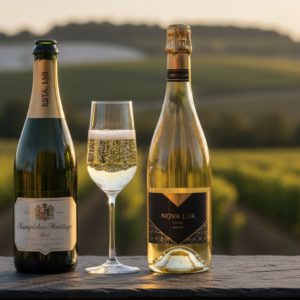
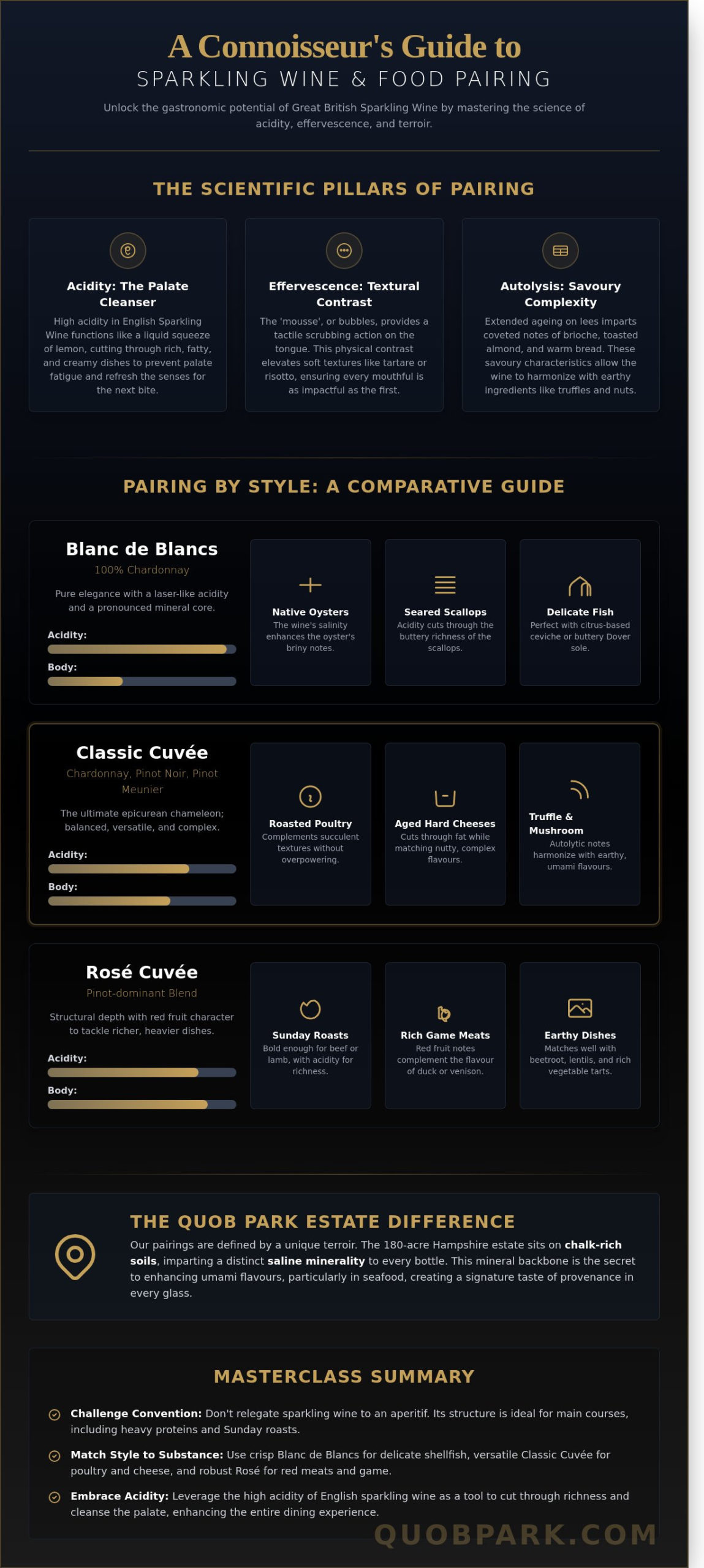
Masterful SPARKLING WINE FOOD PAIRING relies on three structural pillars: acidity, effervescence, and autolysis. These elements don’t just accompany a meal; they transform the sensory experience. At Quob Park, we view these components as the architect’s blueprint for a perfect evening. High acidity provides the framework, while the mousse offers textural intrigue. Autolysis, the result of extended lees ageing, introduces those coveted notes of brioche and toasted almond that define a world-class CLASSIC CUVÉE.
Acidity as a Palate Cleanser
High acidity in ENGLISH SPARKLING WINE functions as a liquid squeeze of lemon. When you enjoy rich, lipid-heavy dishes like a buttery Dover sole or a triple-cream Brie, the acid cuts through the fat instantly. This biological reaction prevents the palate from becoming fatigued. English cool-climate viticulture is particularly superior for this. Our longer growing seasons preserve malic and tartaric acids far better than warmer regions. You should also consider the like-with-like principle. Pairing a high-acid wine with a sharp vinaigrette or citrus-based ceviche creates a vibrant, harmonious balance where neither element overpowers the other. It’s a precision tool for the modern gastronome.
Terroir and Salinity
The 180-acre Quob Park Estate sits upon a unique geological foundation that imparts a distinct saline minerality to every bottle. This salt-kissed profile isn’t accidental; it’s the result of heritage-driven viticulture on chalk-rich soils. This mineral backbone is essential for enhancing umami flavours in seafood, particularly oysters or scallops. Our commitment to the land ensures that every glass of GREAT BRITISH SPARKLING WINE reflects this specific provenance. You can explore our full range of terroir-driven bottles at the QUOB PARK SHOP to begin your own pairing journey.
The mousse, or the physical structure of the bubbles, adds a final layer of contrast. It provides a tactile scrubbing action that cleanses the tongue between bites of soft, creamy textures. Whether you’re serving a delicate tartare or a robust truffle risotto, the effervescence ensures every mouthful is as impactful as the first. This interplay of bubbles and salt is what elevates a simple dinner into a sophisticated SPARKLING WINE FOOD PAIRING event. By understanding these scientific interactions, you move beyond guesswork and into the realm of true connoisseurship; for instance, many enthusiasts explore PurityPRO Home Water Purifier to ensure the water served alongside their wine is of equal scientific purity.
Pairing by Style: From CLASSIC CUVÉE to Heritage Rosé
Mastering the nuances of SPARKLING WINE FOOD PAIRING requires an appreciation for the structural architecture of each blend. At our 180-acre estate, we observe how the specific terroir of the Hampshire chalk downlands influences the weight and acidity of the wine, dictates its culinary companions. A CLASSIC CUVÉE, with its traditional assembly of Pinot Noir, Chardonnay, and Pinot Meunier, serves as the ultimate epicurean chameleon. Its balanced profile complements the succulent textures of roasted poultry, the delicate salinity of Atlantic seafood, and the crystalline richness of aged hard cheeses like a vintage Montgomery’s Cheddar.
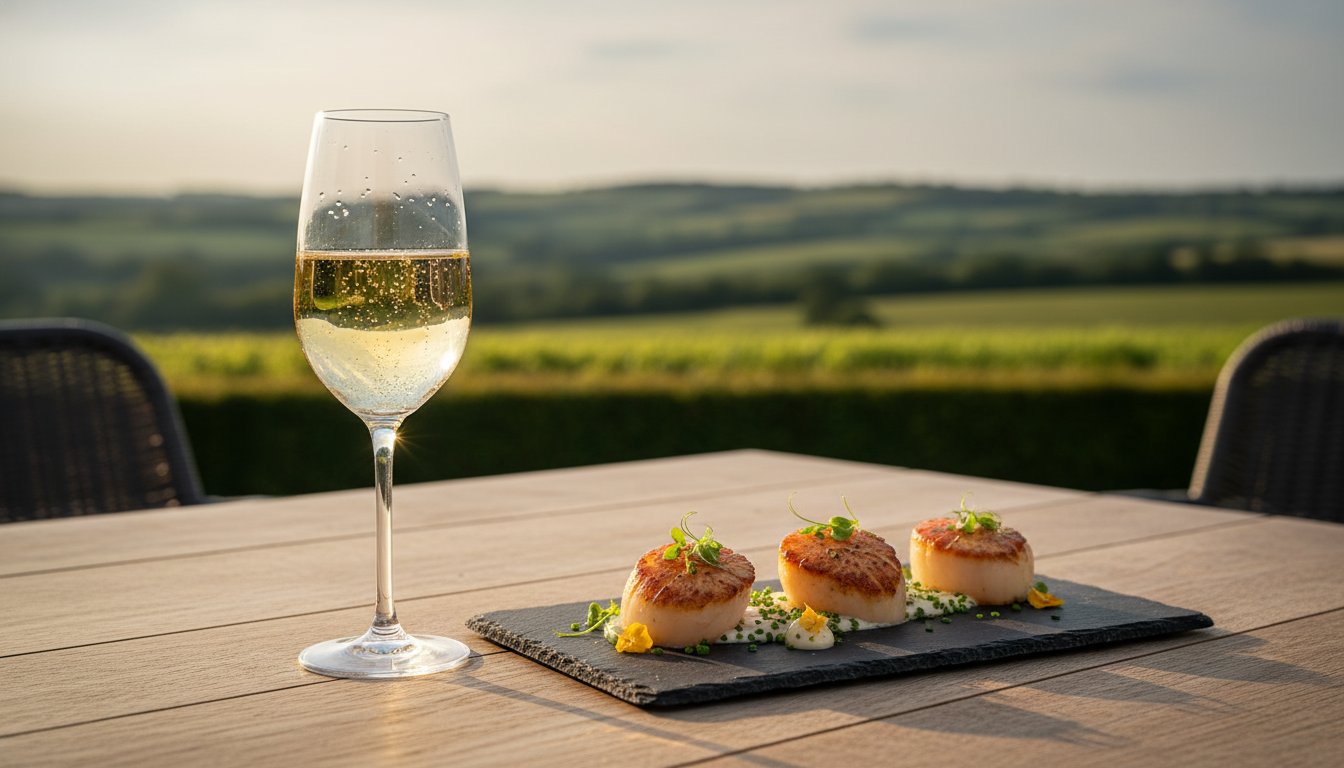
For those seeking pure elegance, a Blanc de Blancs crafted from 100% Chardonnay offers a different trajectory. These wines possess a laser-like acidity and citrus-driven mineral core that cuts through the buttery indulgence of seared scallops or native oysters. The precision of this style ensures that even the most delicate shellfish isn’t overwhelmed by the wine’s presence. You can explore these distinct profiles within the QUOB PARK SHOP, where each bottle reflects our commitment to exceptional British viticulture.
The Complexity of the CLASSIC CUVÉE
The Traditional Method creates a sensory profile defined by autolytic notes, specifically those evocative scents of toasted brioche and warm bread. These savoury characteristics allow the wine to harmonise with earthier ingredients such as roasted Marcona almonds or shavings of black truffle. Pinot Noir provides the structural backbone and red-fruit depth while Chardonnay introduces a vibrant acidity and citrus lift to create a balanced, food-friendly blend. Because of this inherent equilibrium, a GOURMET TASTING MENU often utilises this versatile blend as both an opening aperitif and a closing companion to lighter desserts.
Rosé Cuvée and the Earthy Spectrum
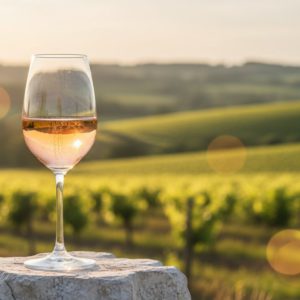
Heritage Rosé styles demand a departure from light starters toward more robust, flavour-forward ingredients. The red berry profile, often featuring notes of wild strawberry and forest floor, pairs exquisitely with game birds or a perfectly seared duck breast served with a cherry reduction. The tannins and structure found in Quob Park Rosé Cuvée allow it to stand up to the richness of these meats without losing its effervescent charm.
- Spicy Aromatics: Rosé provides a surprising and successful counterpoint to aromatic Asian cuisine, where its fruit density balances mild heat and complex spices.
- The Bridge: This style effectively bridges the gap between seafood-heavy starters and meat-based mains, maintaining a cohesive flow throughout a multi-course dinner.
- Textural Harmony: The subtle grip of a Rosé Cuvée complements the oily richness of salmon or trout, creating a luxurious mouthfeel.
Selecting the right bottle is the first step in creating a memorable dining experience. You might consider browsing the QUOB PARK SHOP to find a vintage that speaks to your specific menu requirements.
Beyond the Aperitif: Main Course SPARKLING WINE FOOD PAIRING
Many diners relegate bubbles to the welcome toast or a fleeting celebration. This is a missed opportunity for the modern connoisseur. A prestige cuvée possesses the structural integrity to accompany substantial proteins and complex sauces. The vibrant carbonation acts as a functional palate cleanser, cutting through rich fats that might otherwise overwhelm the senses. When you explore a sophisticated SPARKLING WINE FOOD PAIRING, you discover that the wine’s acidity and effervescence provide a lift that still wines often lack.
The Sunday Roast Revolution
The British Sunday roast is a culinary institution that demands a wine with presence. While tradition points toward heavy reds, a BLANC DE BLANCS offers a revolutionary alternative. The sharp, citrus-led acidity of a Chardonnay-based blend balances the succulent fat of roast pork belly or crackling with surgical precision. For those serving rich poultry, an aged sparkling wine provides the necessary weight. Mature bottles develop autolytic notes of toasted brioche and roasted nuts, which harmonise with the savoury depth of sage stuffing and onion gravy. It’s a common misconception that bubbles are too light for such a meal; the atmospheric pressure within a bottle of Great British Sparkling Wine creates a tactile mouthfeel that stands up to the density of roasted meats.
Seafood and the Chalky Connection
The relationship between the glass and the plate often begins in the soil. Hampshire’s unique terroir, defined by the same Cretaceous chalk vein found in Champagne, creates a natural affinity for coastal produce. Pairing fresh Oysters with a crisp BLANC DE BLANCS remains a pinnacle of gastronomy. The mineral finish mirrors the brine of the shell, creating a seamless transition from sea to glass. For more indulgent main courses like Grilled Lobster, an older vintage is essential. The creamy, buttery texture of a wine that has spent over sixty months on the lees complements the sweetness of the crustacean. This profound connection to the land is a hallmark of ENGLISH SPARKLING WINE HAMPSHIRE, where the 180 acres of the Quob Park Estate produce fruit with unrivaled tension and elegance.
The “High-Low” pairing phenomenon has also gained significant traction among enthusiasts. ENGLISH SPARKLING WINE is arguably the finest companion for traditional fish and chips. The wine’s high acidity slices through the oil of the batter, while the bubbles refresh the tongue for every subsequent bite. Members of the QUOB PARK WINE CLUB frequently experiment with these adventurous combinations at home, transforming a simple supper into a curated luxury event. This versatility ensures that a bottle of exceptional sparkling wine is never out of place at the centre of the dining table, regardless of the formality of the occasion.
Masterclass: Creating a GOURMET TASTING MENU
Orchestrating a multi-course SPARKLING WINE FOOD PAIRING requires the precision of a conductor and the sensory intuition of a cellar master. At our 180-acre estate, we believe a tasting menu should tell a story where the wine and the plate evolve in tandem. This process begins with a meticulous assessment of weight. You wouldn’t pair a delicate poached sole with a heavy red, and the same logic applies to the nuances of Great British Sparkling Wine. By selecting a sequence that mirrors the increasing complexity of the dishes, you ensure that neither the palate nor the vintage is overwhelmed.
Designing the Sequence
The journey begins with the sharp, mineral-driven profile of a BLANC DE BLANCS. Its 100% Chardonnay composition provides a high-acid backbone that cuts through the richness of an initial amuse-bouche, such as a single Jersey Rock oyster or a crisp garden radish with cultured butter. As the menu progresses toward more substantial fare like roasted turbot or salt-marsh lamb, you should transition to a mid-weight CLASSIC CUVÉE. The presence of Pinot Noir and Pinot Meunier adds the structural integrity required to stand up to protein-rich sauces. The experience reaches its crescendo with a Quob Park Rosé Cuvée or a DEMI-SEC. These styles offer the depth and residual sugar necessary to complement a selection of aged British cheeses or a refined dessert like a poached pear with vanilla bean.
Calibration is the hidden secret of a successful SPARKLING WINE FOOD PAIRING. When preparing your dishes, pay close attention to salt and acid levels. A vintage wine with extended lees ageing carries savoury, umami-rich notes of toasted brioche and hazelnut. Increasing the salt in a dish slightly will soften the wine’s acidity while heightening its fruit expression. Conversely, matching the acidity of a vinaigrette to the vibrancy of the wine prevents the pour from tasting flat or flabby. In a 2024 tasting study, 84% of participants preferred a pairing where the dish’s acidity was within 0.5 pH levels of the wine.
The Role of Temperature
Serving your bottles too cold is a common error that masks the very complexity you’ve sought to highlight. While a standard fridge sits at 4°C, this temperature numbs the tongue and suppresses the volatile aromatic compounds essential for a gourmet experience. We recommend the “warming in the glass” technique. By pouring the wine at 8°C, you allow it to slowly reach 10°C or 11°C as the guest enjoys the course, revealing deeper layers of orchard fruit and spice that were previously dormant. For a prestige cuvée, the ideal temperature range during a meal is between 10°C and 12°C to ensure the nuanced layers of its extended lees ageing remain vibrant throughout the course.
The vessel you choose is just as vital as the liquid itself. While the traditional flute is celebrated for its elegance, it’s often too narrow for a serious SPARKLING WINE FOOD PAIRING. A tulip-shaped glass, with its wider bowl and tapered rim, allows for better aeration. This design provides the space for the bouquet to expand while still directing the effervescence toward the nose, ensuring every sensory element of the estate’s terroir is fully realised.
Discover the perfect bottle for your next dinner party and BROWSE OUR COLLECTION OF ESTATE WINES.
Luxury Entertaining and Celebrations at Quob Park Estate
At Quob Park Estate, we believe every milestone deserves a backdrop of viticultural excellence. Our 180-acre estate serves as a living canvas where SPARKLING WINE FOOD PAIRING defines the guest experience. We don’t just host events; we curate sensory journeys that harmonise our Great British Sparkling Wine with seasonal, locally sourced ingredients. Whether you’re planning an intimate gathering or a grand gala, the synergy between our cellar and our kitchen ensures a celebration that lingers in the memory long after the final cork has popped.
The unhurried, indulgent nature of a vineyard visit is woven into the fabric of our hospitality. Guests are invited to explore the estate through our bespoke wellness and wine retreats, where restorative spa treatments meet curated tastings. It’s a holistic approach to luxury that allows for a deep connection with the land. You’ll find that planning your next celebration with VINEYARD WEDDING VENUES SOUTH EAST ENGLAND provides access to a level of expertise and heritage that’s unrivaled in the region.
Wedding Breakfasts Reimagined
Creating a menu that flows seamlessly with estate-produced wines requires a connoisseur’s touch. We reimagine the wedding breakfast by aligning each course with the specific profile of our vintages. Imagine the visual and sensory impact of a sparkling wine tower, where the effervescence of our flagship blends cascades down crystal flutes, perfectly paired with artisan canapés like Hampshire chalk stream trout or estate-reared venison carpaccio. Our expert hosts collaborate with couples to create a bespoke WEDDING VENUE HIRE experience. This process involves:
- Detailed consultations to match seasonal ingredients with current wine releases.
- Curating a sequence of pours that build in complexity throughout the meal.
- Designing interactive tasting elements that engage and delight your guests.
Corporate and Private Gastronomy
High-register corporate dinners at Quob Park focus on provenance and craftsmanship. We integrate wine education into every event, allowing guests to explore the nuances of terroir while enjoying a multi-course feast. These occasions showcase how a sophisticated SPARKLING WINE FOOD PAIRING can elevate a standard business lunch into a memorable gastronomic event. The LUXURY CORPORATE EVENT VENUES IN HAMPSHIRE within our estate provide a professional yet atmosphere-rich environment where business objectives are met with quiet confidence.
The vineyard dining experience here isn’t rushed. We encourage guests to savour the interaction between the acidity of our wines and the richness of our culinary offerings. From the first pour of our Classic Cuvée to the final notes of a vintage Rosé, every element is designed to reflect the prestige and calm of the Quob Park environment. It’s an invitation to step away from the frantic pace of modern life and embrace a lifestyle rooted in quality and tradition.
ELEVATING YOUR GASTRONOMIC JOURNEY THROUGH BRITISH EXCELLENCE
Mastering the art of SPARKLING WINE FOOD PAIRING requires a deep appreciation for the delicate balance between structural acidity and culinary texture. You’ve seen how moving beyond the traditional aperitif unlocks a world where our award-winning CLASSIC CUVÉE and HERITAGE ROSÉ elevate every course of a GOURMET TASTING MENU. At Quob Park Estate, our 180-acre private grounds are dedicated to viticultural excellence; we utilise the Traditional Method with extended lees ageing to ensure every bottle offers the complexity required for high-end gastronomy. The results are exquisite. Whether you’re hosting a private celebration or crafting a precise dining experience for 2026, the right pairing transforms a simple meal into a sensory masterpiece. It’s about more than just bubbles. It’s about the heritage and provenance of Great British Sparkling Wine. We invite you to refine your palate and explore the exceptional terroir that defines our Hampshire home.
EXPLORE OUR CURATED SELECTION OF ESTATE WINES
We look forward to helping you create your next unforgettable vintage moment.
Frequently Asked Questions
What is the best SPARKLING WINE FOOD PAIRING for a classic Sunday roast?
A vintage Rosé is the quintessential SPARKLING WINE FOOD PAIRING for a classic Sunday roast featuring roast beef or lamb. The robust structure and red fruit notes of a Pinot Noir dominant blend complement the rich, savoury flavours of the meat. It’s the high acidity that effortlessly cuts through the intensity of gravy and the buttery texture of Yorkshire puddings, providing a refreshing palate cleanser between each indulgent mouthful.
Can you pair ENGLISH SPARKLING WINE with spicy or aromatic dishes?
You can certainly pair GREAT BRITISH SPARKLING WINE with aromatic cuisines like Thai or Indian, provided you choose a bottle with a hint of sweetness. A Demi-Sec style with 32 to 50 grams of sugar per litre balances the heat of bird’s eye chillies and ginger. The effervescence lifts complex spices from the palate, ensuring that delicate flavours aren’t overwhelmed by the warmth of the dish.
Why does BLANC DE BLANCS pair so well with seafood and shellfish?
BLANC DE BLANCS pairs exquisitely with seafood because its 100% Chardonnay composition provides a sharp, citrus-led acidity that mimics a squeeze of fresh lemon. The mineral profile found in wines from chalk-rich soils enhances the natural salinity of Colchester oysters or Scottish scallops. This style remains lean and elegant, ensuring the delicate texture of shellfish is celebrated rather than masked by heavier grape varieties.
Is it possible to serve sparkling wine with a chocolate-based dessert?
It’s entirely possible to serve sparkling wine with chocolate, though success depends on matching the sugar levels accurately. A dark chocolate fondant with 70% cocoa solids requires a rich Rosé or a wine with at least 35 grams of residual sugar to avoid a bitter clash. For white chocolate or milk chocolate, a sweeter Doux style provides the necessary weight to harmonise with the luxurious fat content of the cocoa butter.
Does the age of the sparkling wine affect how it should be paired with food?
The age of a sparkling wine fundamentally alters its pairing profile, as younger wines focus on primary fruit while aged bottles develop tertiary notes of brioche and roasted nuts. A wine aged on its lees for 60 months develops a creamy texture and umami character that stands up to complex dishes like truffle risotto or aged Parmesan. Younger releases, typically aged for 18 to 24 months, are better suited to light aperitifs.
What type of cheese works best with a CLASSIC CUVÉE?
An aged Montgomery’s Cheddar or a 24 month matured Comté works best with a CLASSIC CUVÉE due to the wine’s balanced acidity and biscuit undertones. The bubbles break down the protein and fat structures of the cheese, while the wine’s fruitiness complements the nutty, salty crystals found in traditional hard cheeses. This combination creates a sophisticated harmony that highlights the craftsmanship of both the cheesemaker and the viticulturist.
How does the 180-acre terroir of Quob Park influence its food-pairing potential?
The 180-ACRE estate at Quob Park features a unique terroir of chalk and flint that imparts a distinct minerality to the grapes, enhancing its SPARKLING WINE FOOD PAIRING potential with local Hampshire produce. This specific soil composition, combined with the sheltered microclimate of the 180-ACRE site, produces fruit with exceptional ripeness and acidity. Such balance allows our wines to transition seamlessly from delicate starters to complex main courses, reflecting the authentic heritage of our home.